

If you're looking at your backyard in Sharon and thinking, “We need a real outdoor space, not just a patch of grass and a couple of chairs,” you're not alone. Most deck projects start that way. A door that opens into mud, a patio that’s too small, or a yard that gets almost no use because it never felt finished.
A good deck solves that. A bad one creates water problems, permit headaches, and expensive repairs where the structure meets the house. In Sharon, that risk is higher because the weather is hard on exterior construction. Snow, wet springs, humidity, and freeze-thaw movement expose weak details fast.
That’s why a Custom deck builder Sharon PA homeowner can trust has to think beyond deck boards and railings. The job starts with design, but it succeeds or fails on planning, code compliance, drainage, flashing, and how the deck ties into the home.
Envisioning Your Perfect Sharon Deck Materials and Designs
The right deck design starts with how you use the back of the house in Sharon. A family with kids usually needs clear stairs to the yard and room for traffic around a grill. A couple who entertains may care more about dining space, lighting, and a railing that keeps the view open. If the deck sits off a kitchen or mudroom, the layout also has to handle wet boots, snow melt, and the daily path in and out without becoming a maintenance problem.
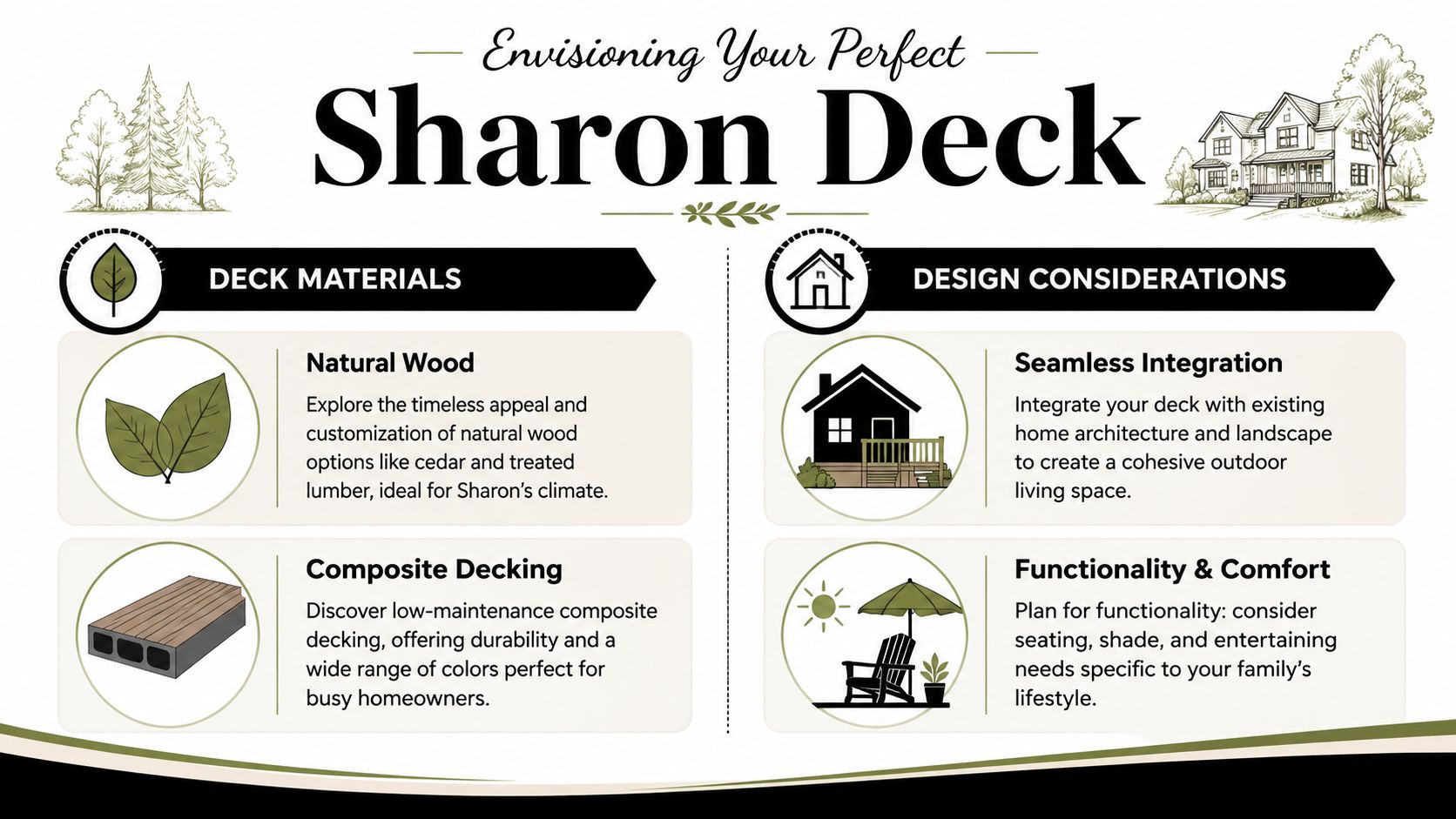
In this area, weather changes the design more than homeowners expect. Freeze-thaw cycles in Mercer County punish low spots that hold water. Heavy snow loads and spring runoff expose weak stair layouts, poor drainage, and sloppy trim details fast. Coming from roofing work, I pay close attention to where water leaves the roof, where it splashes, and whether that runoff will shorten the life of the deck boards, stair framing, or the ledger connection at the house.
Deck styles that fit Sharon homes
A single-level deck fits many Sharon homes with a simple rear entry and a reasonably level yard. It is often the easiest layout to build correctly and the easiest for homeowners to furnish. Fewer elevation changes also mean fewer stairs, fewer rails, and fewer places for water to sit.
A multi-level deck earns its keep on sloped lots or homes with a higher first floor. It can separate cooking, dining, and seating without making one big platform feel oversized. The trade-off is more framing, more footings, more railing, and more detailing where snow and water can collect.
A wraparound deck can make sense when the house has multiple doors or when the goal is to connect the side yard and backyard into one usable space. It also creates more corners, more transitions, and more exposure points. That matters in Sharon, where repeated wet-dry and freeze-thaw cycles will find every weak spot.
Start with a few practical questions:
- Where do people exit the house most often? The main traffic path should feel natural in January, not just on a sunny estimate day.
- Where does the sun hit in late afternoon? Full exposure can make a deck uncomfortable in July if shade is ignored.
- Where do downspouts discharge? Roof water should not dump onto stairs, posts, or the deck surface.
- How much yard access do you need? Poor stair placement makes a deck feel awkward every day.
Choosing the right decking material
Material choice in Sharon comes down to maintenance tolerance, moisture exposure, and how long you plan to stay in the home.
Pressure-treated wood still works well when the budget is tighter and the owner is realistic about upkeep. It can look good and perform well, but it needs regular cleaning, sealing, and occasional board replacement over time. In our climate, wood moves more, checks more, and shows neglect sooner.
Composite decking is the better fit for many homeowners who want a lower-maintenance surface and a more uniform appearance year after year. It costs more up front, but it cuts down on the sanding, staining, and board swapping that come with wood. Homeowners comparing brands and installation details can review composite decking installation details in Grove City to see how these systems are typically assembled.
PVC or vinyl decking deserves a close look in shaded yards, damp locations, or spots that stay wet after storms. It handles moisture well, though some homeowners prefer the feel and appearance of capped composite. The right choice depends on the setting, not just the sample board.
| Decking Material Comparison for Sharon PA Homes | Average Lifespan | Maintenance Level | Upfront Cost (per sq. ft.) |
|---|---|---|---|
| Pressure-treated wood | Shorter if upkeep is delayed | Higher | Lower |
| Composite | Longer in low-maintenance applications | Lower | Higher |
| PVC/vinyl | Strong moisture resistance | Lower | Higher |
Railing deserves the same level of thought as the deck boards. Rail style affects maintenance, sightlines, and how open the space feels from inside the house. If you are weighing low-maintenance rail options, this piece with practical advice for Ottawa deck rails is useful because it covers PVC railing decisions in a cold-weather climate much like ours.
What works well on real Sharon projects
For many local homes, the best setup is pressure-treated framing with a low-maintenance deck surface and a railing system that matches the amount of upkeep the homeowner will do. That approach controls structural cost while improving the parts you see and use every day.
Details matter. Fascia lines, picture-frame borders, hidden fasteners, stair tread material, and post placement all affect whether the deck still looks sharp after a few Sharon winters. The strongest designs also account for roof runoff, siding transitions, flashing, and the way snow and water move around the house. That is where a contractor with roofing experience brings real value, because the deck is not a stand-alone platform. It is part of the exterior system.
Budgeting Your Custom Deck Project in the Sharon Area
A Sharon deck budget can go sideways fast if the quote looks clear but leaves out half the job. I see that happen with stairs, tear-off, permit handling, footings, and the house connection. The number on page one sounds fine until the change orders start.
A useful budget starts with scope. Are you pricing a ground-level platform, or a raised deck with railings, wide steps, fascia trim, and cleanup? Are old materials being removed? Is the contractor correcting flashing, runoff, or rot where the deck ties into the house? Those details separate a realistic proposal from a cheap-looking one.
What decks typically cost in Sharon
Earlier cost data for Sharon put many basic deck projects in a relatively modest local range compared with larger metro markets. That lines up with what homeowners here usually expect for a small, straightforward build. It does not hold once the project includes upgraded boards, custom rail systems, difficult access, or structural repairs at the house.
For a deck around 200 square feet, labor and materials are often closer than homeowners expect. Labor takes a large share because the hard part is not laying deck boards. It is layout, digging below frost depth, setting footings, building a stiff frame, and getting stairs and railings right. In Sharon, freeze-thaw cycles punish weak footings and loose framing, so cutting labor usually means cutting lifespan.
Sharon pricing also tends to run lower than some national averages. The trade-off is that local conditions still demand careful work. Snow load, wet springs, and repeated freezing and thawing do not care whether the initial quote was cheap.
Where the money usually goes
The biggest price swings usually come from five things:
- Size and layout: A simple rectangle is the most budget-friendly shape. Angles, bump-outs, benches, and multi-level sections add framing time and waste more material.
- Height: Raised decks need more posts, bracing, stair work, and rail. That adds both labor and hardware.
- Decking and railing choices: Pressure-treated boards keep the upfront cost down. Composite and PVC reduce maintenance, but the material package climbs quickly once matching fascia, hidden fasteners, and premium rail systems are added.
- Site conditions: Tight backyard access in older Sharon neighborhoods can slow excavation and material delivery. Sloped grades and wet soil can change footing work too.
- House-side corrections: Ledger details, flashing, siding cuts, and gutter or downspout changes are not extras if they prevent water damage. They are part of building the deck correctly.
That last item gets missed a lot.
A contractor who also understands roofing and water management usually catches trouble earlier. If roof runoff dumps onto the future stair area, or if the ledger zone has vulnerable siding and no proper flashing plan, it is cheaper to address it before the deck is framed than after the first winter.
Budget items homeowners often miss
The visible parts get the attention. The hidden parts decide whether the deck still feels solid in five or ten years.
Common missed costs include demolition, disposal, permit fees, concrete, hardware upgrades, stair lighting, and drainage corrections around the deck perimeter. Sharon homes with older exterior work may also need carpentry repairs where moisture has already affected sheathing, band boards, or trim near the attachment point.
Allowance money matters too. I advise homeowners to keep room in the budget for one or two field conditions nobody could fully confirm on day one. Once an old deck comes off, you sometimes find rot, weak fastening, or grading problems that were impossible to price perfectly from the outside.
The best budget is honest from the start. It covers the deck you want, the site conditions you have, and the weather exposure Sharon will give it every year.
Navigating Mercer County Building Codes and Permits
Permits aren’t paperwork for the end of the job. They shape the job from the start. In Sharon and the rest of Mercer County, that affects layout, height, railings, stair details, setbacks, and how the deck attaches to the house.
Too many homeowners find out late that their contractor didn’t account for local review, and then the project slows down while plans get revised. That’s one reason permit knowledge should be part of hiring, not an afterthought.

When permits usually come into play
Verified local guidance notes that decks over 30 inches high require permits under Pennsylvania code requirements referenced for this market, and many Mercer County homeowners run into permit costs and delays that weren’t explained upfront. Local permit guidance also notes Mercer County deck permits often cost $200-$500 and can take 2-4 weeks, with a 2025 HomeAdvisor report finding 68% of Pennsylvania deck projects were delayed due to zoning issues, while a 2025 Angi survey found 42% of Pennsylvania homeowners had faced permit denials, according to Mercer County permit and zoning guidance.
Those numbers matter because they show the actual cost of hiring someone who doesn’t understand local approvals.
Code details that protect the structure
The most important deck code detail is often the one homeowners never see after the job is done. It’s the ledger connection. In Sharon’s climate, with heavy snowfall and freeze-thaw cycles, that area takes constant stress from moisture and seasonal movement.
Verified technical guidance for this area states that ledger boards must be bolted to rim joists with 1/2-inch through-bolts, and Zmax galvanized or stainless steel flashing must be installed over the junction. The same guidance states improper flashing causes 80% of callbacks, and that exposure without corrosion-resistant hardware can lead to rot within 5-7 years. Mercer County codes also mandate 42-inch railings for safety, according to local deck code and flashing requirements.
That isn’t fussy detail. That’s the difference between a deck that stays dry where it meets the house and one that slowly damages the rim area behind the siding.
The house connection is where many deck failures start. If a builder talks only about boards and colors, keep asking questions.
What smart homeowners should ask before work starts
A permit-ready deck plan should answer practical questions before materials are ordered.
- Who pulls the permit: The contract should state whether the contractor or homeowner handles it.
- What setbacks apply: Lot lines, easements, and placement all matter.
- How the deck attaches: The builder should explain the ledger and flashing method in plain language.
- What inspections are required: You need to know what gets checked and when.
- How roof runoff is handled: Water from gutters and valleys shouldn’t dump onto footings, stairs, or the ledger area.
Sharon weather makes water management part of code thinking even when the code book doesn’t spell out every site-specific issue. If a downspout empties beside a footing area or snow slides directly onto the stairs, the plan should address that before the build starts.
Why local compliance protects resale and insurance
Unpermitted or poorly documented deck work can create trouble later when the house is sold, refinanced, or inspected after a loss. Buyers ask questions. Adjusters ask questions. Municipalities ask questions.
A deck that was properly permitted, properly attached, and properly flashed is easier to defend because the work follows a documented process. A deck built without that discipline often becomes expensive twice. Once during construction, and again when someone has to fix paperwork, redesign non-compliant details, or open finished work to correct hidden problems.
The Custom Deck Building Process From Start to Finish
Homeowners usually feel better about a deck project once they know the sequence. The work looks big from the outside, but the process is straightforward when it’s managed well.
How a typical project unfolds
It starts with an on-site visit. The builder looks at the house, grade, access, door height, and where water moves. That visit should cover more than style choices. It should also identify siding conditions, gutter discharge, and any part of the roofline that could affect the deck.
Next comes design and scope. That’s where size, stairs, railings, skirting, and material choices get settled clearly enough to price and permit. A rough idea isn’t enough. Contractors can only bid accurately when the project description is specific.
Then the project moves into approvals and ordering. Permits, if required, need to be handled before framing starts. Materials get selected and scheduled so the job doesn’t stall halfway through.
The work on site
Construction usually follows a predictable order:
Layout and site prep
The footprint gets marked, access is protected, and any old structure is removed if needed.Footings and framing
This stage sets the whole job up. If the framing is off, everything after it shows the mistake.Ledger and house connection
Here, careful waterproofing and attachment details matter most.Decking, stairs, and rails
Once the structure is solid, the visible finish work comes together fast.Final walkthrough and cleanup
The builder should review the completed work with you and address punch-list items before calling it done.
Homeowners who ask for a clear sequence at the start usually have a smoother project. Good process keeps surprises smaller.
What to expect as the owner
You don’t need to supervise every step, but you should know what’s happening and what decisions are still open. Color, railing type, fascia details, and stair layout should all be settled before the crew reaches those stages.
It can also help to look at outdoor-living planning ideas from other climates when thinking about use patterns. For example, this guide on planning your Arizona outdoor space is useful for layout thinking, even though our weather in Sharon demands very different construction details.
A good deck build never feels chaotic from the homeowner’s side. It feels organized, communicated, and deliberate.
How to Vet and Hire Your Sharon PA Deck Contractor
A contractor interview in Sharon should get specific fast. If the conversation stays at the level of colors, square footage, and a rough price, you still do not know whether that builder can keep water out of the house, deal with Mercer County inspections, or build a stair that works safely in January after a freeze.
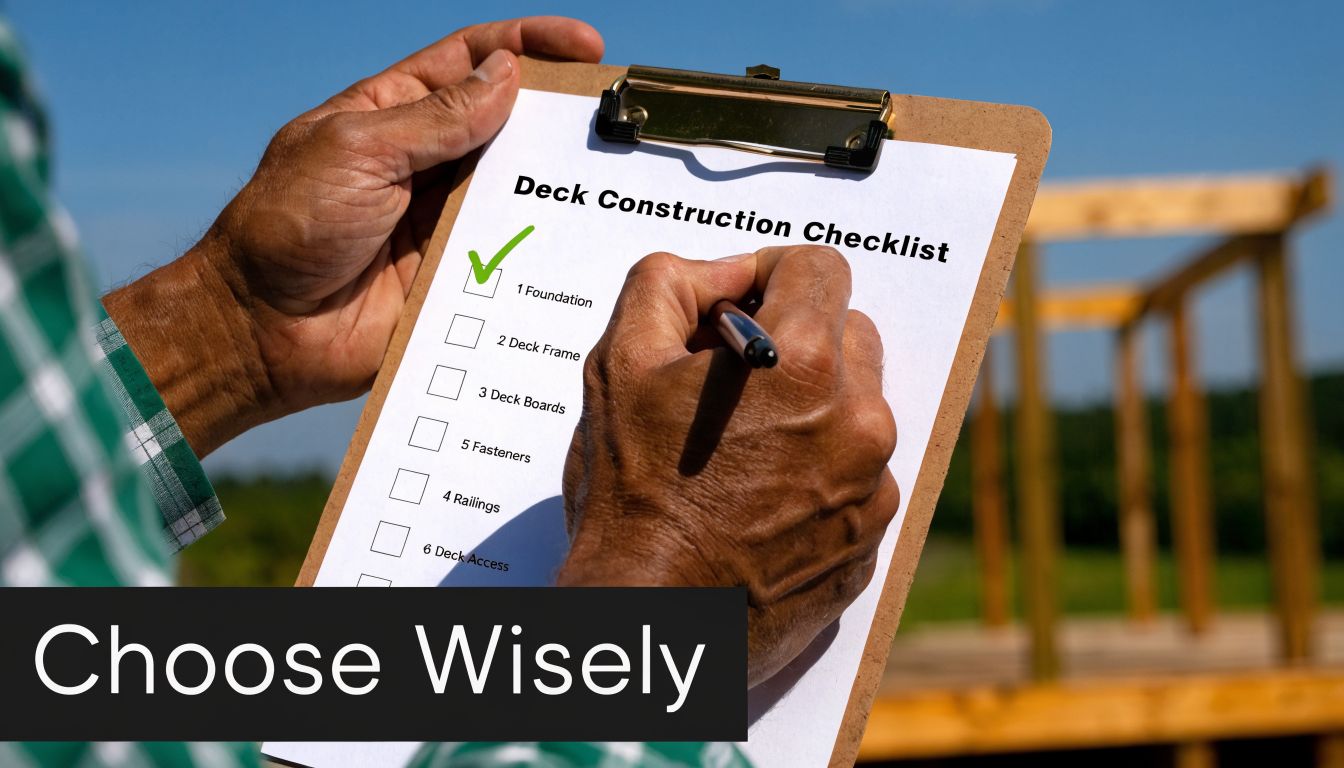
Good vetting starts with one practical question. Has this company built decks tied into homes like yours in western Pennsylvania weather, or are they learning on your job?
Questions every homeowner should ask
Start with the paperwork. Ask for Pennsylvania contractor registration, liability insurance, and workers' compensation coverage. A legitimate contractor should produce those without hesitation.
Then ask the questions that expose how they build:
- Who pulls the permit and meets the inspector? In Mercer County, that should never be left vague.
- Who is your day-to-day contact once the job starts? The salesperson is often not the site supervisor.
- How do you flash and fasten the ledger at the house? Listen for a real method, not a generic promise.
- What happens if you find rot, rim-joist damage, or old water intrusion during demolition? Sharon homes with older siding or roofing history can hide problems at the attachment point.
- How do you handle drainage around stairs, posts, and the area under the deck? Freeze-thaw cycles punish sloppy water management.
- What is included in writing? Framing, decking, railing, stairs, skirting, disposal, permit costs, and change orders should all be spelled out.
Homeowners comparing deck and roofing contractors can use the same screening habits. This checklist of questions to ask roofers before hiring is useful because the core issue is the same. You are checking documentation, workmanship standards, communication, and how the contractor handles risk when hidden conditions show up.
What strong proposals have in common
A solid proposal reads like a job plan. It should identify materials, connection details, finish selections, payment stages, and who is responsible for approvals and inspections.
Vague estimates create expensive arguments later.
Here is a simple way to review bids:
| What to review | Strong sign | Red flag |
|---|---|---|
| Scope | Detailed material and labor descriptions | Vague one-line summary |
| Permit handling | Clear written responsibility | "If needed" language with no detail |
| Payment schedule | Progress-based stages | Heavy money due upfront |
| House connection | Explained attachment and flashing | No mention of waterproofing |
| Changes | Written change-order process | Verbal-only approach |
Price matters, but low price by itself tells you very little. One contractor may include permit handling, upgraded hardware, proper flashing, and cleanup. Another may leave those items out and still call it a complete job. The quote only means something if the scope is clear.
Red flags that should slow you down
Sharon homeowners should be cautious with any contractor who treats code and inspections like a nuisance. Deck failures usually start with the parts you cannot see after the job is finished.
Watch for these warning signs:
- A bid that is far below the others: Something may be missing from the framing, hardware, stairs, or permit scope.
- Large cash demands before materials are ordered: Deposits are normal. Front-loaded payment schedules deserve a closer look.
- No nearby references: A local contractor should be able to point to work in Sharon, Hermitage, West Middlesex, or nearby Mercer County communities.
- Weak answers about water control: If they cannot explain flashing, runoff, and drainage in plain language, keep looking.
- No written contract detail: If it is not on paper, do not assume it is included.
Hire the contractor who makes the process clearer.
What trust actually looks like
Trust comes from clear answers, current coverage, a clean contract, and steady communication once the job starts. It also comes from trade knowledge that fits the job. A builder tying a deck into a house should understand siding, flashing, roof runoff, and the way water moves across the whole exterior.
Penn Ohio Roofing & Siding Group is one example of a Sharon-based exterior contractor that builds treated and composite decks as part of broader exterior work. That matters for one reason. Homeowners should favor contractors who can talk through decking, waterproofing, siding cuts, drainage, and permit handling as one connected system instead of treating the deck like a stand-alone platform.
The Penn Ohio Advantage Why a Roofer Builds a Better Deck
A deck in Sharon takes a beating from the start. Snow sits against the house connection. Spring rain finds every small gap. Summer sun dries and shrinks exposed wood. Then winter opens those joints again. A builder who understands roofs and wall flashing usually catches problems at the planning stage instead of after the ledger starts taking on water.
That is the practical advantage here. Deck framing and decking matter, but the long-term failures I see around Mercer County often start at transitions. The ledger, the siding cut, the kick-out point near a roof edge, the downspout discharge, and the way water sheds off the house all affect how long that deck stays solid.

Why roofing knowledge changes the result
A deck attached to a house becomes part of the exterior shell. It has to work with the roof, gutters, siding, and drainage plan already in place. In Sharon, that matters even more because freeze-thaw cycles punish trapped moisture. Water gets behind a bad ledger detail, freezes, expands, and starts loosening fasteners or damaging the band area.
Roofing experience helps with the parts many deck-only crews treat as side details. Flashing has to be lapped correctly. Siding cuts have to leave a clean drainage path. Gutters and downspouts cannot dump water where footings, stairs, or landing pads will stay saturated. On older homes in Sharon, that judgment matters because trim, sheathing, and wall assemblies are often not as forgiving as new construction.
What a roofer notices before the first post goes in
The questions are different.
- Where does roof runoff land during a hard storm?
- Does a valley or upper roof section drop snow and ice onto the proposed deck?
- Will a covered deck hold moisture against the wall if the tie-in is handled poorly?
- Is the house a good candidate for a ledger connection, or is a freestanding design the safer choice?
- Will gutter changes or diverters be needed before the deck goes in?
Those answers change the build. They affect framing layout, stair placement, flashing details, and sometimes the entire design.
Where that matters on Sharon homes
This comes up all the time on homes with low eaves, older siding, heavy roof runoff, or a patio door wall that looks simple until you open the cladding and see prior water staining. In those cases, deck construction and roof-edge water control overlap. Treating them as separate jobs is how hidden rot gets missed.
Penn Ohio Roofing & Siding Group handles deck work with that full exterior view in mind. Homeowners who want to understand the roof-edge and flashing side of the equation can review these residential roofing conditions common on Sharon homes before finalizing a deck plan.
A roofer does not build a better deck by title alone. The difference comes from knowing how water behaves on a real house in Western Pennsylvania, then building the deck so runoff, snow load, flashing, and drainage work together instead of fighting each other.
Start Building Your Dream Deck Today
A deck in Sharon usually gets tested fast. One winter of freeze thaw cycling, spring runoff, and a few heavy snowfalls will expose weak footings, poor flashing, and shortcuts around stairs or drainage. A deck that lasts here starts with the house, the yard, and the weather, not with a brochure photo.
Good results come from asking plain questions early. Where will the posts sit if the yard falls away from the house? Will the deck stay clear of standing water after a hard rain? Is the connection at the house sound enough for the planned design? On many Mercer County homes, those answers affect cost, permitting, and even whether a freestanding deck makes more sense than attaching one to the structure.
The finish boards get attention. The framing, hardware, and water control decide how the deck performs five or ten years from now.
A solid build should fit the home, pass inspection without drama, and hold up through Sharon winters with routine maintenance instead of recurring repairs. That takes clear planning, honest pricing, and a contractor who understands both deck construction and how roof runoff, flashing, and exterior wall details affect the finished job.
If you are ready to discuss your project, Penn Ohio Roofing & Siding Group can review the site, explain the design and material options, and lay out what the permit and build process will involve before work starts. Reach out at https://pennohiorc.com for a free, no obligation consultation and estimate.