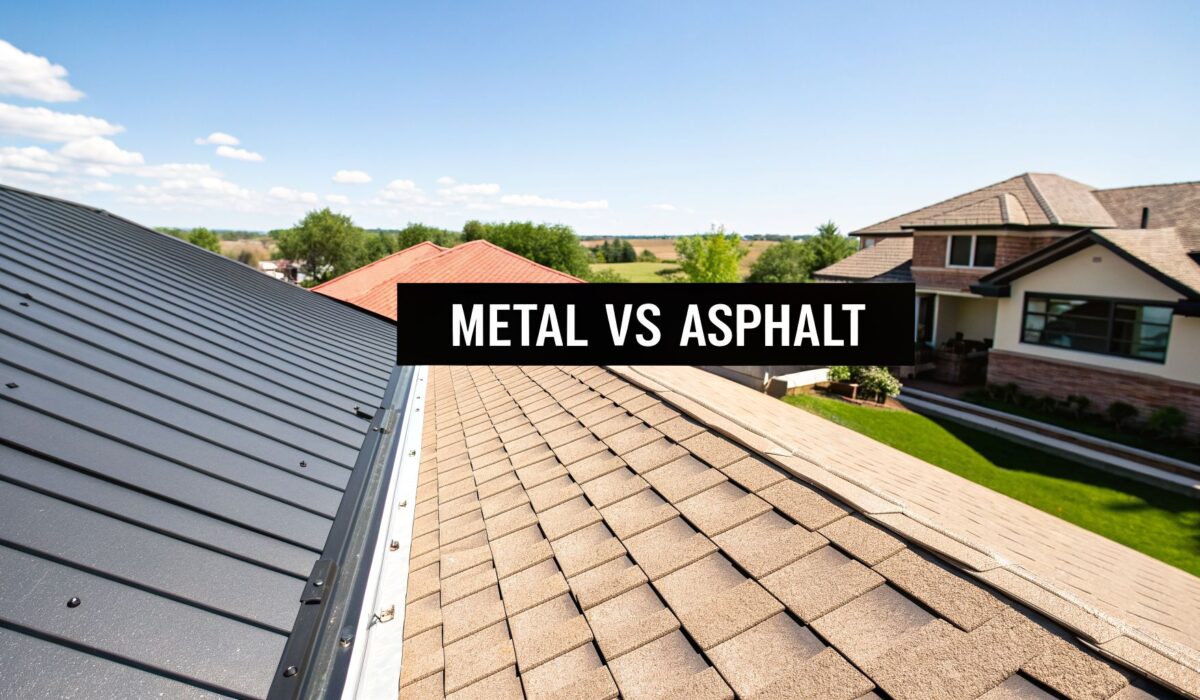
When it's time for a new roof, most homeowners find themselves weighing two main options: metal and asphalt shingles. At its heart, the decision comes down to your priorities. Are you focused on a lower upfront cost, or are you playing the long game and investing in lifetime value?
Choosing Your Roof: Metal Vs. Asphalt Explained
Deciding on a new roof is one of the biggest investments you'll make in your property. This guide is designed to give you a straightforward, no-nonsense comparison between metal roofing and asphalt shingles, helping you make a choice that fits your home, budget, and long-term goals.
A Quick Comparison
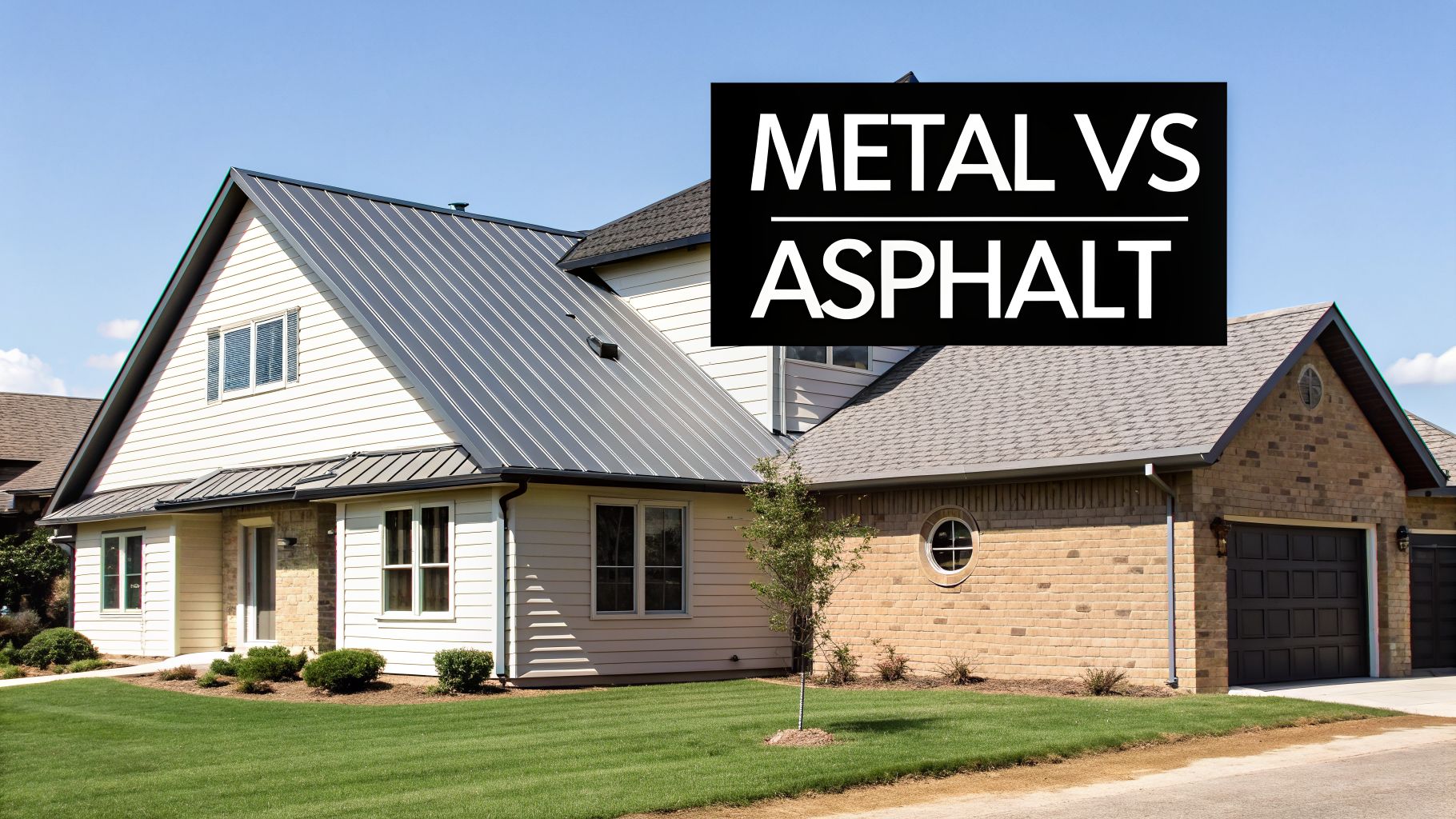
Before we dive deep, let's start with a high-level look at how these two materials stack up. This quick rundown gives you a clear picture of their core differences.
| Feature | Asphalt Shingles | Metal Roofing |
|---|---|---|
| Initial Cost | Low to Moderate | High |
| Lifespan | 15-30 Years | 40-70+ Years |
| Durability | Good | Excellent |
| Maintenance | Periodic Repairs | Minimal |
| Energy Efficiency | Standard | High (Reflective) |
Market Popularity and Material Choices
There’s no question about it: asphalt shingles are the most common sight on American homes, covering roughly 75-80% of the residential market. Their popularity is driven by a winning combination of affordability and simple installation, making them the default choice for many homeowners.
Today’s shingles have come a long way. For example, high-quality architectural options like GAF Timberline HDZ Shingles offer enhanced durability and aesthetics that rival more expensive materials.
On the other hand, metal roofing is rapidly gaining ground. While its market share was just 12% in 2019, it has since climbed to 17% in 2023. This trend shows a clear shift as more people prioritize longevity and sustainability.
As we explore each factor in the sections ahead, think about what matters most for your home. This will help you find the perfect fit for your property and your peace of mind.
Comparing Upfront Cost Vs. Lifetime Value
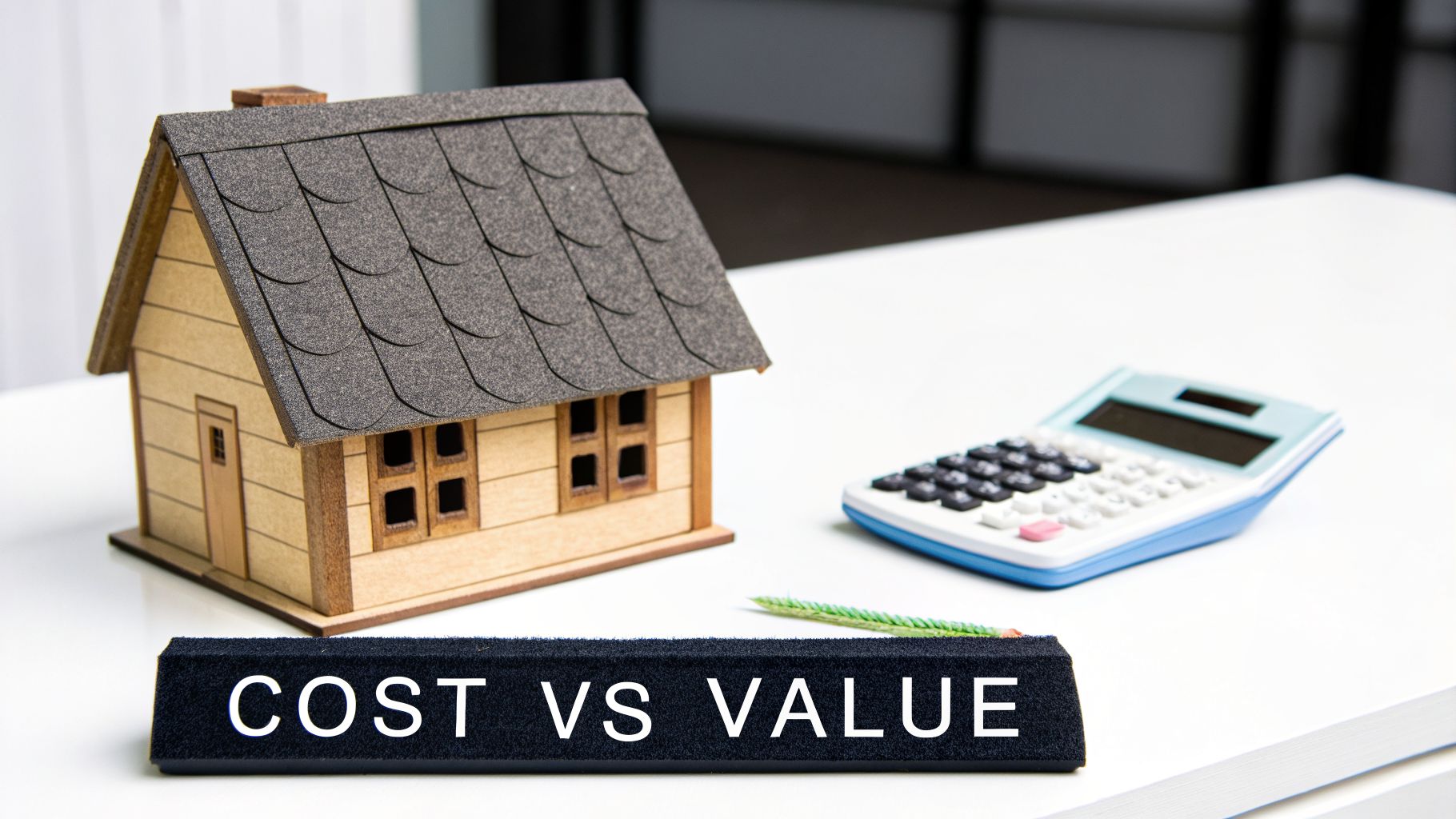
When homeowners start comparing metal and asphalt, the first thing they almost always notice is the price. Let's be upfront about it: asphalt shingles have a much lower initial installation cost, and that's a huge factor in their popularity across the country. A metal roof, on the other hand, requires a significantly larger investment to get started.
But if you only look at that first bill, you’re missing the bigger financial picture. The real cost of any roof isn't just what you pay the day it's installed; it's the total amount you’ll spend on it for as long as you own your home. This is what we in the industry call lifetime value, and this is where the financial story takes a sharp turn.
The Upfront Investment
When you get a quote for a new roof, you're looking at a package deal. The total price includes the materials themselves, the labor to install them, all the necessary underlayment and fasteners, and the disposal of the old roofing. Don't forget to factor in the logistics and cost of proper construction debris removal, as that's a real part of the job.
Here’s how that initial cost breaks down:
- Asphalt Shingles: These are the go-to for a reason. Both the material and labor costs are lower, making them a very accessible option for homeowners who need a reliable roof without breaking the bank.
- Metal Roofing: This is a premium product from the start. The materials cost more, and the installation is more complex, requiring special tools and skilled labor. That all adds up to a higher initial price tag. You can get a much clearer picture of what goes into this by reading our guide on metal roof installation cost.
While the sticker shock on a metal roof can be real, it helps to think of it as just the first chapter in a long financial story.
For a quick reference, here’s a simple table summarizing the key numbers.
Quick Look Cost and Lifespan Comparison
| Comparison Factor | Asphalt Shingles | Metal Roofing |
|---|---|---|
| Upfront Cost | Lower | 2-3 times higher |
| Expected Lifespan | 20-25 years | 40-70 years |
| Long-Term Value | Lower (Requires replacement) | Higher (One-time investment) |
As you can see, the initial cost is just one piece of the puzzle. The real difference emerges over the decades.
A Practical Scenario: Lifetime Cost in Action
Let's put this into a real-world context. Imagine two identical homes side-by-side. One gets a new asphalt shingle roof, and the other gets a standing-seam metal roof.
The homeowner with the new asphalt roof has a lower bill today. But fast forward about 20-25 years, and they're going to be calling a roofer again for a full—and expensive—replacement.
Now, look at the house with the metal roof. At the 25-year mark, that roof is still in its prime. With just basic maintenance, it's good for another few decades, easily lasting 40-70 years in total. While the upfront cost for a premium metal system might run $10-15 per square foot—two or three times more than asphalt—it’s a one-and-done job for most homeowners.
Over a 50-year span, the asphalt roof may need to be torn off and replaced twice, meaning you pay for labor, materials, and disposal two times over. Suddenly, that "cheaper" roof has become the more expensive long-term option. This is the point where a metal roof stops being an expense and starts acting like a strategic asset for your property.
How Each Roof Handles Weather And Wear
Your roof is your home’s first line of defense, the primary barrier standing between your family and the elements. When you're weighing metal roofing against asphalt shingles, how each one holds up to years of sun, wind, rain, and snow is probably the most important factor to consider. Their performance directly impacts your home's safety and how much you'll spend on maintenance down the road.
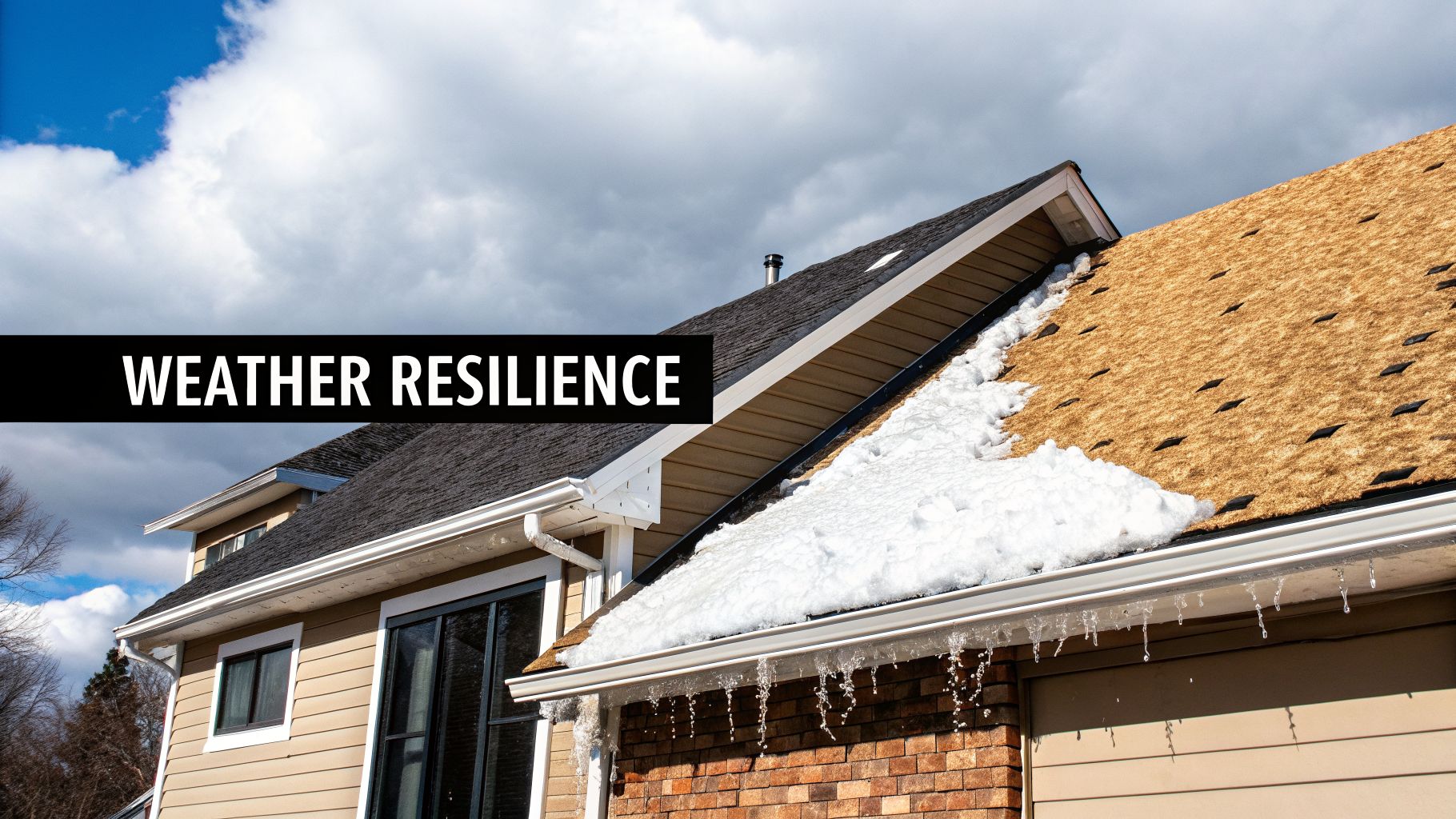
At their core, these materials are just built differently. An asphalt shingle has a granular, porous surface meant to shed water. A metal roof, on the other hand, is a slick, interlocking system designed to repel everything. This fundamental difference is what dictates how they perform year after year.
Performance in High Winds
Strong winds are a true test for any roof, and this is where you see a major gap between metal and asphalt. As asphalt shingles age and their adhesive seals weaken, they become incredibly vulnerable. A powerful gust can easily get under the edge of a shingle, lift it, and tear it clean off.
Metal roofs are engineered specifically for this kind of stress. Standing seam metal roofs, with their interlocking panels mechanically fastened to the deck, create a single, unified membrane that wind has a very hard time penetrating. In fact, many metal roofing systems are rated to withstand winds of 140 mph or more, giving you real peace of mind during a severe storm.
A single missing shingle isn’t just an eyesore; it's a breach in your home's armor. Once wind gets a foothold under one shingle, it often starts a chain reaction, leading to widespread damage and expensive water leaks.
Handling Snow and Ice
If you live somewhere with heavy winters, the way a roof deals with snow and ice is a huge deal. The smooth, low-friction surface of a metal roof is a game-changer here—snow simply slides right off. This dramatically reduces the heavy load on your home’s structure and is your best defense against destructive ice dams.
Asphalt shingles, with their rough, granular texture, tend to grab and hold onto snow. This creates a couple of big problems:
- Excessive Weight: Wet, heavy snow can pile up, placing enormous stress on your roof trusses and the framing of your house.
- Ice Dam Formation: When snow melts and refreezes at the edge of the roof, the shingle's rough surface traps the water. This builds thick ridges of ice that can force water back up under the shingles, causing leaks that run down inside your walls.
Resilience Against Hail and Debris
Hail is one of the most brutal things a roof can endure. The constant hammering from hailstones can knock the protective granules right off an asphalt shingle. This "granular loss" exposes the asphalt mat underneath to UV rays, which rapidly accelerates its deterioration and shortens the roof's life.
Metal roofing just brings a higher level of impact resistance to the table. While a truly massive hailstone might leave a dent, high-quality steel is remarkably tough. Many stone-coated steel products even boast a Class 4 impact resistance rating—the highest rating available—and are often warrantied against hail up to 2.5 inches in diameter.
Long-Term Maintenance and Wear
When it comes down to it, durability is all about maintenance. With an asphalt roof, you have to stay vigilant. You need to perform regular inspections, looking for any cracked, curling, or missing shingles and signs of granular loss. Catching these issues early is key to stopping a small repair from turning into a major leak.
A metal roof, by comparison, is about as close to a "set it and forget it" system as you can get. Maintenance is minimal, typically just an occasional check to make sure fasteners are tight and the gutters are clear. It doesn't crack, curl, or break down from sun exposure like asphalt does, so it holds its integrity for decades. This stark difference in wear and tear is crucial to understanding how long does a roof last and what the true cost will be over its lifetime.
Analyzing Energy Efficiency and Eco-Impact
A modern roof does a lot more than just keep you dry. It's one of the most important components of your home's energy system and has a real environmental footprint. If you’re focused on lowering your utility bills and making a sustainable choice, the differences between metal and asphalt are night and day.
Let's start with how each material deals with the sun. On a hot, sunny day, your roof can be the single biggest source of heat gain in your house, forcing your air conditioner to work overtime just to keep up. How your roof handles that solar blast has a direct impact on your energy bills.
How Each Material Affects Your Energy Bills
This is where metal roofing really shines, thanks to what we in the industry call “cool-roof” technology. Most modern metal panels come treated with special coatings that don't just absorb the sun's rays—they reflect them right back into the atmosphere. It’s a simple concept, but the effect is powerful.
By reflecting solar radiation, a metal roof can dramatically reduce the amount of heat that seeps into your attic and living spaces. This can slash your summer cooling costs by as much as 25%. That's a real return on your investment you'll notice on your utility bills, year after year.
In sharp contrast, standard asphalt shingles, especially the darker ones, are essentially giant sponges for heat. They absorb solar energy all day and then radiate it down into your home, putting a heavy strain on your HVAC system and driving up your energy bills.
The Environmental Lifecycle From Production to Disposal
Beyond just energy savings, many homeowners are rightly concerned about the long-term environmental cost of their roofing choice. Looking at the entire lifecycle of each material, from how it's made to where it ends up, reveals another huge difference.
Metal roofing is, by its very nature, a sustainable product. Here’s a quick rundown of its green credentials:
- Recycled Content: A lot of the metal roofing installed today is made from a high percentage of recycled materials, which lessens the need to mine for new resources.
- Complete Recyclability: When a metal roof finally reaches the end of its 40-70+ year lifespan, it is 100% recyclable. The old panels can be melted down and turned into new products, keeping them completely out of the landfill.
This creates a closed-loop system that produces almost zero waste. You can dive deeper into these points by exploring the many benefits of metal roofing in our detailed guide.
Asphalt shingles, on the other hand, tell a very different environmental story. Their composite makeup—a mix of asphalt, fiberglass, and granules—makes them extremely difficult and costly to recycle. The unfortunate truth is that the vast majority of old shingles are torn off, loaded into a dumpster, and hauled to the local landfill.
This process dumps millions of tons of non-biodegradable waste into our nation's landfills every single year. When you consider that an asphalt roof might need to be replaced two or even three times in the lifespan of just one metal roof, its environmental toll multiplies significantly. For any homeowner who wants to minimize their impact on the planet, metal is the clear winner here.
How Your Roof Impacts Your Home’s Look and Value
A roof is so much more than just a shield against the weather—it’s the first thing people notice. It sets the entire tone for your home's curb appeal. But beyond looks, the roofing material you choose has a real, measurable impact on your property's value when it’s time to sell.
Let's be honest, when most people hear "metal roof," they picture an old barn. That's a stereotype that’s decades out of date. The truth is, modern metal roofing is one of the most versatile and stylish materials on the market today, capable of matching almost any architectural look.
What Will My Home Look Like?
Thanks to huge leaps in manufacturing, metal has become a master of disguise. Through advanced stamping processes, metal panels can be made to perfectly mimic the appearance of other, often more expensive, materials. This gives you the best of both worlds: the high-end look you want with the unmatched durability of steel.
You’re no longer stuck with the classic, vertical lines of standing seam panels (though they offer a fantastic modern look!). You can now get metal roofing that looks just like:
- Slate: Captures the elegant, chiseled texture of natural slate.
- Shake: Delivers the warm, rustic charm of cedar shakes without the constant upkeep.
- Tile: Mimics the classic, rolling curves of traditional Spanish clay tiles.
Of course, there's a reason asphalt shingles are so popular. They offer a classic, traditional look that fits right in on almost any home, from a colonial to a modern ranch. The introduction of architectural shingles really changed the game, giving you a layered, three-dimensional look with far more texture and depth than older, flat shingles. They are a safe, reliable, and attractive choice for nearly any neighborhood.
The Big Question: How a Roof Affects Resale Value
When you decide to sell your home, a great-looking, long-lasting roof is a massive selling point. This is where the long-term financial benefits of a metal roof really shine.
Industry reports show that homeowners who install a new metal roof can recoup an average of 85.9% of their investment at resale. In some parts of the country, that return on investment can soar as high as 95.5%!
Why such a high return? Buyers see a metal roof as a permanent solution, not a problem they'll have to deal with in a few years. An aging asphalt roof, on the other hand, is a huge red flag for home inspectors and a major bargaining chip for buyers looking to drive the price down. In fact, a quality metal roof can increase a home’s total value by up to 6% over one with asphalt shingles.
Let’s Debunk a Common Myth: The Noise Factor
One of the first questions we get about metal roofing is about noise. People imagine a torrential downpour sounding like a drum solo on their roof, but that’s not how modern installations work.
That "tinny" clattering sound only happens when rain hits a thin, unsupported sheet of metal. A residential metal roof is a complete system. The metal is installed over your solid roof deck, with a layer of high-quality underlayment in between. This structure, along with the insulation already in your attic, does an incredible job of deadening sound.
The result? A properly installed metal roof is typically no louder than an asphalt shingle roof, even in a heavy rainstorm.
Making The Right Choice For Your Home
So, after weighing all the pros and cons, how do you actually decide? The truth is, there’s no single "best" roof. The right choice really comes down to your budget, how long you plan to stay in your home, and what you value most.
To put it simply, your decision boils down to what matters most to you: short-term savings or long-term performance. This flowchart can help you visualize the path that best fits your priorities.
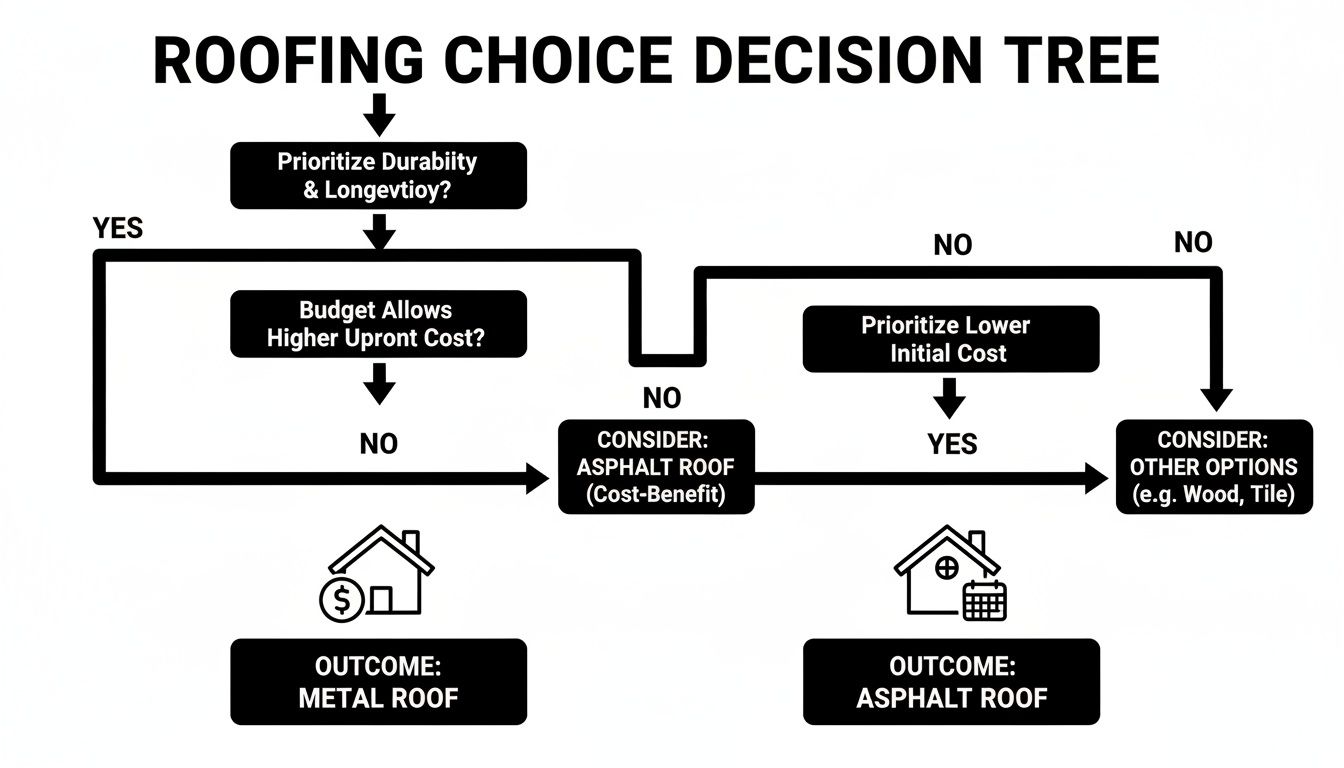
As you can see, the debate between metal and asphalt often hinges on your financial focus and your timeline.
A Quick Checklist For Your Decision
To make it even clearer, let's break it down into two simple scenarios. See which one sounds more like you.
Choose an asphalt shingle roof if:
- Your biggest factor is the initial upfront cost. Asphalt is significantly more affordable to install, which can free up cash for other projects around the house.
- You think you might move within the next 10-15 years. You simply won't be in the home long enough to get the full financial benefit from a metal roof's incredible lifespan.
- You love a classic, traditional look that fits in seamlessly with just about any neighborhood or home style.
Choose a metal roof if:
- You're playing the long game and want the lowest long-term cost. A metal roof is a buy-it-once investment that pays you back by never needing a costly replacement.
- You're in your "forever home." With a lifespan of 40-70+ years, you’ll probably never have to think about your roof again.
- Getting the best energy efficiency and boosting your home's resale value are top priorities. A metal roof delivers real savings on your cooling bills and an excellent return on investment at sale time.
Think of it this way: An asphalt roof prioritizes saving money now. A metal roof prioritizes saving money over a lifetime.
Now you have the information to make a confident choice. The next step is to talk it over with a pro who can look at your specific home, discuss your goals, and give you a detailed estimate. A trusted expert can help you finalize the perfect roofing solution for your needs.
Frequently Asked Questions About Roofing Choices
After weighing the pros and cons, homeowners often have a few specific, nagging questions left. We hear them all the time. Let's clear up some of the most common concerns that come up when you're deciding between metal and asphalt.
Can You Install A Metal Roof Over Existing Shingles?
We get this question a lot, and the short answer is yes, you often can. Putting a new metal roof directly over a single layer of existing asphalt shingles—a process known as a "roof-over"—can save you a significant amount on the cost of tearing off the old roof and hauling it away.
But—and this is a big but—it’s not a given. This should only be done after a thorough professional inspection. Before we'd ever recommend it, our crew needs to confirm two critical things:
- Structural Integrity: Is your roof deck solid? It has to be strong enough to handle the combined weight of both roofing materials without any issues.
- Moisture Check: There can be absolutely no hidden leaks or trapped moisture. Covering up a damp, rotting deck is a recipe for disaster, leading to mold and serious structural damage.
We also have to check local building codes, as some municipalities don't allow for roof-overs at all. It’s why getting an experienced contractor on-site is non-negotiable.
Which Roof Is More Difficult To Repair?
When it comes to small, isolated damage, asphalt shingles are definitely the winner for ease of repair. If a shingle gets cracked or torn off in a storm, a roofer can typically pop it off and slide a new one into place without much fuss. The job is usually quick and relatively inexpensive.
Repairing a metal roof is a different story. A minor scratch can be touched up with a special sealant to prevent any rust from forming. However, if a panel gets a deep gouge, a major dent, or a puncture, you can't just patch it up. The entire panel, which can be quite long, often needs to be replaced. That's a bigger job that requires specialized skills and equipment.
The real story, though, isn't about the difficulty of the repair; it's about the frequency. Metal is so incredibly durable that the need for these kinds of repairs is rare. Shingles, being more vulnerable to wind, hail, and simple aging, will need attention far more often over their lifespan.
Will A Metal Roof Affect My Cell Phone Signal?
This is one of the biggest myths out there, so let's put it to rest for good. A professionally installed, modern metal roof will not mess with your cell phone signal or your home's Wi-Fi.
Think about it: most signals enter your home through the walls and windows, not straight down through the roof. By the time a signal passes through the metal, your attic insulation, and the solid wood of your roof deck, the effect is no different than with any other roofing material. You can expect your service to be just as reliable as it was before.
Ready to get answers tailored to your home? The only way to truly know which roof is the right investment is to have a professional take a look. Contact us today to schedule your consultation.