
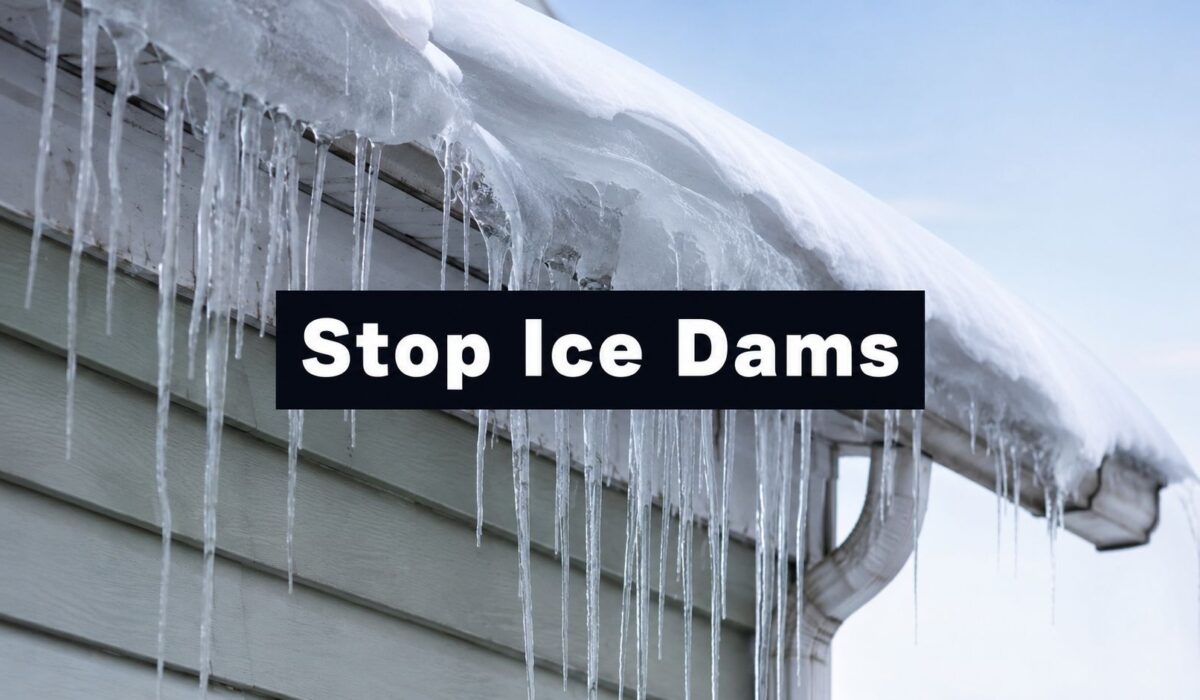
You wake up after a hard overnight freeze, look out at the roof, and see what seems like a winter postcard. Snow on the shingles. Long icicles hanging off the gutters. A thick band of ice hugging the eaves. In Pittsburgh, Sharon, and Erie, that scene is common enough that many homeowners shrug it off at first.
That's often the mistake.
A few icicles don't always mean trouble. But a true ice dam is more than decorative winter buildup. It's a ridge of ice that blocks melting snow from draining off the roof. Once water gets trapped behind that ridge, it can work its way under shingles and into the house. That's when a roof problem turns into a ceiling, insulation, drywall, trim, and gutter problem.
Pennsylvania weather makes this more likely than many homeowners realize. Erie gets hammered by lake-effect snow. Pittsburgh sees heavy snowfalls and repeated freeze-thaw stretches. Around Sharon and nearby communities, older homes often have attic insulation and ventilation issues that create the exact conditions ice dams need.
Table of Contents
- The Winter Warning Sign on Your Roof
- The Science Behind Ice Dam Formation
- How to Spot Ice Dams and Their Hidden Dangers
- Practical Prevention You Can Do This Fall
- Removing an Existing Ice Dam Safely
- Your Long-Term Solution with Penn Ohio Roofing
The Winter Warning Sign on Your Roof
In western Pennsylvania, the first sign usually isn't a ceiling stain. It's what you see from the driveway.
A homeowner in Sharon might notice thick icicles hanging in clusters from the gutter rather than neatly from the roof edge. In Pittsburgh, after a heavy snowfall and a cold snap, the lower edge of the roof can look like it has a frozen curb attached to it. Near Erie, lake-effect snow can pile up, then sit long enough for melting and refreezing to build a solid ridge along the eaves.
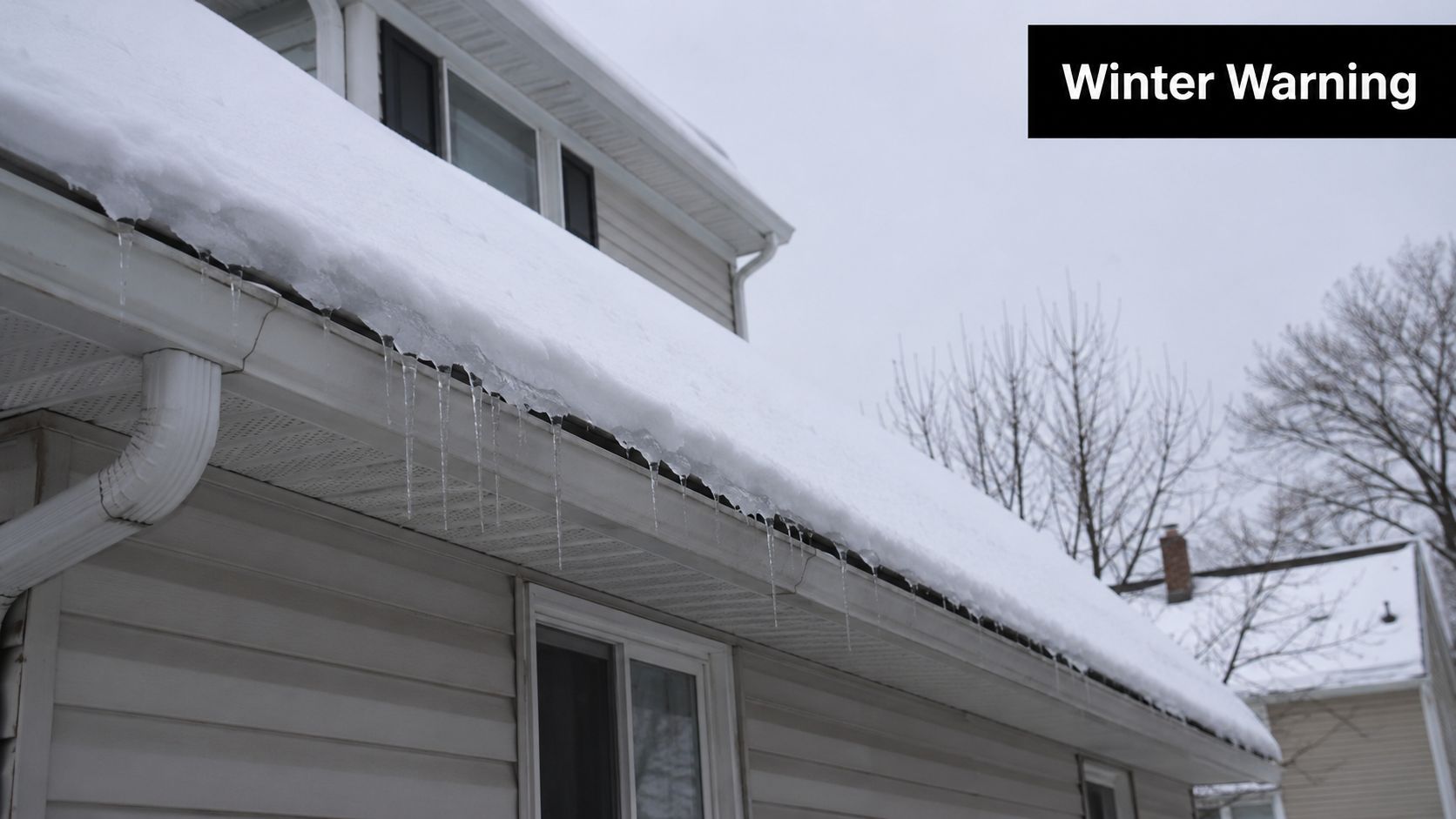
That ridge is the warning sign. What causes ice dams on roofs isn't just cold weather. If cold alone caused them, every snow-covered roof would have the same problem. Ice dams form when part of the roof gets warm enough to melt snow while the outer edge stays cold enough to freeze that water again.
Why homeowners often miss the problem
Normal winter icicles can happen even on a healthy roof. What raises concern is location, thickness, and repetition.
- Large ice buildup at the eaves: A thick lip of ice along the lower roof edge is different from a few scattered icicles.
- Icicles attached to gutters: When gutters are buried in ice, drainage is already being blocked.
- The same area every winter: Recurring buildup usually points to a house-condition issue, not bad luck.
Practical rule: If you see heavy icicles and a solid ice ridge together, treat it as a roof warning, not winter decoration.
Homeowners usually ask one question first. Why did this happen on my house? The answer almost always leads back to attic heat loss, insulation gaps, and poor airflow under the roof. That's also why fixing the symptom alone rarely solves the problem for good.
The Science Behind Ice Dam Formation
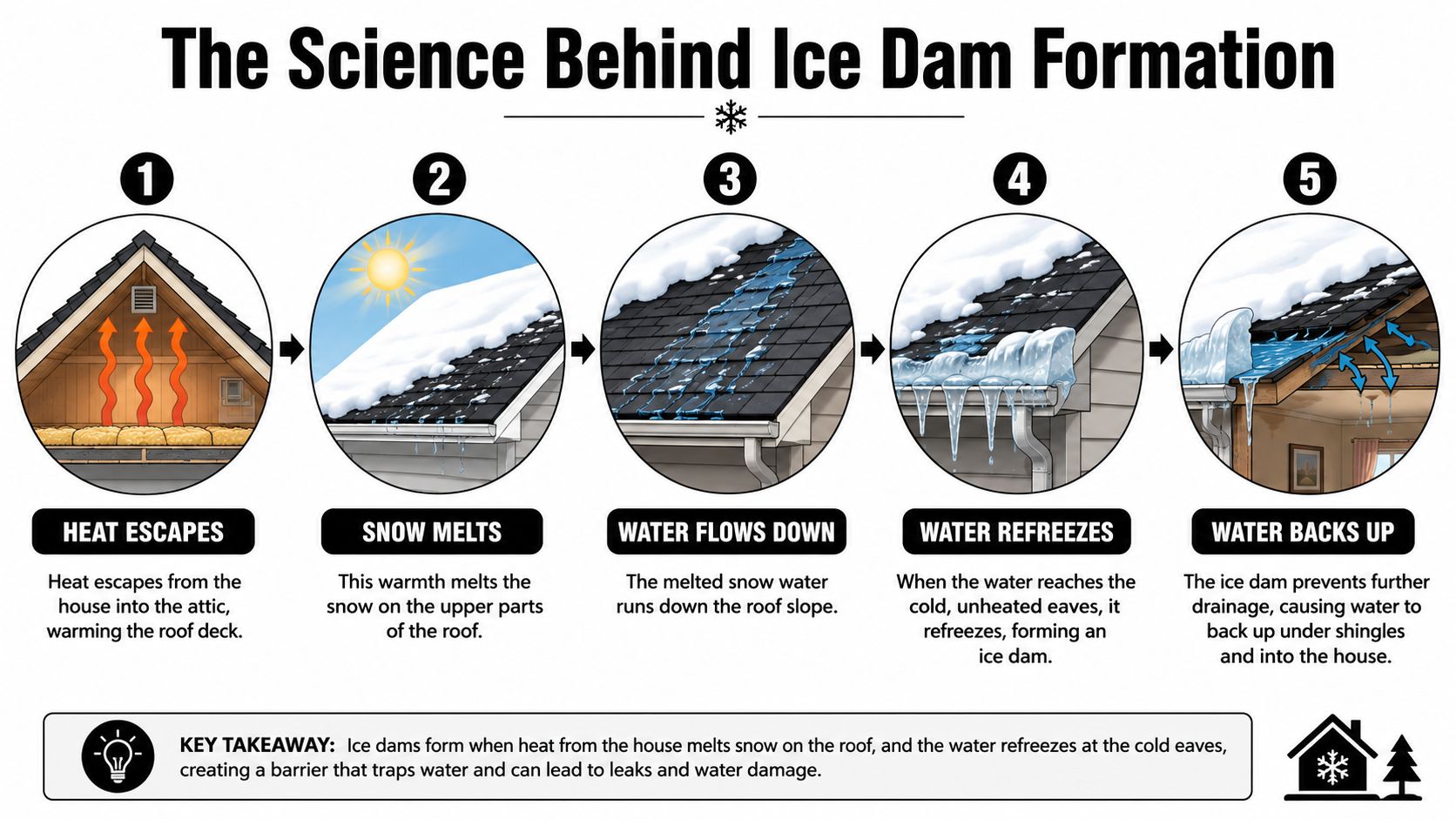
An ice dam works like a small glacier at the roof edge. Snow covers the roof. Heat from the house warms the roof deck unevenly. Snow melts higher up on the slope, runs downward as water, and then freezes when it reaches the colder overhang near the gutters. As that frozen edge grows, it blocks the next round of meltwater.
That backed-up water is what causes trouble.
Why the roof edge stays colder
The main roof area sits over heated living space and an attic that may be leaking warmth. The eaves usually extend beyond the exterior wall, so that section doesn't get the same heat from below. It stays colder.
That temperature difference matters more than people think. The upper roof can start melting snow from underneath even while the lower edge remains frozen solid. Water travels downhill, hits that colder edge, and turns back into ice. Then the cycle repeats.
Three ingredients usually show up together:
- Heat escaping into the attic
- Snow sitting on the roof long enough to melt
- Outdoor temperatures cold enough to refreeze runoff at the eaves
If one piece is missing, you're less likely to get a damaging ice dam. When all three line up, the roof edge becomes a trap.
The heat leak sources that start the cycle
Most ice dams start inside the house, not outside. The roof is reacting to indoor heat loss.
Common trouble spots include:
- Recessed light fixtures: Older can lights often leak warm air into the attic.
- Attic hatches and pull-down stairs: If they aren't weather-stripped and insulated, they act like open doors for heat.
- Bathroom fan housings and duct connections: Warm, moist air can escape where ducts aren't sealed well.
- HVAC ductwork in attic spaces: Leaky ducts dump heated air where it doesn't belong.
- Plumbing and wiring penetrations: Small openings around pipes and cables add up fast.
- Chimney chases and framed gaps: Larger bypasses can move a surprising amount of heat.
A lot of homeowners assume more shingles or a different gutter setup will stop the problem. Usually, they won't. An ice dam is often a symptom of a roof system and attic system that aren't working together. Better insulation helps slow heat transfer, but insulation alone isn't the whole answer if air leaks are still feeding warm air into the attic. Balanced ventilation matters too because it helps keep the roof deck colder and more consistent.
For homeowners looking into the attic side of the issue, Penn Ohio's page on roof insulation solutions is a useful place to compare the role insulation plays versus roofing materials.
A roof should stay cold in winter. When the roof warms from underneath, the snowpack becomes part of the problem.
That's the point many homeowners in Erie and Pittsburgh finally connect after dealing with the same ice ridge year after year. The ice at the edge isn't the cause. It's the result.
How to Spot Ice Dams and Their Hidden Dangers
You don't need to climb a ladder to spot the early signs. In fact, you shouldn't. Most of the useful clues are visible from the ground or inside the house.
What you can see from the ground
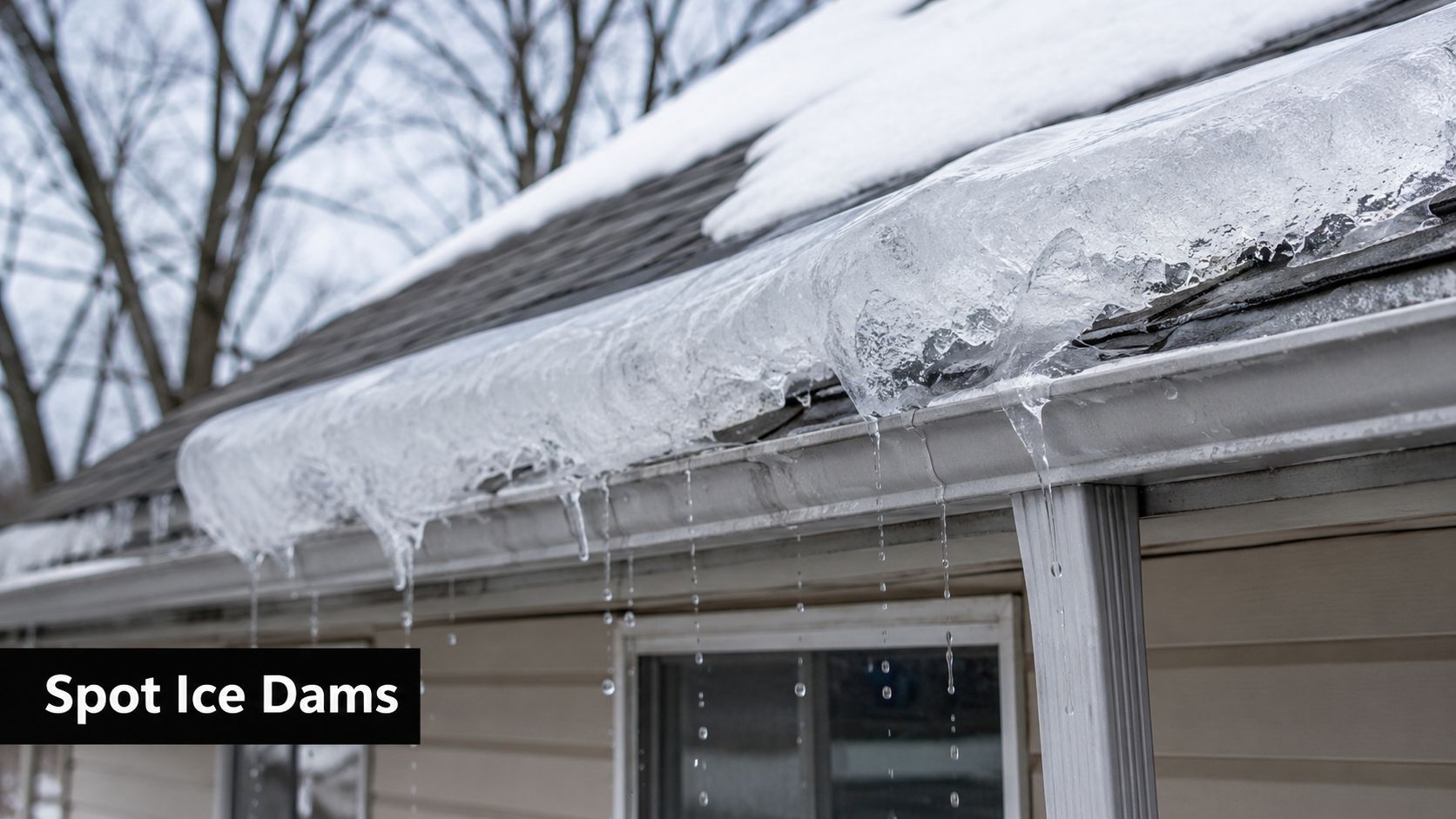
The obvious sign is a thick band of ice at the eaves. It often looks like the gutter has been buried in frozen runoff. Large icicles hanging from the gutter line are another clue, especially when they appear in clusters or keep rebuilding after you knock down the visible tips.
Watch for these patterns:
- Ice concentrated over one room or section: That can point to a localized heat leak in the attic above.
- Snow melting unevenly: Bare patches higher on the roof while snow remains elsewhere can signal warm roof areas.
- Sagging or stressed gutters: Heavy ice adds weight and can twist fasteners loose.
What may already be happening inside
The bigger risk is often hidden. Water trapped behind an ice dam doesn't always pour into the home right away. It can creep under shingles, soak roof decking, wet insulation, and stain drywall before you notice anything dramatic.
Inside the house, pay attention to:
- Ceiling stains: Especially near exterior walls.
- Peeling paint or swollen trim: Window heads and outside corners are common places.
- Damp attic insulation: Wet insulation loses performance and stays cold and heavy.
- Musty odors: Persistent moisture can feed mold growth in concealed areas.
If the ice is outside, the damage may already be inside.
The structure can take a hit too. Repeated wetting can rot roof decking, fascia boards, and wood around the eaves. Gutters may pull away from the house under the weight of ice. And when chunks break loose, they can damage landscaping, crush lower roof components, or fall where people walk.
If you're documenting your home for insurance purposes before winter problems get worse, Vorby's complete home inventory guide is a practical resource. It helps homeowners create records of finishes, belongings, and conditions that are easy to overlook until water damage forces the issue.
Practical Prevention You Can Do This Fall
The best ice dam work happens before the first long freeze. Once snow starts cycling through melt and refreeze, your options get narrower and more urgent.
The jobs most homeowners can handle
Start with the simple maintenance that keeps water moving.
- Clean gutters and downspouts: Leaves, shingle grit, and seed pods hold water at the eaves. Even though clogged gutters aren't the root cause of most ice dams, they make edge freezing worse.
- Check downspout discharge: Water needs a clear path away from the house. If downspouts back up, roof-edge ice tends to build faster.
- Trim overhanging branches: More winter sun and less debris help the roof dry and drain better.
- Use a roof rake after snowfall: Pull snow off the first few feet above the eaves while standing on the ground. That reduces the snow available to melt into the roof edge.
A roof rake works best early, before a thick frozen layer forms. Use a model with a long extension handle and a non-abrasive blade or rollers that help avoid scraping shingles. Pull downward in light passes. Don't jab upward under the shingle tabs.
There's also value in checking edge details before winter. If you want a homeowner-friendly explanation of flashing at the roof perimeter, this guide on how to install drip edge correctly shows why proper metal edge work matters for directing water into gutters instead of behind them.
The upgrades that need a trained eye
Some fixes look simple from the outside but aren't. If the same roof section ices up every winter, the issue is often above the ceiling line.
A proper correction usually includes a combination of:
- Air sealing attic bypasses: This comes before adding more insulation. If warm air is still leaking through ceiling openings, new insulation won't solve the whole problem.
- Improving attic insulation depth and coverage: Uneven insulation leaves hot spots. Compressed batts and thin areas around framing are common trouble spots.
- Correcting ventilation paths: Soffit vents need open intake paths, and ridge vents need a clear exhaust path. Blocked baffles and poorly balanced airflow can leave the roof deck unevenly cold.
- Reviewing eave and gutter conditions: Fascia, soffits, and drainage details all affect how water sheds at the roof edge.
For those edge components, Penn Ohio's page on gutters, soffits, and fascia services gives a useful overview of the parts that often get overlooked when homeowners focus only on shingles.
Field advice: If you keep removing snow from the same area every storm, stop assuming the snow is the main problem. The roof is telling you where the house is leaking heat.
One practical route is to have a roofing contractor assess the attic and roof as one system. Penn Ohio Roofing & Siding Group handles that kind of evaluation for homes in western Pennsylvania, where snow load, wind exposure, and freeze-thaw conditions vary from Sharon to Erie.
Removing an Existing Ice Dam Safely
Once an ice dam is established, homeowners often make things worse trying to attack the ice directly. That's where roofs get scarred, gutters get bent, and leaks show up faster.
What not to do
Don't use an axe, hatchet, hammer, pry bar, or chainsaw. Those methods can break shingles, puncture roofing, dent flashing, and tear up gutters. They also put you on an icy ladder under falling chunks of ice, which is a bad combination.
Don't throw rock salt onto the roof either. It can damage roofing materials, stain exterior surfaces, and harm nearby plants as runoff reaches the ground.
A temporary DIY option
If water is actively backing up and you need a short-term path for drainage, one homeowner method is to fill a pantyhose or nylon stocking with calcium chloride and lay it across the ice dam so it crosses the ridge vertically. That can melt a narrow channel through the dam and give trapped water a place to escape.
It's a stop-gap, not a cure. It won't fix the attic condition that created the problem, and it won't remove the full mass of ice.
Ice Dam Removal DIY vs Professional
| Method | Risk Level | Effectiveness | Best For |
|---|---|---|---|
| Chipping ice with hand tools | High | Low | Not recommended |
| Rock salt or harsh de-icers | High | Low | Not recommended |
| Roof rake from the ground | Moderate | Moderate | Fresh snow near the eaves before the dam gets severe |
| Calcium chloride in a nylon stocking | Moderate | Temporary | Creating a drainage channel during an active backup |
| Professional steam removal | Low | High | Established ice dams and roofs that need safe removal without shingle damage |
Steam removal is the method roofers prefer because it removes ice without the mechanical damage that comes from hacking and chopping. It's controlled, targeted, and far safer for shingles, flashing, and gutters than force.
If you're dealing with an active ice dam and need to understand the service option, Penn Ohio's page on professional ice dam removal explains how roof-safe removal is handled.
Steam addresses the ice you have. It does not fix the heat loss that formed it.
That distinction matters. Safe removal protects the roof now. The long-term fix happens in the attic and roof system.
Your Long-Term Solution with Penn Ohio Roofing
An ice dam is rarely a standalone roof event. It usually points to a house that's losing heat into the attic, a roof edge that stays too cold, or ventilation that isn't doing its job. Remove the ice without fixing those conditions, and there's a good chance the same section will freeze again the next winter.
That's why homeowners in Sharon, Pittsburgh, Erie, Hermitage, and the surrounding counties should think in two phases. First, stop the immediate threat if water is backing up. Then correct the roof and attic conditions that made the dam possible in the first place.

For many homes, that means a full assessment of insulation coverage, attic air leaks, ventilation flow, and the condition of the eaves, gutters, soffits, and fascia. It may also mean reviewing roof underlayment and flashing details if leaks have already occurred.
Penn Ohio Roofing brings more than 25 years of experience, holds the GAF Triple Excellence Award, and provides free, no-obligation estimates for homeowners who want to solve the problem instead of repeating emergency cleanup every winter. When ice dams keep coming back, that kind of whole-system review is what changes the outcome.
If you're seeing heavy icicles, thick ice at the eaves, or signs of water getting inside, contact Penn Ohio Roofing & Siding Group to schedule an inspection, discuss roof-safe removal, or get a no-obligation estimate for insulation, ventilation, and roof-edge improvements that help prevent ice dams from returning.