
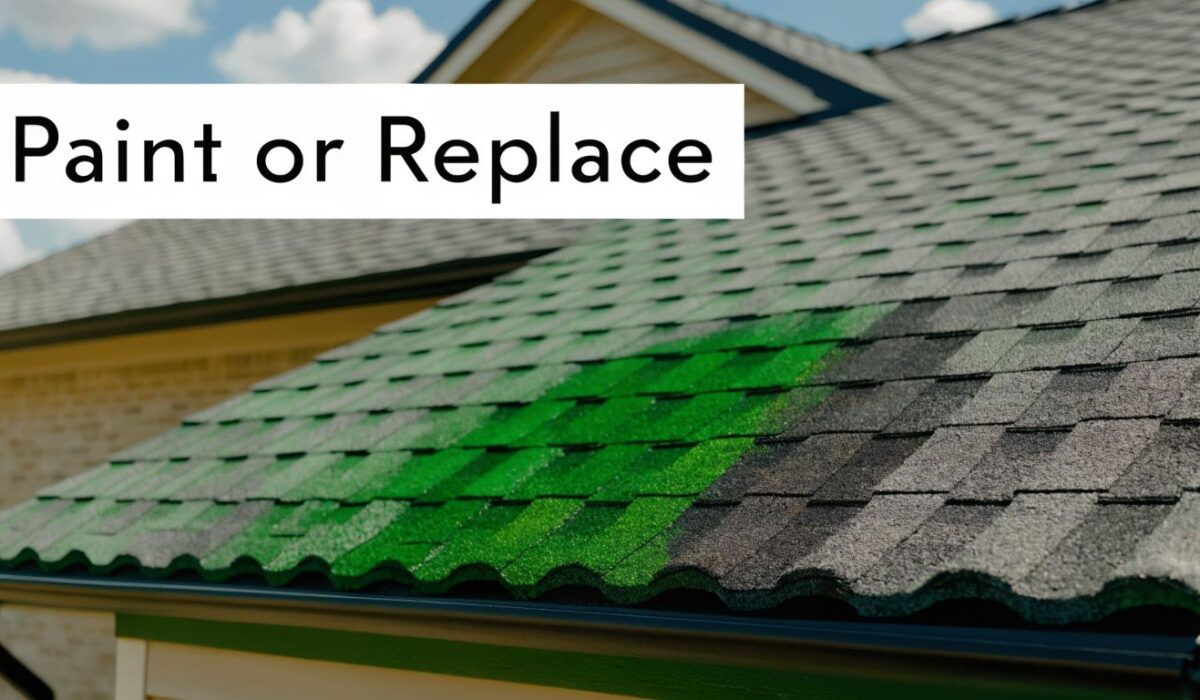
You can paint asphalt shingles, and homeowners are often drawn to it because painting about 2,000 square feet can cost around $1,000, while a full professional replacement often runs $8,700 to $22,000. But in practical roofing terms, it’s a high-risk, short-term cosmetic fix that we generally advise against for Western PA and Eastern OH, especially because painted roofs need touch-ups every 5 to 7 years and harsh local weather is hard on coatings.
If you're asking this, there's a good chance your roof still functions but looks tired. The color has faded, streaks are showing, and you're trying to improve curb appeal without stepping into full replacement pricing. That instinct makes sense.
The problem is that asphalt shingles weren’t designed to be treated like siding. A painted shingle roof can look better for a while, but that doesn’t mean it’s a good roofing decision. Around Hermitage, Mercer, Beaver, and Lawrence County, the local weather usually turns this from a cosmetic project into a durability problem.
Table of Contents
- The Short Answer So Can You Paint Shingles
- When Painting Shingles Might Seem Appealing
- Warning Signs Your Roof Needs Replacement Not Paint
- The Proper Process and Inherent Risks of Painting
- Why Our Local Climate Is a Deal-Breaker for Painted Shingles
- Make the Right Choice for Your Roof's Future
The Short Answer So Can You Paint Shingles
Yes, but that answer comes with a warning most homeowners don’t hear early enough. Asphalt shingles can be coated, but that doesn’t make painting them a standard or low-risk roofing solution.
If your roof is structurally sound and the issue is mostly appearance, painting can seem like a shortcut. The big issue is what happens after the coating goes on. Applying coatings can void warranties from major brands like GAF and IKO because the coating can trap moisture and interfere with how the shingles are designed to shed water, which can lead to premature failure, as noted in this breakdown of shingle paint risks and application practices.
That’s the part many homeowners miss. A shingle roof is a water-shedding system. Once you alter the surface, you may change how it dries, how it breathes, and how it handles seasonal movement.
Practical rule: If the roof has any active damage, painting is the wrong fix. If the roof is in decent condition, painting is still a gamble, not a standard upgrade.
A good-looking result in the first season doesn’t prove long-term performance. It only proves the roof looks better right now. On asphalt shingles, those are two very different things.
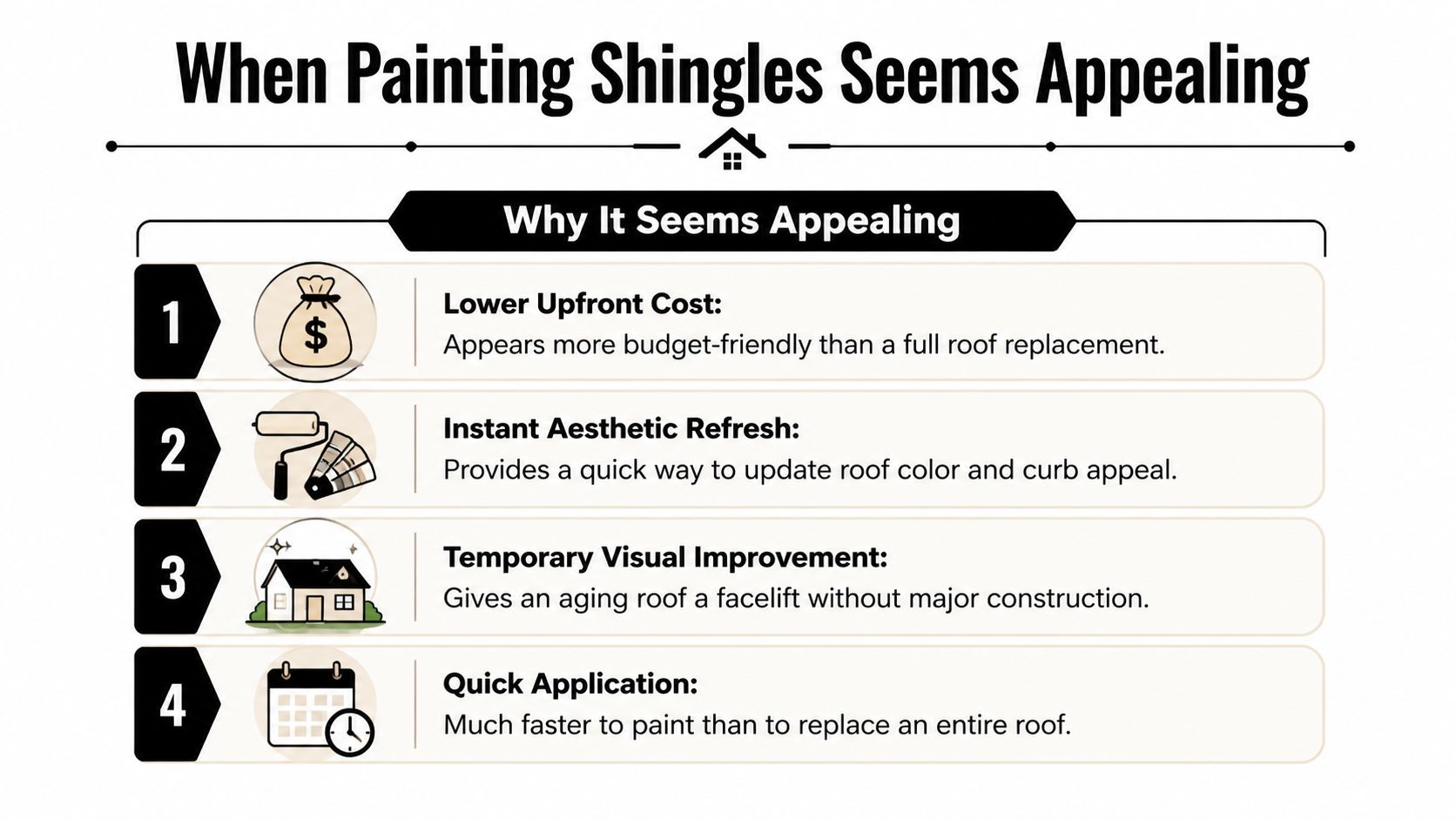
When Painting Shingles Might Seem Appealing
The appeal is easy to understand. If you can avoid a full tear-off and still make the roof look newer, that feels like a win.
Homeowners might spend around $1,000 to paint about 2,000 square feet of shingles, while a professional replacement typically ranges from $8,700 to $22,000, according to Angi’s cost comparison for painting versus replacing shingles. That same source notes the painted surface usually needs touch-ups every 5 to 7 years.
The narrow case where it can make sense
Painting is usually most tempting when the roof still has serviceable life left, but the appearance has dropped off. That often means:
- The shingles are intact: No widespread curling, cracking, or exposed substrate.
- The issue is visual: Fading, discoloration, algae staining, or a dated color.
- The owner needs time: They want to postpone replacement while planning a larger exterior project.
- The goal is cosmetic: They understand they are buying appearance, not resetting the roof’s lifespan.
That last point matters. Painting can change color and curb appeal. It does not rebuild worn shingles or reverse aging.
Why the math looks better upfront than it does later
The upfront savings are real. The long-term value is less convincing once maintenance enters the picture. A painted roof needs monitoring, touch-ups, and careful expectations.
Here’s the practical comparison:
| Option | Upfront cost | What you get | Ongoing reality |
|---|---|---|---|
| Paint shingles | About $1,000 for 2,000 sq. ft. | Cosmetic refresh | Touch-ups every 5 to 7 years |
| Replace roof | $8,700 to $22,000 | New roofing system | Higher upfront investment, but not a coating maintenance cycle |
The table makes the temptation obvious. If you’re trying to improve appearance on a tight budget, painting looks like a shortcut.
A painted roof can be a temporary bridge for the right roof in the right condition. It is not a substitute for a failing roof, and it is rarely the best long-term decision in a climate that stresses coatings.
That’s why homeowners need to separate two questions. First, can you paint asphalt shingles? Technically, yes. Second, should you paint your specific roof? That answer depends on roof condition, local weather, and your tolerance for risk.
Warning Signs Your Roof Needs Replacement Not Paint
If the roof has damage, paint won’t solve it. It will only make it harder to judge what’s happening underneath.
Damage paint will only hide
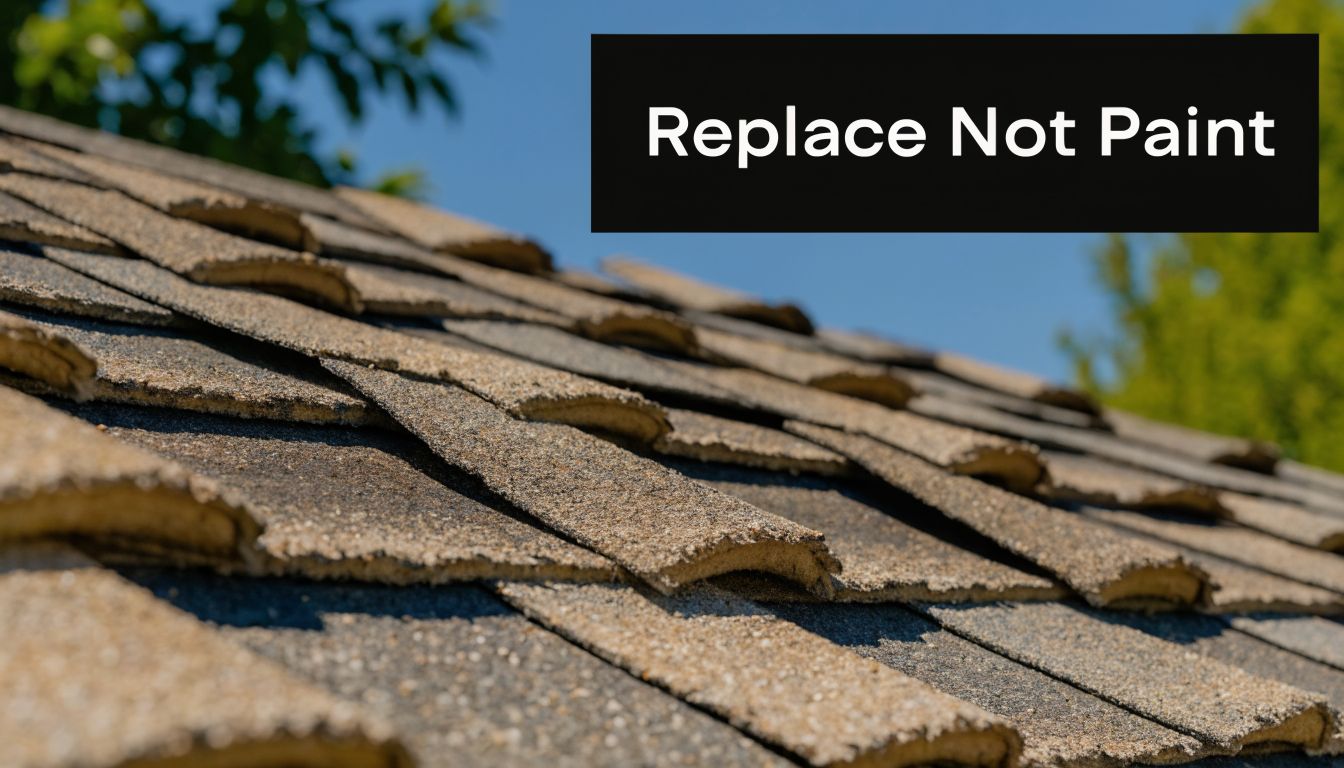
Some roofs are disqualified immediately. If you see these conditions, replacement or repair belongs in the conversation before any coating does:
- Curling or cupping shingles: These shingles are aging out or reacting to heat and moisture issues.
- Cracked tabs: Paint cannot bond away brittleness.
- Heavy granule loss: Bald-looking spots mean the protective surface is already wearing off.
- Soft decking or attic moisture signs: A coating over a moisture problem can make things worse.
- Patchy prior repairs: Mixed surfaces often create uneven adhesion and appearance.
Paint is not a structural repair. It doesn’t restore lost granules, flatten curled edges, or correct ventilation problems. It only covers what you can already see.
If you want a broader homeowner checklist, this guide on when to replace your roof is useful because it focuses on visible aging signs rather than cosmetic fixes alone.
A simple homeowner check from the ground
You don’t need to climb onto the roof to spot some of the biggest red flags. Start with binoculars and a dry day.
Look for areas where shingle lines no longer lie flat. Check valleys and lower sections for dark streaking mixed with wear. After a windy day, glance around downspouts and gutters for roofing granules.
For a local checklist focused on exterior trouble spots, these signs of roof damage are worth reviewing before you spend money on paint.
If the roof already has age-related failure, coating it is like painting over rot on a window frame. It changes the look, not the condition.
A roof that needs replacement usually tells on itself. The mistake is assuming a cleaner color means a healthier roof.
The Proper Process and Inherent Risks of Painting
Many homeowners think this is a basic paint job with a roller and a free weekend. It isn’t. The process is much closer to a specialized coating application, and mistakes show up fast.
What a real coating job requires
Proper application requires 100% acrylic latex or elastomeric coating, applied with an airless sprayer at 2000 to 3000 PSI after a bonding primer has been used. If the wrong materials or prep are used, the coating can delaminate or trap moisture, leading to wood rot.
That technical sequence matters because asphalt shingles are not a friendly surface for ordinary paint. They need to be dry, clean, and free of moss, dirt, and debris. If prep is rushed, the coating may not bond properly.
A proper job typically includes these steps:
Inspection first
The roof must be checked for curling, cracking, soft spots, exposed fasteners, and deck concerns. If those are present, stop there.Cleaning and drying
Surface contamination has to be removed fully. A roof that still holds moisture under debris is a bad candidate.Bonding primer application
Without a compatible primer, coatings are far more likely to fail on asphalt-based surfaces.Spray application in controlled conditions
The coating needs even coverage. Roof geometry, slope, and weather all affect results.
Why this goes wrong so often
Most failures come from one of three causes. The roof was already too worn, the prep was incomplete, or the wrong coating was used.
Acrylic latex and elastomeric products are not interchangeable with standard exterior paint. They are formulated for flexibility and weather exposure. Even then, success depends on the roof moving, drying, and shedding water the way the system expects.
Here’s where people get in trouble:
- DIY surface prep is often incomplete: Moss in shadowed areas, embedded dirt, and residual moisture all interfere with bonding.
- Ordinary paint gets used by mistake: House paint is cheaper and easier to find, but it is the wrong product for this surface.
- The roof gets treated as a cosmetic surface: Roofing materials move, expand, and drain differently than siding.
Roofing coatings fail from the bottom up as often as they fail from the top down. If moisture gets trapped, the problem is no longer just appearance.
The labor also isn’t simple. Roof pitch, overspray control, weather windows, fall risk, and uniform application all matter. Once a coating starts peeling or blistering, the fix is usually far uglier than the original faded shingles.
Why Our Local Climate Is a Deal-Breaker for Painted Shingles
A painted shingle roof might hold up better in a mild, dry climate. Hermitage and the surrounding counties are not that climate.
Western PA and Eastern OH are rough on coatings
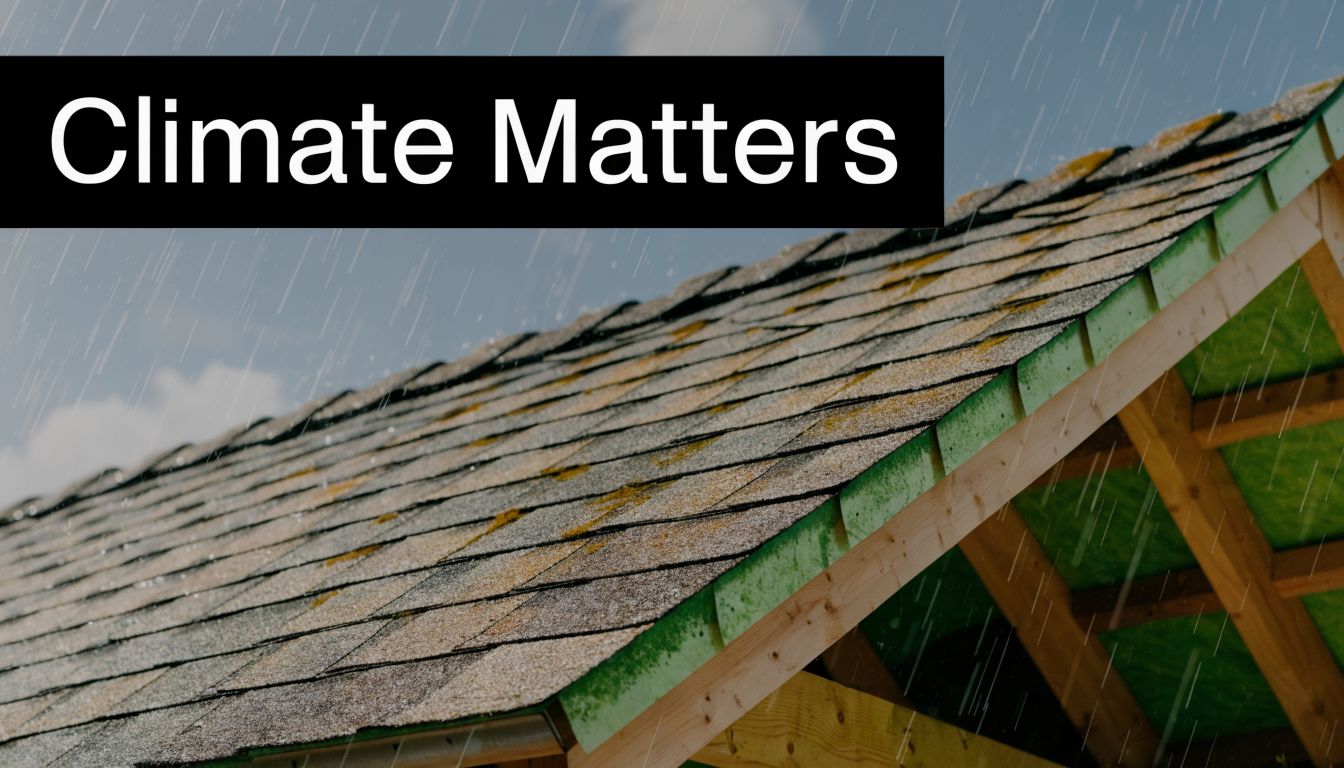
In harsh-weather areas like Northeast Ohio, where freeze-thaw cycles are similar to the Hermitage area, most roofing professionals do not recommend painting asphalt shingles because painted roofs often fail to last more than a few years due to accelerated deterioration, according to this explanation of why painted shingles perform poorly in Northeast Ohio.
That lines up with what matters here locally. Roofs in Mercer, Beaver, and Lawrence counties deal with wet stretches, winter swings, humidity, snow load, and summer sun. Those conditions put stress on any coating film laid over asphalt shingles.
The trouble is movement. Shingles expand and contract. Moisture shows up where shade lingers. Ice and repeated temperature changes test every weak point in adhesion. A coating that looks solid in a mild spell can start showing its limits after a tough seasonal cycle.
Why exterior paint timing advice does not translate to roofs
Homeowners sometimes compare this to other painting projects around the house. That’s understandable, especially if they’ve looked at advice like Wheeler Painting on exterior house painting for siding and trim work. The difference is that a roof is a constantly exposed water-shedding assembly, not just an exterior finish surface.
Roof slope, drainage paths, shingle movement, and underside ventilation all change the equation. Even if the weather feels right for painting a wall, that doesn’t mean it’s right for coating shingles.
If you're weighing longer-term material choices for this region instead of short-term coatings, it helps to compare types of roofing for homes based on local weather demands rather than appearance alone.
Make the Right Choice for Your Roof's Future
If you’re still asking can you paint asphalt shingles, the practical answer is this. You can, but for most homeowners in this region, you shouldn’t.
Painting offers one clear benefit. It changes the look for less money upfront. Against that, you have warranty concerns, the risk of trapped moisture, and a coating that’s working against a climate known for freeze-thaw stress and damp conditions. That’s a poor trade for a roof that protects your whole house.
A better move is getting an honest condition assessment before spending money on cosmetics. If the roof still has life, there may be smarter ways to maintain it. If it’s nearing the end, knowing the likely cost to replace asphalt shingles gives you a much more useful planning number than guessing with paint.
For a thoughtful outside perspective on how experienced roofers think about long-term decisions, this profile of Heath Redman, roofing expert is a worthwhile read.
If you want a straight answer about whether your roof is a candidate for repair, replacement, or more years of service, contact Penn Ohio Roofing & Siding Group. They offer a free, honest assessment for homeowners in Hermitage and throughout Mercer, Beaver, and Lawrence counties, so you can make the right decision before a cosmetic shortcut turns into a bigger roofing problem.