

Your roof does more than keep rain out. It protects framing, insulation, finishes, and everything underneath it. But here's the gap most homeowners miss. A roof doesn't usually fail all at once. It starts with small, easy-to-overlook issues like lifted shingles, clogged gutters, loose flashing, or standing water that sits too long after a storm.
That's why a smart roof maintenance checklist isn't just a list of things to glance at once a year. In Pennsylvania, timing matters. Homes in Sharon deal with tree debris and freeze-thaw cycles. Pittsburgh roofs take on humid summers, storms, and urban grime. Erie homes face lake-effect snow, wind, and heavy seasonal moisture. If you wait until you see a ceiling stain, you're already late.
A proactive roof maintenance program typically costs about 1% to 3% of total roof value per year, and industry best practices call for at least two formal inspections annually, usually in spring and fall, plus a post-storm inspection after significant weather events, according to NRCIA guidance on why roof maintenance matters. That's a lot cheaper and easier than chasing emergency leaks.
If you want a broader seasonal routine for the rest of the house too, this Bulls Eye Repair home care advice is a helpful companion. For the roof itself, start with the checklist below and use it by frequency, not guesswork.
Table of Contents
- 1. Inspect Shingles and Roof Surface
- 2. Clean Gutters and Downspouts
- 3. Check and Seal Flashing
- 4. Clear Debris and Remove Moss/Algae
- 5. Inspect and Maintain Attic Ventilation
- 6. Inspect Roof Valleys and Water Flow Paths
- 7. Evaluate Roof Slope and Structural Integrity
- 8. Document Maintenance and Create Long-Term Plans
- 8-Point Roof Maintenance Comparison
- Your Roof's Health Is Our Priority
1. Inspect Shingles and Roof Surface
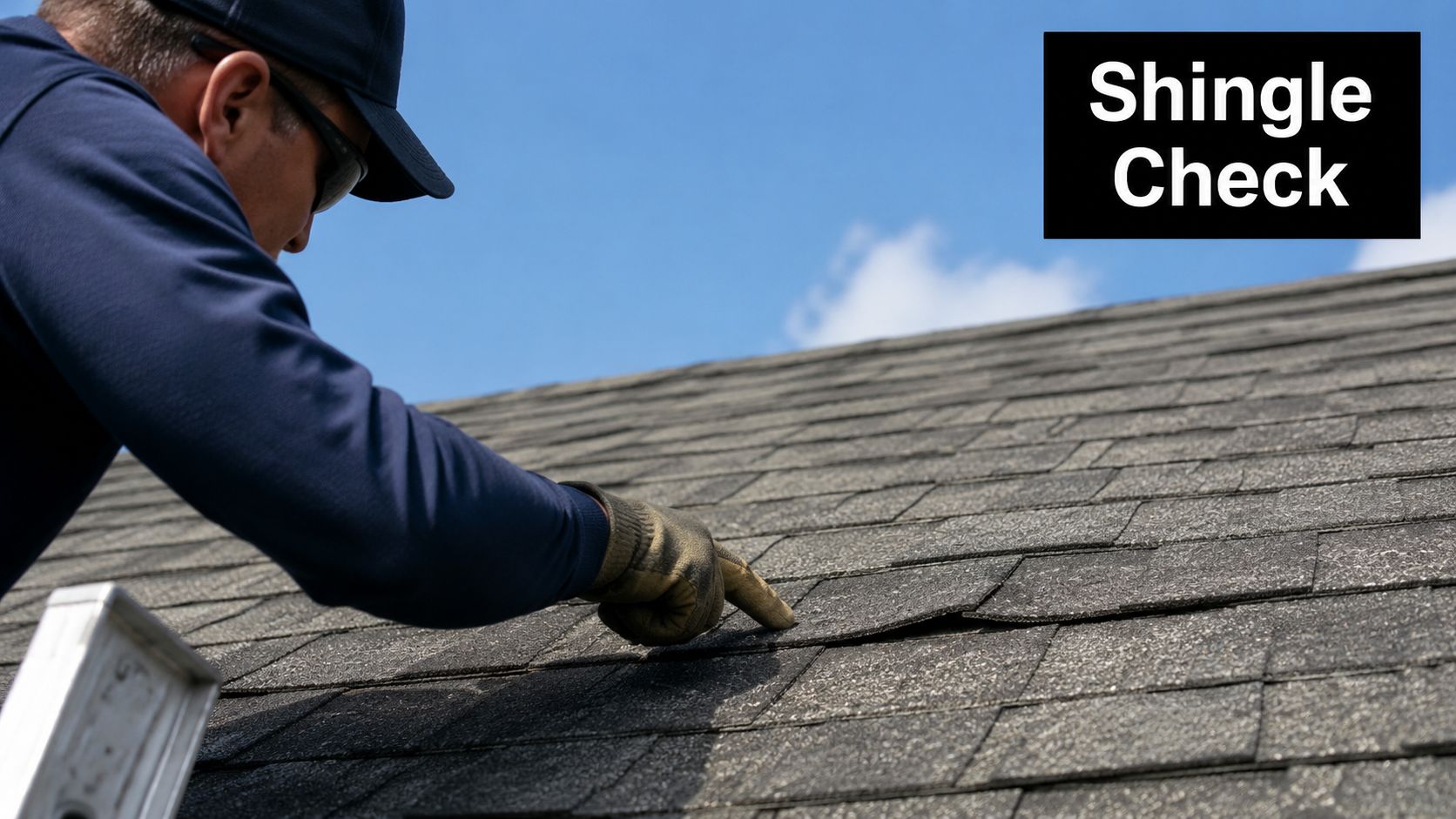
The first pass is simple. Look for anything that breaks the roof's outer skin. Missing shingles, cracked tabs, curled edges, exposed nails, worn spots, and bare patches all deserve attention before the next hard rain.
In Sharon, Pittsburgh, and Erie, I'd make this a spring and fall habit. Winter can loosen shingles, and summer heat can bake older roofs until corners lift. If you've had a wind event, hail, or heavy snow load, inspect again. That post-storm check isn't optional if you want to catch hidden damage early.
Start from the ground and the attic
A good homeowner inspection starts in two places: outside with binoculars, then inside the attic. Outside, look for color changes, uneven lines, dark patches, and shingles that don't sit flat. Inside, check rafters and sheathing for water stains, dark streaks, or damp insulation.
For a close evaluation, a professional roof inspection from Penn Ohio Roofing & Siding Group makes sense when the roof is steep, high, older, or showing mixed signs of wear. That's especially true on homes with multiple roof planes or areas you can't safely see from a ladder.
- Check lifted corners: Wind often starts at edges and tabs before homeowners notice damage from the yard.
- Look for granules: If asphalt shingle grit is collecting in gutters, the roof may be aging unevenly.
- Photograph trouble spots: Date-stamped photos help with warranties, insurance conversations, and comparing wear over time.
Practical rule: Don't walk a wet, icy, or visibly soft roof. A photo from the ground is better than a fall.
A common Pennsylvania scenario is the homeowner in Hermitage who spots a few lifted shingles during a spring walkaround, then finds a faint attic stain nearby. Catching that early usually means a focused repair. Ignoring it often leads to sheathing damage and a much bigger job.
2. Clean Gutters and Downspouts
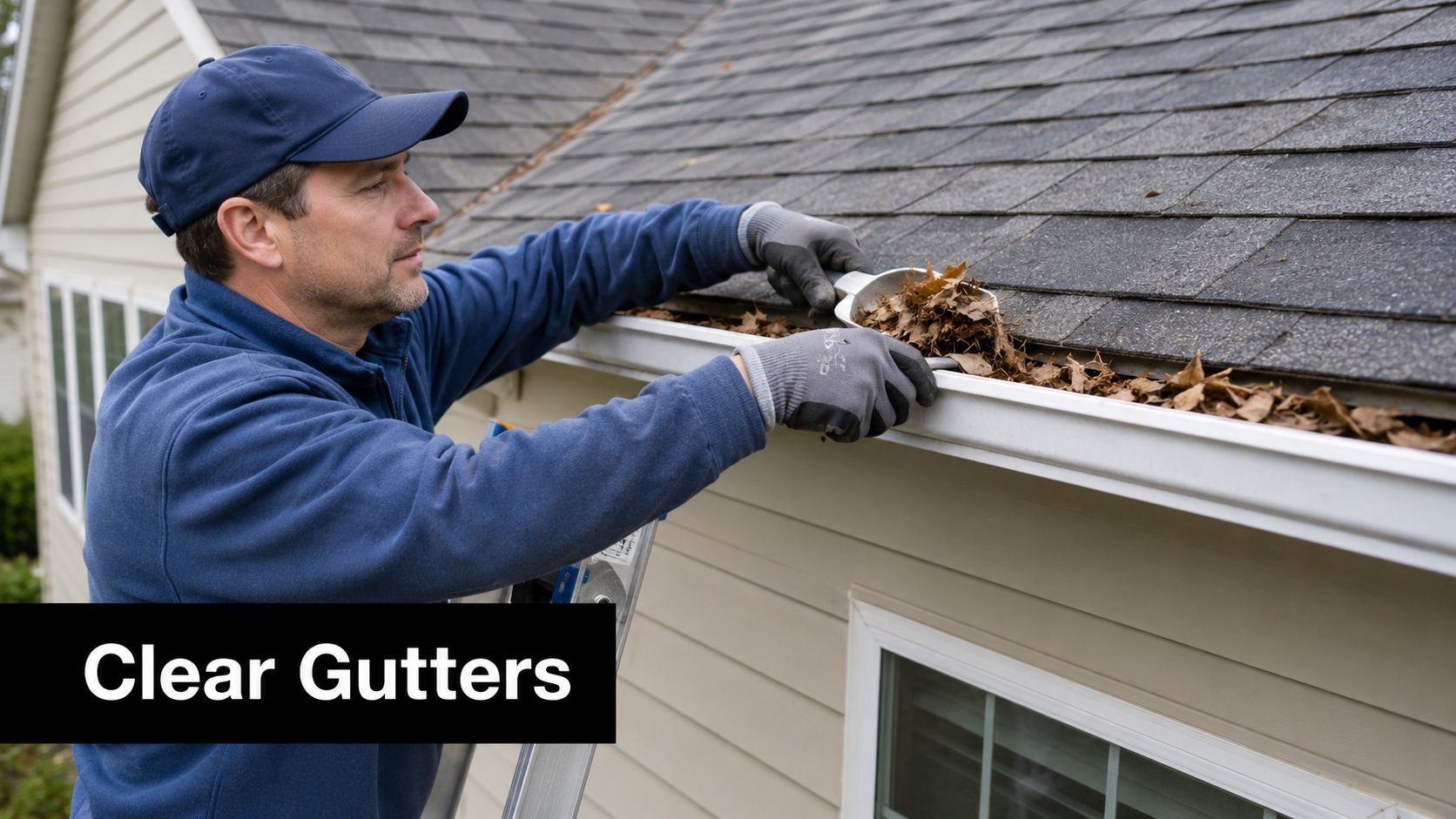
A lot of roof problems are really drainage problems. Water should leave the roof quickly and move away from the house. When gutters are packed with leaves, seed pods, roofing granules, or sludge, water backs up at the eaves and starts finding alternate paths.
This is one of the few roof maintenance checklist tasks many homeowners can do themselves if the ladder setup is safe and the home is one story. In neighborhoods around Pittsburgh and Erie with mature trees, clogged gutters are one of the most common reasons otherwise decent roofs start leaking at the edges.
Water needs a clear exit path
Clean the gutters at least in spring and fall, then again after heavy storms if nearby trees are dropping debris. Flush the downspouts with a hose and watch where the water ends up. If it dumps right at the foundation, you've solved only half the problem.
If runoff is pooling near the house, a downspout extension installation service can help move water farther away and protect both roof edge and foundation. For homes with guards, this guide on Sparkle Tech Window Washing gutter care is useful because guards reduce buildup, but they don't make gutters maintenance-free.
- Clear elbows and outlets: The gutter may look open while the downspout neck is packed solid.
- Watch for seam drips: Leaking joints and detached hangers mean the system is failing under load.
- Check after leaf drop: Sharon homes with overhanging trees often need extra attention in late fall.
A practical example is the Beaver County homeowner who cleans gutters before winter and avoids the ice buildup that starts when trapped water refreezes at the eaves. What doesn't work is cleaning only when you can see plants growing in the gutters. By then, overflow has usually already stained fascia or wetted the roof edge.
3. Check and Seal Flashing
If shingles are the skin, flashing is the waterproof detailing. It protects the joints around chimneys, plumbing vents, skylights, dormers, sidewalls, and valleys. These transition points are where a lot of leaks begin, even when the field shingles still look decent.
Flashing problems usually show up as separation, rust, cracked sealant, or nails working loose. In Erie and Pittsburgh, repeated wetting, winter movement, and temperature swings can open small gaps that let water in behind the visible roofing material.
Where leaks usually start
Check every penetration during each roof inspection, not just once a year. A chimney may look fine from the yard, but the counterflashing can lift slightly, or sealant can crack where metal meets masonry. Around vent boots, the rubber collar can dry out long before the rest of the roof is ready for replacement.
What works is targeted repair with roofing-grade materials and proper metal replacement when needed. What doesn't work is smearing generic caulk over everything and hoping it lasts. Patch-over-patch repairs usually fail because they don't address movement or corrosion underneath.
Small flashing gaps can send water a long way before it shows up inside. The ceiling stain often appears far from the actual entry point.
A good Pennsylvania example is a Lawrence County home with a valley and chimney intersection that leaks only during wind-driven rain. The homeowner may think the shingles are bad, but the problem is often flashing detail. That's why I tell people to pay special attention to any area where roof surfaces meet walls or penetrations. Those spots age faster than open shingle runs.
4. Clear Debris and Remove Moss/Algae
Leaves, twigs, and dirt don't just make a roof look neglected. They hold moisture against the surface and slow drainage. On shaded slopes, that trapped moisture creates the ideal environment for moss and algae to take hold.
That matters in western Pennsylvania. Homes in Sharon, Pittsburgh, and Erie often have mature trees, humid weather, and shaded roof sections that stay damp longer than sunny slopes. A roof can be sound on one side and steadily deteriorating on the other.
What to remove and what to leave alone
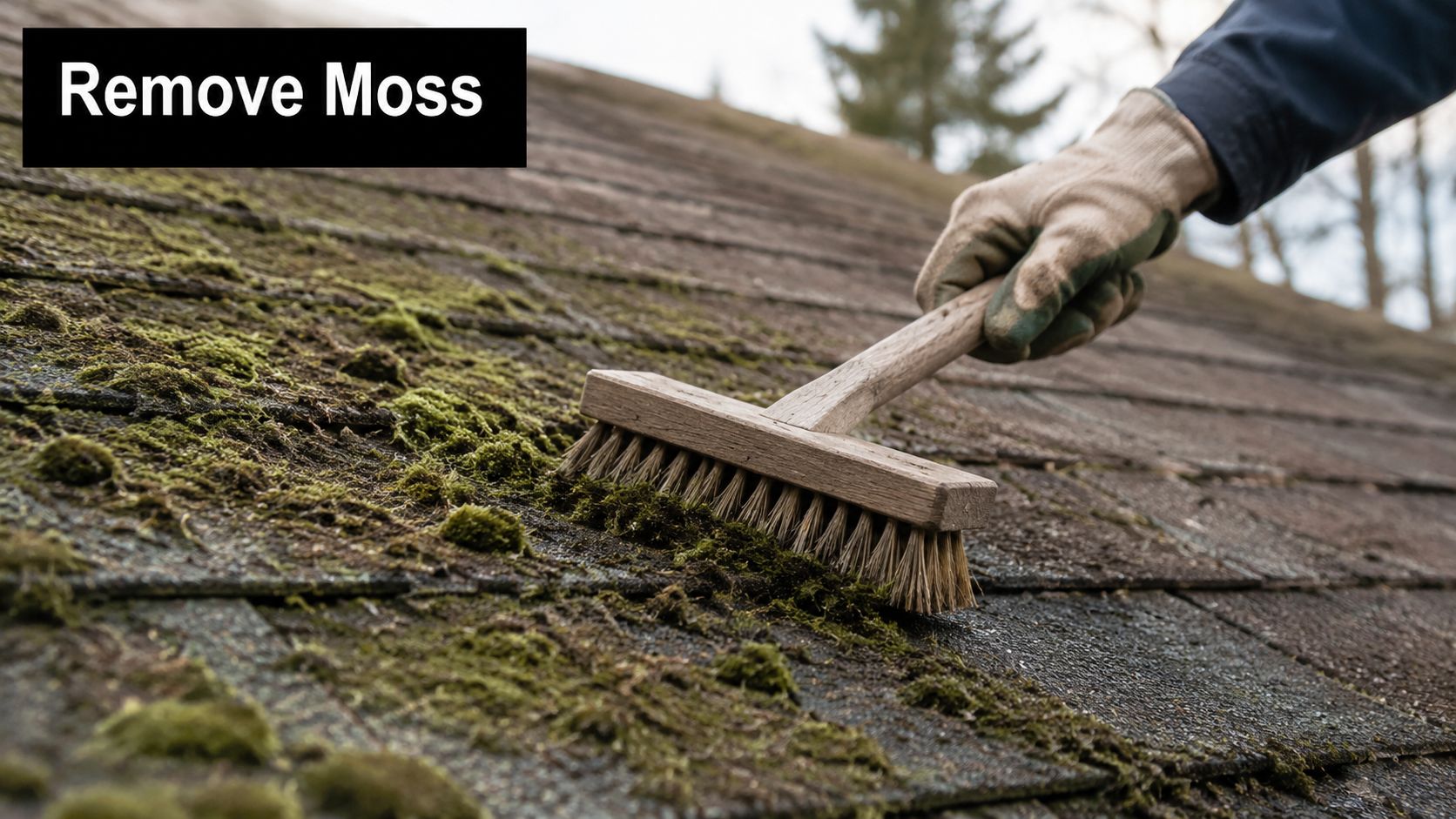
Remove loose debris by hand, with a leaf blower used carefully from a safe position, or with a soft-bristle brush. Moss should be treated gently. Aggressive scraping and pressure washing can strip granules and shorten the life of asphalt shingles faster than the moss itself.
For Pennsylvania homes, tree limbs should be kept at least 10 feet from the roof surface according to this spring roof maintenance guidance for West Chester homeowners. That clearance helps reduce scraping damage and cuts down on debris and pest access.
- Trim for airflow: Shade plus dampness is what keeps moss returning.
- Use soft cleaning methods: Pressure washers can do expensive damage fast.
- Check shaded slopes first: North-facing sections often show trouble before the sunny side does.
A common Erie scenario is a roof over a detached garage that sits under heavy tree cover. The owner sees black streaks and moss but waits because there's no leak yet. That wait usually makes cleanup harder and can leave the shingle surface weakened. Preventive cleaning and better branch clearance work far better than repeated harsh washing.
5. Inspect and Maintain Attic Ventilation
Some roof problems start below the shingles, not above them. If the attic can't move heat and moisture out, the roof system gets stressed from the underside. Sheathing stays damp, insulation loses effectiveness, and shingles can age unevenly.
Homeowners often miss this because the roof looks acceptable from the street. Then winter brings frost in the attic, summer brings trapped heat, and the house starts showing signs like musty smells or uneven indoor temperatures.
Ventilation problems show up indoors first
Check that soffit vents aren't blocked by insulation and that ridge, box, or gable vents are open and intact. Bathroom fans and dryer vents should discharge outside, not into the attic. If they vent indoors, moisture collects where you don't want it.
Ice dams are one of the clearest warning signs that attic heat and ventilation need attention, especially in Pennsylvania winters. If that's happening at your home, this explanation of what causes ice dams on roofs is worth reading before next winter arrives.
What works is balancing insulation, air sealing, and ventilation together. What doesn't work is adding one vent type at random and assuming the problem is solved. On homes in Pittsburgh and Hermitage, I've seen attic issues continue because soffits were still blocked even after new roof vents were installed.
Field note: If you smell damp attic air or see rusty nail tips poking through the roof deck, ventilation deserves a closer look.
This is one area where DIY observation is fine, but full correction often needs a roofer who understands how the entire roof system breathes.
6. Inspect Roof Valleys and Water Flow Paths
Roof valleys do a lot of work. They collect runoff from two roof planes and send it downslope fast. That also makes them a magnet for leaves, grit, branches, and any defect that interrupts flow.
On complex roofs in Pittsburgh neighborhoods, valleys often tell you where future leaks will start. If debris piles there, water slows down, backs up, and pushes under roofing materials that were designed to shed moving water, not standing water.
Watch how water moves
After a storm, look at the valley lines from the ground or from a safe ladder position. If debris is lodged there, remove it promptly. If staining, exposed underlayment, metal damage, or uneven wear appears along the valley, it's time for a closer inspection.
For flat and low-slope roofs, ponding deserves special attention. Water that remains for more than 48 hours after rainfall is a key threshold noted in EMC Insurance roof maintenance guidance. That same guidance explains why prolonged standing water matters, and verified industry material notes that it can reduce membrane life by up to 50% through thermal cycling and biological growth when ponding persists.
- Clear after storms: Valley blockages don't wait for your seasonal schedule.
- Watch the runoff pattern: Water should move cleanly toward gutters and drains.
- Take annual photos: Valley wear is easier to judge when you can compare year to year.
A Sharon homeowner with a steep roof and heavy leaf fall may need only basic debris clearing. A commercial property in Pittsburgh with multiple low-slope sections may need more frequent valley and flow-path checks, especially around rooftop equipment. Different roof designs fail in different ways, but poor drainage is a repeat offender on both.
7. Evaluate Roof Slope and Structural Integrity
Not every roof problem is a material problem. Sometimes the structure underneath has shifted, sagged, or settled enough to change how water moves. That's when you start seeing dips, uneven ridgelines, soft decking, or low spots that weren't there before.
Older homes around Hermitage and Pittsburgh deserve extra attention here. Freeze-thaw cycles, long-term moisture exposure, and past repair layers can all hide structural weakness until the roof starts telegraphing it through visible sagging.
When a low spot becomes a real problem
Walk the attic first. Look for cracked framing, dark water trails, soft sheathing, or daylight where it shouldn't be. Outside, scan the roofline from a distance. A straight line that suddenly dips or waves is worth taking seriously.
On flat roofs in Pennsylvania, a low area holding standing water is a critical red flag, and blistering, cracking, tears, or holes are primary signs of water damage that need prompt attention, according to PHP Systems/Design roof maintenance guidance. That kind of condition goes beyond routine housekeeping. It can signal membrane failure or substrate trouble.
What works is getting a professional assessment when you notice sagging or persistent low spots. What doesn't work is patching the surface while ignoring the framing or deck movement underneath. I've seen homeowners spend money twice because the leak was repaired but the drainage defect was left in place.
A realistic Erie example is the older garage roof that starts dipping after repeated winter loading and spring thaw. The owner may only notice occasional pooling at first. That's the time to act, before the deck softens further and the repair options narrow.
8. Document Maintenance and Create Long-Term Plans
The homeowners who stay ahead of roof costs aren't always the ones with the newest roofs. They're the ones who keep records. Photos, dates, invoices, inspection notes, and repair summaries make it easier to spot patterns and decide whether you're dealing with isolated wear or a roof that's entering a more expensive phase.
Documentation also helps when warranty questions, buyer requests, or insurance conversations come up. If you can show what was inspected, when it was repaired, and how the condition changed over time, decisions get easier.
Use active triage not a vague to-do list
A standard checklist tells you what to inspect. It often doesn't tell you how to rank what you find. That's where active triage matters. Separate findings into three buckets: repair now, monitor, and leave alone for the moment.
A homeowner in Pittsburgh might log one lifted shingle as a repair-now item, minor cosmetic streaking as monitor, and a stable older patch with no movement as leave alone. That's more useful than a generic list with ten unchecked boxes and no priority.
The cost side makes this even clearer. A market analysis states that the global roof maintenance services market was valued at $12.5 billion in 2025 and is projected to reach $18.7 billion by 2034 at a 5.5% compound annual growth rate. For owners, that same analysis reports proactive maintenance at 14 cents per square foot annually versus 25 cents per square foot for reactive repairs, with roof life extending from 13 years to 21 years when semi-annual inspections and upkeep are followed.
“Repair immediately, monitor, or ignore” is a better decision tool than a long checklist with no urgency ranking.
Use a simple folder structure. One folder for inspection photos, one for invoices, one for warranty paperwork, and one running note with dates. That works for a single-family home in Sharon just as well as it does for a commercial property in Erie.
8-Point Roof Maintenance Comparison
| Task | 🔄 Implementation Complexity | ⚡ Resource Requirements | 📊 Expected Outcomes | 💡 Ideal Use Cases | ⭐ Key Advantages |
|---|---|---|---|---|---|
| Inspect Shingles and Roof Surface | Low–Moderate; visual inspection, safe roof access | Ladder, PPE, camera; optional professional fee | Early detection of shingle damage; fewer leaks | Biannual checks; post-storm assessments | Prevents costly repairs; preserves warranty |
| Clean Gutters and Downspouts | Moderate; working at heights and manual clearing | Ladder, scoop, disposal; time or contractor | Restored drainage; reduced foundation/ice-dam risk | Fall/spring or after heavy leaf fall; tree-lined properties | Low-cost prevention; reduces water-related damage |
| Check and Seal Flashing | Moderate–High; precision sealing and repairs | Skilled labor, sealants/metal flashing; moderate cost | Sealed roof penetrations; stopped leak paths | Around chimneys, skylights, valleys; after storms | Protects vulnerable joints; cost-effective if early |
| Clear Debris and Remove Moss/Algae | Low–Moderate; careful cleaning to avoid shingle harm | Soft brushes, mild treatments, ladder; repeated work | Reduced moisture retention; improved curb appeal | Shaded or humid roofs; seasonal maintenance | Extends shingle life; minimizes biological damage |
| Inspect and Maintain Attic Ventilation | Moderate; attic access and airflow assessment | Inspection tools, possible vent upgrades; moderate cost | Better temperature/moisture control; fewer ice dams | Homes with moisture issues or high temps; older roofs | Improves energy efficiency; prevents mold/rot |
| Inspect Roof Valleys and Water Flow Paths | Moderate; targeted inspection and debris removal | Hands-on inspection, possible flashing repair; pro recommended | Free-flowing runoff; fewer valley leaks | Rain-heavy areas; complex multi-plane roofs | Addresses common leak sources; improves drainage |
| Evaluate Roof Slope and Structural Integrity | High; structural assessment often requiring experts | Structural inspection, possible engineering and repairs; high cost | Identification of sagging/weak spots; mitigated collapse risk | Older homes, post-storm/settling, heavy snow regions | Prevents major failures; enables targeted structural fixes |
| Document Maintenance and Create Long-Term Plans | Low; administrative but ongoing | Time, photo storage, scheduling tools; minimal cost | Predictive maintenance, warranty/insurance support | Homeowners with warranties; multi-property managers | Clarifies history, aids claims, guides planning |
Your Roof's Health Is Our Priority
Following a roof maintenance checklist on a set schedule is one of the best ways to protect your home. It keeps small issues small. It also helps you avoid the pattern I see too often, where a homeowner notices a minor warning sign, waits through another season, and ends up paying for interior repairs, decking work, and a larger exterior fix than they needed in the first place.
The key is knowing what you can handle yourself and what deserves a roofer's attention. Most homeowners can safely manage visual checks from the ground, attic observations, basic recordkeeping, and in some cases gutter cleaning if the setup is safe. Once you're dealing with steep slopes, storm damage, flashing repairs, recurring leaks, ponding, sagging, or any question about structural integrity, it's time to bring in a professional.
That matters in Pennsylvania because the weather doesn't give roofs much rest. Erie homes can take a beating from snow, wind, and moisture. Pittsburgh roofs go through humid summers, storms, and freeze-thaw stress. In Sharon and surrounding communities, tree debris, ice, and seasonal drainage problems can create slow roof deterioration that's easy to miss if nobody is checking on a schedule.
Penn Ohio Roofing & Siding Group has served communities from Hermitage to Pittsburgh and Erie for over 25 years. The company is family-owned and operated, and its team handles residential and commercial roofing with the kind of practical approach homeowners need. That means honest inspections, clear repair recommendations, and work that addresses the actual source of the problem instead of covering it up temporarily.
If you've noticed warning signs like missing shingles, dark attic stains, clogged valleys, loose flashing, standing water, or recurring ice buildup, don't wait for the next storm to tell you how serious it is. A professional inspection can tell you whether you need a small repair, a drainage correction, ventilation improvements, or a bigger long-term plan for replacement.
Penn Ohio Roofing & Siding Group is licensed, bonded, and insured, and the company offers free, no-obligation estimates along with 24/7 emergency service when a storm causes sudden damage. That combination matters. Routine maintenance protects your roof over time, but fast response matters when weather turns a manageable issue into an urgent one.
The best roof maintenance checklist is the one you'll follow. Put spring and fall inspections on the calendar. Check again after major weather. Keep records. Triage what you find. And when the roof gives you signs that go beyond basic upkeep, get an experienced roofer involved before the damage spreads.
If your roof in Hermitage, Sharon, Pittsburgh, Erie, or the surrounding area needs a professional eye, contact Penn Ohio Roofing & Siding Group for a free estimate. Whether you need an inspection, targeted repair, full replacement, or emergency service after a storm, their licensed, bonded, and insured team can help you protect your home with practical roofing solutions that last.