A residential drone roof inspection typically costs $150 to $400, while commercial inspections are higher and often start well above that range. The core question isn't just what the flight costs. It's what you get back when the drone lands.
That's where many homeowners in Sharon, Pittsburgh, and Erie get tripped up. A low quote can buy a basic set of photos and a quick opinion, but that may not help much if you're filing an insurance claim, comparing repair bids, or trying to document storm damage clearly. A stronger report with annotated images, thermal findings, or a measurable 3D model usually costs more because it gives you something usable, not just something viewable.
In practice, drone roof inspection cost comes down to three things: how difficult the roof is to inspect, what kind of data you need, and how detailed the final deliverable must be. For a straightforward ranch house, a basic visual report may be enough. For a steep Victorian, a multi-building site, or a claim where adjusters may ask follow-up questions, the better value often sits in the reporting package, not the cheapest flight fee.
Table of Contents
- Why Drone Inspections Are Replacing Ladders
- Typical Drone Roof Inspection Cost in 2026
- Key Factors That Drive Your Final Price
- Drone vs Traditional Inspections A Cost and Safety Comparison
- Sample Pricing Scenarios in Pennsylvania
- Beyond the Price Tag Insurance and Permit Needs
- How to Get an Accurate Quote for Your Property
Why Drone Inspections Are Replacing Ladders
A roof inspection that ties up a crew for half a day costs more than the invoice suggests. It also gives you less to work with if the result is only a few photos and handwritten notes.
That is why more Pennsylvania property owners are choosing drones first. The change is not just about keeping boots off a steep roof, though that matters on slate, metal, older shingles, and any house with multiple dormers or a bad access point. It is also about getting documentation that can be reviewed later, shared with an insurer, or used by a roofer to quote repairs without another site visit.
The biggest shift is in what the client receives. A cheap flyover usually delivers a folder of images. That may be enough if you only want a quick look after a storm. It is a weak package if you need to mark hail hits, confirm flashing locations, document ponding on a low-slope section, or support a repair estimate on an older home in Pittsburgh or Erie.
A better drone inspection produces organized records. That can include labeled defect photos, roof maps, measurements, and in some cases a 3D model. Those deliverables are what make the inspection useful instead of disposable. For property owners comparing service levels, this complete guide to drone photography costs helps explain why a basic image package is priced differently from a project that includes post-processing and reporting.
On the job, drones also solve a practical problem. They let the inspector capture valleys, chimneys, upper transitions, rooftop equipment, and drainage patterns quickly, without setting multiple ladders or walking a brittle roof surface. On a simple ranch home, that saves time. On a three-story Pennsylvania house with steep pitches and limited staging area, it can change whether the inspection is straightforward or a production.
Clients usually choose drones over ladders for three practical reasons:
- Lower jobsite risk: Less roof walking means less chance of falls and less chance of damaging fragile roofing materials.
- Faster documentation: Short weather windows are common in Pennsylvania, especially after wind, hail, or winter freeze-thaw cycles.
- Stronger records: A usable report gives contractors, adjusters, and owners something they can measure and reference later.
Manual inspections still have a place. If I need to test soft decking underfoot, lift a shingle edge, or verify a leak path at close range, someone may still need hands on the roof. But for many homes and commercial buildings, the first inspection now happens from the ground and from the air because it is safer, faster, and often more useful once the report lands in your inbox.
Typical Drone Roof Inspection Cost in 2026
A cheap drone inspection can cost a homeowner less than a minor gutter repair. The useful version usually costs more, because the cost is tied to what you receive after the flight.
For most Pennsylvania homes, a basic drone roof inspection lands in the low hundreds. Commercial properties can move into the thousands once the roof area grows or the report needs measurements, mapping, or documentation that an adjuster, engineer, or estimator can use. The spread in pricing is wide because a photo set and a measured 3D model are different products.
2026 Drone Roof Inspection Cost Averages
| Property Type | Average Cost Range | Key Considerations |
|---|---|---|
| Residential standard visual inspection | $150 to $600 | Price usually rises with square footage, roof layout, and reporting depth |
| Residential homes under 1,500 sq ft | $150 to $250 | Simple rooflines and lower image volume usually keep pricing lower |
| Residential homes between 2,500 and 3,000 sq ft | $400 to $600 | More flight time and more data to review |
| Standard residential per-flight range | $150 to $400 | Often covers on-site flight time and a basic photo report |
| Commercial or multi-building structures | $500 to $1,500 or more | Larger roof areas and advanced outputs increase price |
| Commercial inspections with broader scope | $2,500 to $12,000+ | Large facilities, multi-flight capture, orthomosaics, and engineer-level reporting can push pricing higher |
The biggest pricing mistake I see is treating every drone inspection quote like it covers the same scope. It does not. One company may be quoting a fast visual pass with labeled photos. Another may be quoting stitched overhead imagery, slope-aware measurements, repair annotations, moisture-related thermal review, or files that support insurance documentation and contractor estimating.
For a homeowner in Pennsylvania, that difference matters after wind, hail, or winter ice damage. A photo-only report can confirm that something looks wrong. A measured deliverable can help answer how much roofing is affected, where the problem areas sit on the slope, and whether the roof is a candidate for repair or full replacement. That is also where a service tied to a roof repair versus replacement decision starts to carry more value than the cheapest inspection on the list.
Cheap reports have their place. If the goal is a quick post-storm check on a simple ranch home, a basic image package may be enough.
If the property owner needs documentation for an insurance claim, a scope for contractor bids, or a record to compare against future damage, better deliverables usually save money later. Paying once for usable measurements is often cheaper than paying for a low-cost photo set, then paying again for a second visit to build an estimate from scratch.
The same pattern shows up across adjacent drone services. This complete guide to drone photography costs is useful if you want to see how capture time, editing, and final outputs change the quote.
The lowest quote usually buys the least useful paperwork. On the roof, the flight is only part of the job. The deliverable is what you are really paying for.
Key Factors That Drive Your Final Price
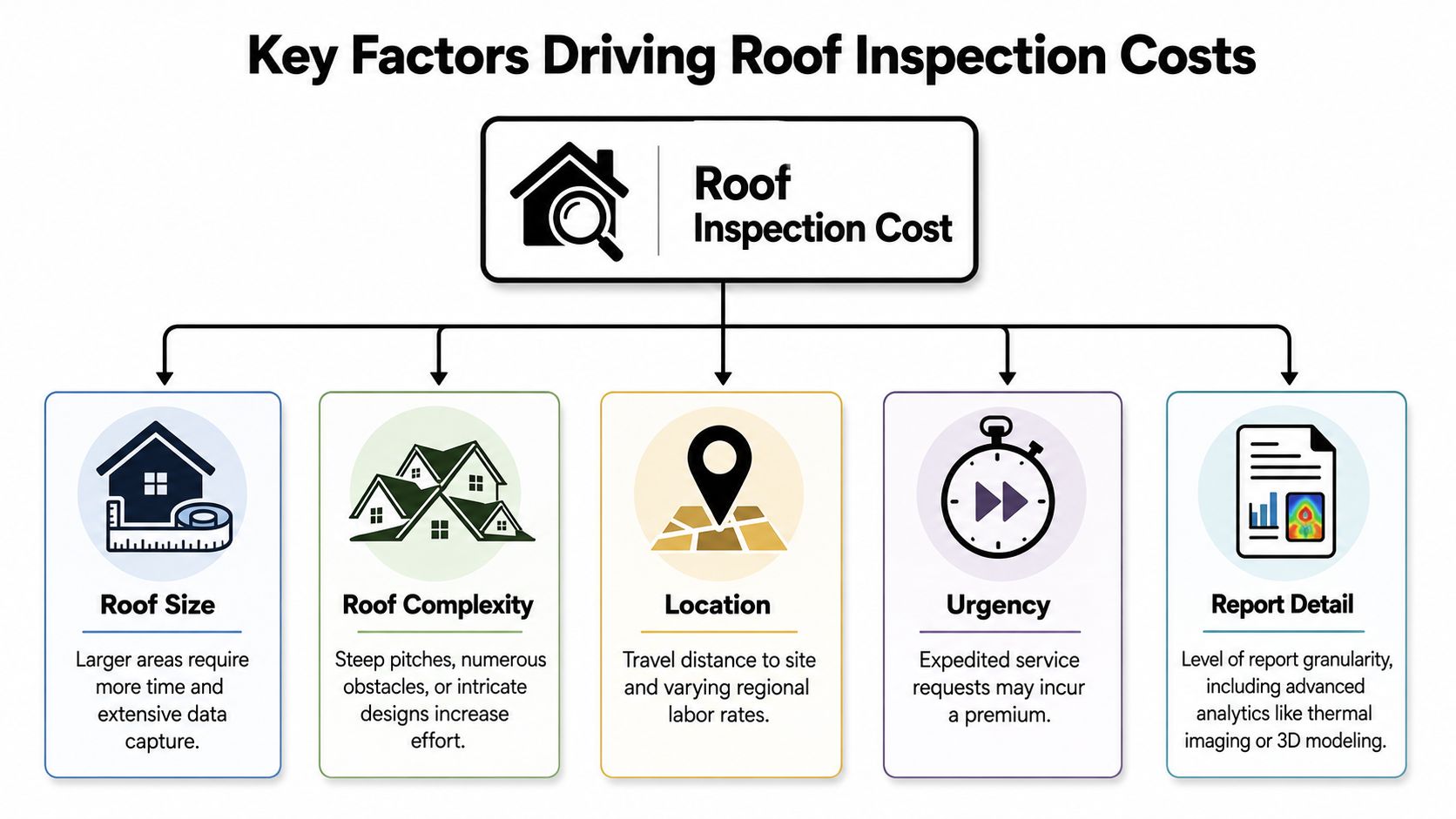
A roof inspection quote is mostly a pricing decision about scope. The flight matters, but the final cost usually rises because the roof is harder to document, the equipment is more specialized, or the report needs to support a real decision instead of a quick visual check.
Roof size and roof complexity
Size is the obvious factor. Bigger roofs require more flight paths, more images, and more time sorting usable shots from glare, shadow, and obstructions.
Complexity is what changes the quote faster.
Steep pitches, intersecting valleys, dormers, skylights, chimneys, solar panels, and rooftop mechanical units all increase capture time and review time. Tight lot lines matter too, especially in older Pennsylvania neighborhoods where trees, utility lines, and nearby homes limit flight angles. On those jobs, getting clear documentation without blind spots takes more planning and more overlap in the image set.
A simple one-story ranch may only need a basic visual record. A taller home in Pittsburgh with multiple gables and limited access often needs a tighter flight plan and a more organized report so the results are usable for repairs, claims, or contractor pricing.
Inspection type and sensor package
The equipment package changes the price because it changes what the inspection can prove.
A standard visual inspection is usually enough to document missing shingles, flashing problems, storm hits, exposed fasteners, and general wear. Thermal work adds another layer and more interpretation time. Thermal drone roof inspection pricing from Optamiss notes that thermal imaging raises the total price because of the added sensor cost and the extra analysis required to read moisture patterns and heat loss correctly.
Thermal is usually worth considering for a few specific situations:
- Suspected moisture intrusion: Surface photos can miss moisture trapped below the roofing material.
- Flat or low-slope systems: These roofs often benefit from moisture mapping and heat pattern review.
- Recurring leak complaints: Thermal can help narrow down where to open the roof or start repairs.
The right scope depends on the question you need answered. If the issue is whether a roof still makes sense to repair or whether the money is better spent on replacement, a roof repair versus full roof replacement decision guide helps frame that call before paying for extra reporting you may not need.
Deliverables That Drive Decisions
This is the cost driver property owners miss most often.
A low quote usually buys a basic photo set and a short summary. That can work for a simple post-storm check on a small home. It usually falls short when an insurance adjuster wants clearer documentation, a contractor needs measurements for an estimate, or a building owner wants competing bids based on the same scope.
The more useful deliverables cost more because they take more field discipline and more office time. Annotated defect photos, organized roof-plane layouts, thermal overlays, orthomosaic maps, and measurable 3D models all require cleaner capture and more processing after the drone lands.
For Pennsylvania homeowners, the difference shows up fast after wind, hail, or ice damage. A folder of photos may show torn tabs or lifted ridge caps. It may not tell you how many slopes are affected, where the damage sits by elevation, or how to price repairs consistently across multiple contractors. A measurable model or mapped report gives the owner, adjuster, and roofer the same reference point.
That usually saves money later.
I see the same mistake over and over. Someone orders the cheapest photo-only inspection, then still needs a second visit because the report does not support a claim, a repair scope, or a replacement estimate. Paying once for usable deliverables is often the better value than paying twice for incomplete documentation.
Drone vs Traditional Inspections A Cost and Safety Comparison
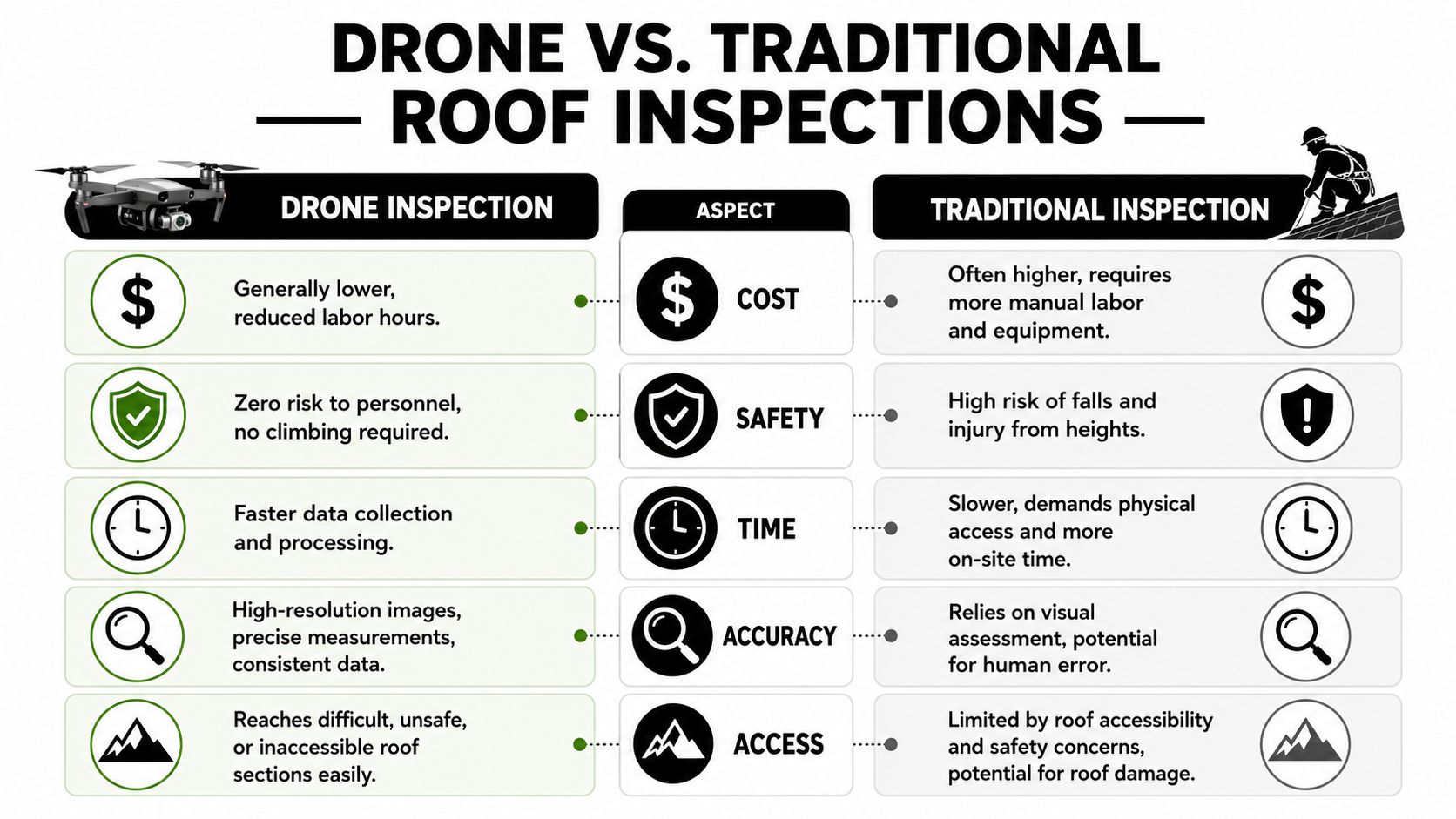
A manual roof inspection can turn a simple condition check into a half-day job once ladders, harnesses, access planning, and cleanup are involved. A drone changes that math, but the primary comparison is not just speed. It is what the owner gets at the end.
Where drones usually win
As noted earlier, drones often cut field labor and reduce the need for access equipment. That matters on steep Pennsylvania roofs, older slate, tall townhomes, church buildings, and commercial properties where physical access adds time, risk, and cost.
They also protect the roof during the inspection itself. On brittle shingles, aging metal, and slate in freeze-thaw areas, extra foot traffic can create its own problems. A drone lets the inspector document ridge caps, flashing lines, valleys, penetrations, and storm damage without putting another person on the surface unless there is a clear reason to do it.
The bigger cost difference often shows up in the deliverable.
A traditional inspection may give you field notes, a few handheld photos, and a verbal recommendation. A drone inspection can do that too, but it can also produce organized defect photos, roof-plane views, annotated reports, and in higher-tier jobs, measurable mapping or a 3D model. For a Pennsylvania homeowner dealing with an insurance claim or comparing repair bids, that added documentation is often more useful than a cheaper walk-and-look inspection.
| Decision area | Drone inspection | Traditional inspection |
|---|---|---|
| On-site method | Ground-based flight operations | Ladder, harness, and physical roof access |
| Time on site | Shorter capture time on many properties | Longer setup and inspection time |
| Safety exposure | Less time spent on the roof | More fall risk and access risk |
| Deliverables | Photos, annotations, maps, model-ready data | Notes, handheld photos, direct observation |
| Best use case | Condition documentation, storm reviews, measurement support | Hands-on material testing, probing, repair verification |
Where manual inspections still matter
There are jobs where boots on the roof are still the right call. Soft decking, wet insulation, loose fasteners, seam separation, or a suspected leak around a curb or vent sometimes need hands-on confirmation. A drone can show staining, displacement, or likely failure points. It cannot press on a substrate or lift a shingle tab to check adhesion.
That is why the best approach on many properties is staged. Start with the drone. Review the images and map the problem areas. Then send a technician onto the roof only where the evidence supports it. That keeps the first visit safer and usually keeps the second visit shorter.
For owners comparing methods, a professional roof inspection overview can help clarify what should be included in a useful inspection report.
For many homes and buildings in Sharon, Erie, and Pittsburgh, the lowest price is not the best value. A cheap manual inspection with limited documentation may still leave you without what you need for an insurance file or a solid repair quote. A well-scoped drone inspection often gives you a cleaner record, better visuals, and fewer surprises before repair work starts.
Sample Pricing Scenarios in Pennsylvania
Local context helps more than generic averages. The same service can look very different in Sharon, Pittsburgh, and Erie because roof design, weather exposure, and inspection goals aren't the same.
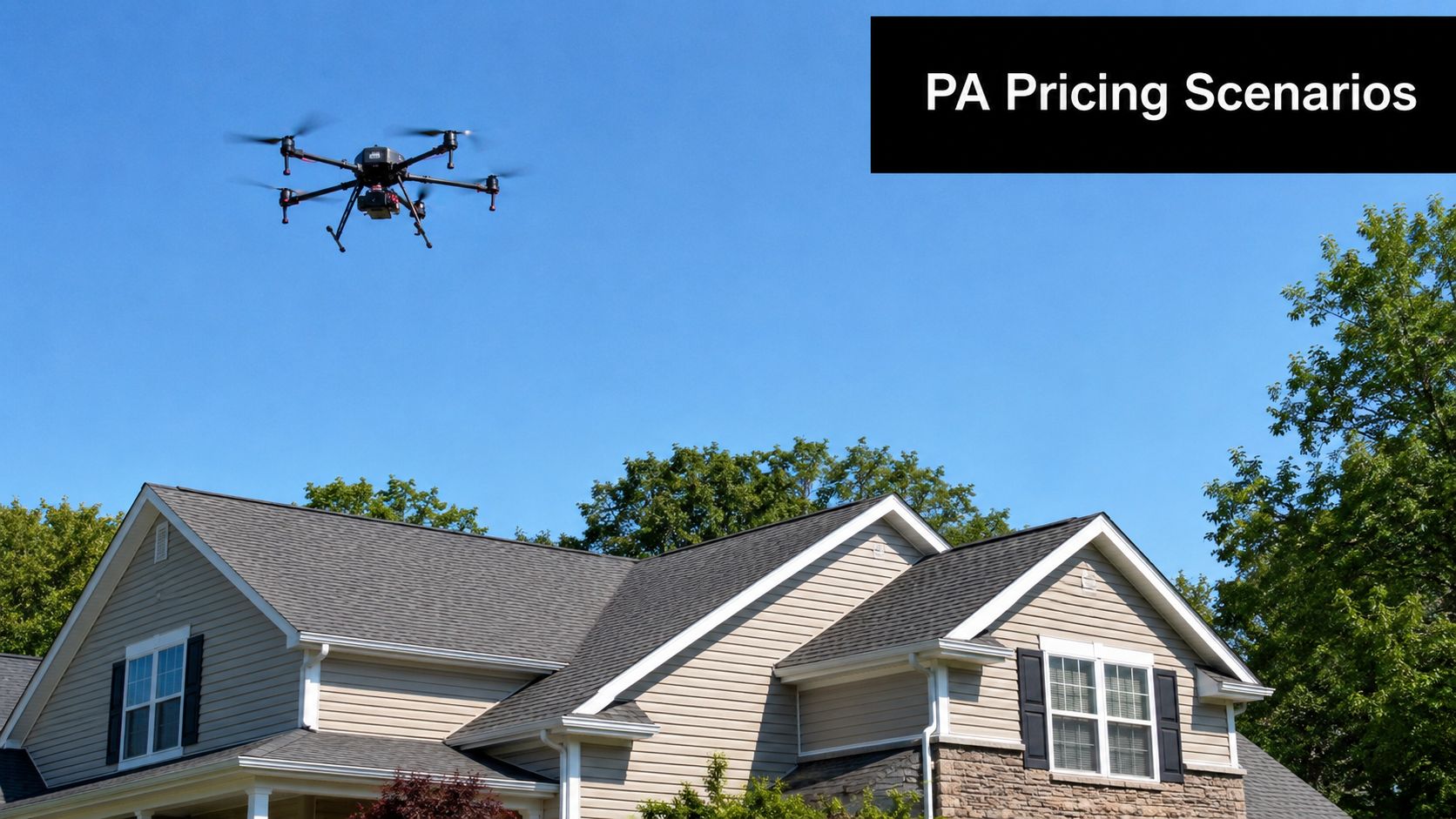
Pennsylvania drone inspection pricing from Mid-Atlantic Drone Services states that general residential roof inspections in Erie average between $120 and $320. That local range is useful because it shows how basic residential drone pricing can stay competitive in western Pennsylvania, even before the scope becomes more advanced.
Sharon ranch home for a pre-sale check
A modest ranch home in Sharon with a simple roofline usually fits the lower end of residential pricing if the client only needs a visual condition report for a pending sale. In that situation, a basic image set and a short findings summary may be perfectly adequate.
What keeps the price down is the simplicity of the roof, not just the square footage. Fewer valleys, easy line-of-sight, and a straightforward objective all help. The deliverable here doesn't need full measurement modeling if the buyer and seller just need a documented condition snapshot.
For agents or owners preparing a listing, a real estate roof inspection service overview can help clarify what level of reporting supports a transaction.
Pittsburgh Victorian with an insurance-focused scope
A steep three-story Victorian in Pittsburgh is a different animal. The roof may have dormers, slate or specialty materials, multiple transitions, and areas that are difficult to inspect safely from ladders.
In that case, the cheap option often becomes the wrong option. If the owner is pursuing an insurance claim after wind or hail, a better report with annotations and measurable documentation carries more value than a low-cost photo dump. The scope can also expand if the homeowner wants clearer evidence around ridge damage, flashing failure, or isolated sections that may need repair pricing broken out separately.
On older Pennsylvania homes, complexity drives cost faster than square footage does.
Erie commercial roof with rooftop equipment
A small warehouse in Erie with a flat roof may look easier at first glance, but rooftop units, drains, seams, and ponding-prone areas often create a broader documentation need. A visual scan may identify obvious defects, but owners often benefit from organized roof-plane mapping or thermal review when they're tracking leaks or maintenance priorities.
Deliverables begin to carry more weight than flight time. A business owner may not care how the inspection was flown. They care whether the report helps maintenance staff, a roofer, and an insurer all look at the same roof and reach the same conclusion.
These examples are why comparing only the base number can lead to bad decisions. A low quote for a simple Sharon home may be fair. The same style of quote for a complex Pittsburgh claim or an Erie commercial roof may leave out the very documentation that makes the inspection useful.
Beyond the Price Tag Insurance and Permit Needs
A drone inspection isn't just a camera service. It's a professional engagement that affects liability, documentation quality, and whether the results hold up when an insurance adjuster or property manager reviews them.
Certification and liability matter
The operator should be properly certified to perform commercial drone work. That's not a bonus. It's the minimum standard. If a provider can't explain their flight process, airspace planning, and insurance coverage clearly, that's a red flag.
Permits aren't a major issue on most standard residential jobs, but airspace can be. Properties near airports or restricted flight zones may require additional authorization steps before the drone goes up. That's more common on commercial work and some urban locations than on a typical suburban house.
Before hiring, ask for these basics:
- Pilot credentials: Confirm the operator is authorized for commercial drone work.
- Liability coverage: Make sure the company carries appropriate insurance for aerial operations.
- Report sample: Review an actual deliverable, not just marketing photos.
- Scope in writing: Get clear wording on whether the quote includes only images or a real inspection report.
Why report quality affects claims
The biggest mistake property owners make is assuming any drone photo set is claim-ready. It often isn't.
A strong insurance-facing report organizes the evidence. It shows location, condition, and damage areas in a way that reduces confusion later. That's one reason insurers and adjusters have leaned harder into aerial documentation. Fact.MR's market report notes that, according to PricewaterhouseCoopers, integrating drones into the insurance industry could generate annual savings of up to $6.8 billion by streamlining claims processing and reducing the need for physical site visits.
Good drone documentation doesn't guarantee claim approval. It does make the roof condition harder to misunderstand.
For homeowners, that means a better report can save time and reduce the back-and-forth. For commercial owners, it can help everyone involved review the same evidence without repeated site visits.
The cheapest inspection can still be expensive if it doesn't answer the questions your insurer, buyer, or repair contractor will ask next.
How to Get an Accurate Quote for Your Property
The fastest way to get a useful quote is to stop asking only for a price and start asking for scope. The quote should reflect the roof, the purpose of the inspection, and the deliverable you need at the end.
If you call three companies and only ask, “What's your drone roof inspection cost,” you'll probably get three numbers that aren't priced on the same basis. One may include basic photos. Another may include thermal review. A third may include a measurable report that saves you a second inspection later.
Have this information ready before you request pricing:
- Property location: City, address, and whether the site is in Sharon, Pittsburgh, Erie, or another area with tighter access or travel considerations.
- Roof type: Shingle, metal, flat, slate, or another material.
- Main concern: Storm damage, active leak, pre-sale review, annual maintenance, or insurance documentation.
- Deliverable needed: Basic photo set, annotated report, thermal scan, or measurable 3D output.
- Building details: Approximate size, number of stories, and anything unusual like dormers or rooftop equipment.
If you're curious why training, certification, and operator skill can influence quote quality, this resource to Calculate professional drone training prices gives some context on the investment behind professional drone work.
The best quote is rarely the lowest one. It's the one that tells you exactly what you're buying, what the report includes, and whether the results will be useful for repair planning, insurance, or property records.
If you need a roof assessment that goes beyond a few aerial photos, Penn Ohio Roofing & Siding Group can help homeowners and commercial property owners understand what level of inspection makes sense for the roof, the claim, and the repair decision. Reach out for a clear estimate and a practical recommendation based on the condition of your property.