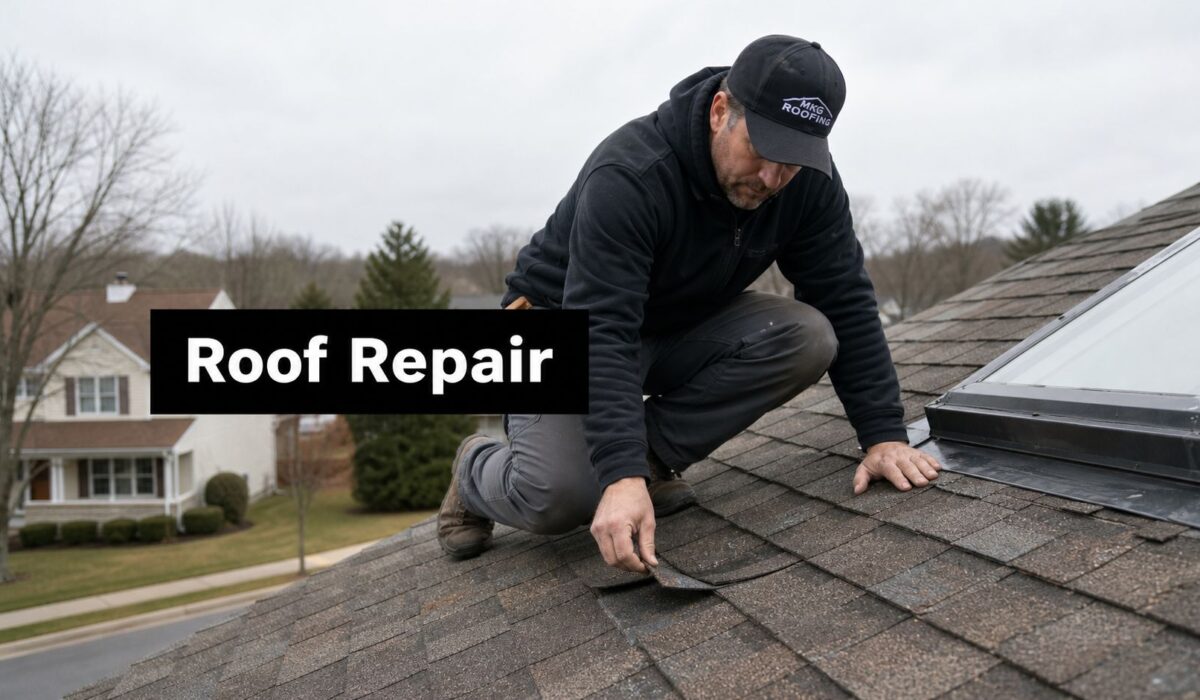
A lot of Sharon homeowners end up in the same spot. A hard rain moves through overnight, the wind pushes water where it shouldn't go, and by morning there's a stain spreading across the ceiling or a drip landing in a bucket you grabbed half-awake from the basement.
That moment feels bigger than it is. The house is quiet, but your mind isn't. You're wondering if it's a small repair, a full replacement, an insurance claim, or a bill you can't absorb this month.
In Western Pennsylvania, roofs take a beating. Snow sits. Ice works into weak spots. Spring and summer storms hit hard from the Erie side and roll all the way toward Pittsburgh. Roof repair in Sharon PA isn't the same as roof advice written for dry climates or generic national blogs. The details matter here, including how you stop damage fast, how you decide between repair and replacement, and what local funding may be available if the budget is tight.
Table of Contents
- Your Local Guide to Roof Repair in Sharon PA
- Spotting Roof Damage and Taking Emergency Action
- Should You Repair or Replace Your Roof
- Funding Your Roof Repair in Sharon PA
- How to Select a Trustworthy Sharon Roofing Contractor
- Protecting Your Investment After the Repair
Your Local Guide to Roof Repair in Sharon PA
A Sharon homeowner usually doesn't call about the roof on a calm sunny afternoon. It's after a storm, after snow starts melting, or after they notice water where water doesn't belong. The first question is almost always the same. “How bad is this, really?”
The answer depends on where the water entered, how long it's been moving, and whether the visible leak is the true source. On a lot of Western PA homes, the ceiling stain is just the last place the water showed itself. It may have started higher up at flashing, a pipe boot, a valley, or a wind-lifted shingle line.
That's why a calm process matters more than panic. Start with damage control. Then figure out whether the problem is isolated or part of a roof system that's wearing out. In Sharon, that means thinking like a local roofer, not like a checklist copied from somewhere with no snow load and no freeze-thaw cycle.
Local conditions change the repair approach
Roofs in Sharon, Pittsburgh, and Erie don't fail the same way roofs fail in warmer, drier places. Storm exposure, winter expansion and contraction, and long periods of moisture all push small weaknesses into active leaks.
Practical rule: The first visible leak is rarely the whole problem. It's the clue that tells you where to inspect next.
A solid roof repair plan here usually comes down to four things:
- Find the actual entry point: Not just the stain on drywall.
- Stabilize the interior quickly: Limit insulation, ceiling, and trim damage.
- Match the fix to the roof's condition: A targeted repair works when the surrounding system is still sound.
- Check permit and funding questions early: That avoids delays once you're ready to move.
If you need roof repair in Sharon PA, the goal isn't to make the leak look handled for a week. The goal is to fix it in a way that stands up to the next storm.
Spotting Roof Damage and Taking Emergency Action
The first job is triage. You're trying to answer two questions. Where is water getting in, and how do you keep the damage from spreading before permanent repairs happen?
What to check first from inside and outside
Start indoors. Most homeowners notice the obvious sign first, but the subtle signs usually tell you more.
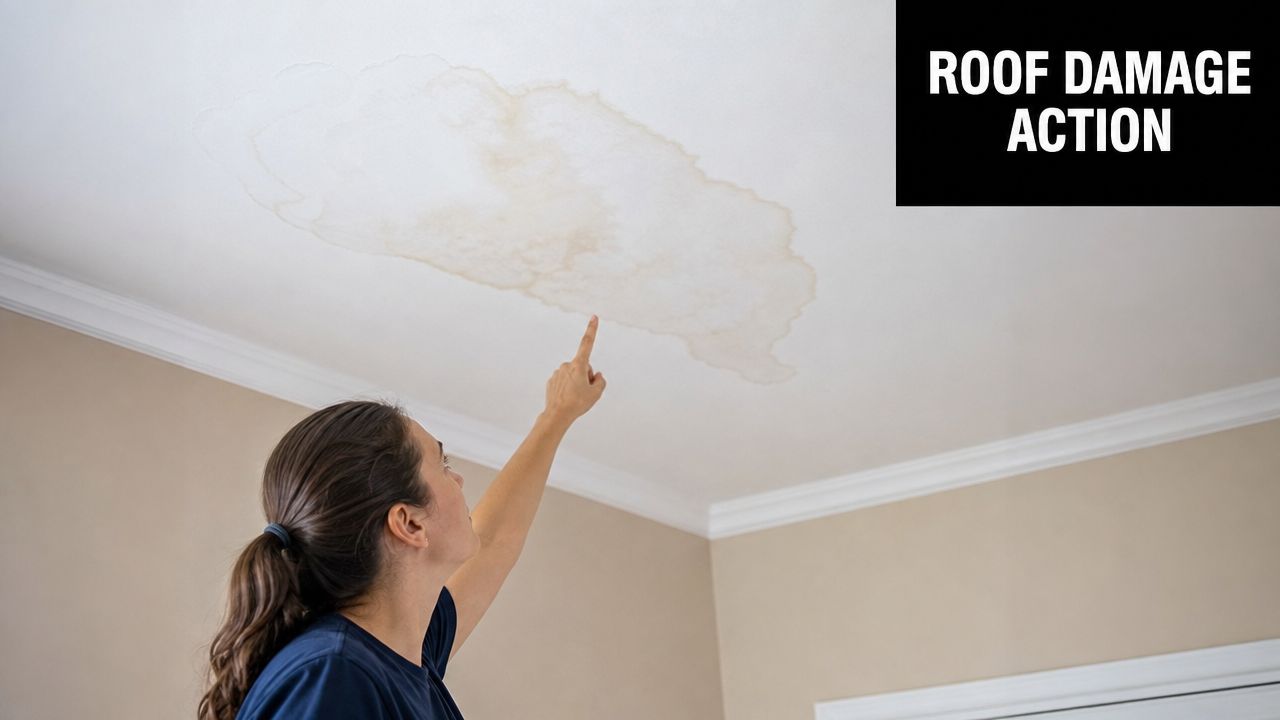
- Ceiling stains: Brown rings, bubbling paint, or damp drywall mean water has already traveled.
- Attic moisture: If you can enter the attic safely, look for dark decking, wet insulation, damp rafters, or daylight at roof penetrations.
- Window and wall confusion: Water around a wall or upper window isn't always siding. Roof runoff can track down framing and show up away from the source.
Then look outside from the ground. Don't climb a wet or storm-damaged roof.
- Shingle changes: Curled tabs, cracked shingles, or pieces missing after wind are direct warning signs.
- Granules in downspouts or at the splash block: That can point to shingle wear.
- Flashing trouble: Lifted metal at chimneys, walls, or vents often lets water in long before shingles fully fail.
- Tree impact or branch scrape marks: Even small hits can break shingles or loosen ridge material.
If storm damage is obvious and active, get immediate guidance on emergency storm damage roof repair steps before trying anything more involved.
Water rarely drips straight down from the entry point. It follows framing, underlayment, and gravity in the most inconvenient direction possible.
Safe temporary steps before a roofer arrives
Temporary action should reduce damage, not create a second emergency. That means no risky ladder work during wind, rain, ice, or darkness.
Use this order:
- Contain the interior leak. Put a bucket, tote, or pan under the drip. If the ceiling is bulging, that can mean water is trapped above the drywall. Many homeowners are tempted to ignore it, but trapped water can spread. If you're unsure, wait for a professional rather than cutting blindly.
- Move belongings fast. Pull furniture, electronics, rugs, and stored boxes away from the leak path.
- Protect the floor. Use towels, a tarp, or plastic sheeting inside to keep water from soaking flooring.
- Document what you see. Take photos of stains, drips, attic moisture, and anything visible outside from the ground. That helps later if insurance gets involved.
- Tarp only if it can be done safely. A tarp is a stop-gap, not a repair. If the roof is steep, slick, damaged, or still exposed to weather, wait for trained help.
A few things make the problem worse:
- Smearing roof cement everywhere: That often traps water or hides the actual entry point.
- Using caulk as a universal answer: It may slow a leak briefly, but it usually doesn't solve a flashing or material failure.
- Nailing a tarp carelessly: Extra holes in the wrong place can add damage.
When homeowners act quickly and safely, they usually save drywall, insulation, trim, and a lot of frustration. The permanent fix comes next, but the first few hours matter.
Should You Repair or Replace Your Roof
A leak doesn't always mean you need a new roof. It also doesn't always mean a small patch is the smart move. The right answer depends on the roof system around the damaged area, not just the spot that got your attention.
The truth about the 25 percent rule
A lot of homeowners have heard some version of this: if a certain portion of the roof is damaged, Pennsylvania law forces full replacement. That's not how it works.
In Pennsylvania, there is no blanket statewide law that automatically mandates a full roof replacement once 25% or more of the roof surface is damaged. Insurance companies often use that threshold as an internal decision point, but it does not legally force replacement statewide according to this Pennsylvania roof replacement discussion of the 25 percent misconception.
That matters because homeowners in Sharon often make the wrong assumption in both directions. Some think they have no choice but replacement. Others assume insurance will approve scattered repairs forever. Neither is guaranteed.
Local permit rules can matter too. In some Pennsylvania municipalities, roof permit triggers are based on repair area rather than an insurance percentage discussion. That's one reason you want a contractor who is based in this region and understands municipal differences.
Roof Repair vs. Full Replacement Decision Matrix
Use this as a thinking tool before you sign anything.
| Factor | Lean Towards Repair If… | Consider Replacement If… |
|---|---|---|
| Leak location | The issue is isolated to one area such as a vent, flashing point, or a limited section of shingles | Leaks show up in multiple areas or the source can't be isolated to one section |
| Roof condition around the damage | Surrounding shingles, flashing, and decking still look serviceable | The surrounding roof shows widespread wear, brittleness, patching, or repeated failure |
| Storm impact | Damage appears concentrated and repairable without disturbing large sections | Wind or impact damage is spread across many sections and matching materials may be difficult |
| Future plans for the home | You need a practical fix and the roof still has useful service left | You want a longer-term reset because more repairs are likely soon |
| Budget timing | A targeted repair solves the actual failure without kicking the problem down the road | Repeated repair spending is starting to rival the value of replacing the system properly |
A good estimate should make that trade-off clear in writing. If you want a neutral way to understand scope, line items, and pricing logic before comparing bids, this guide on deal-making with accurate roof estimates is useful.
For homeowners comparing options locally, it also helps to review a plain-language breakdown of roof replacement versus roof repair so you can ask sharper questions during inspections.
What usually works and what usually doesn't
Targeted repair works well when the failure is specific. A damaged pipe boot, a section of lifted shingles, or localized flashing failure can often be fixed without replacing the whole roof.
Replacement makes more sense when patching starts turning into a pattern. If one side was repaired last season, another area is failing now, and the material is hard to match, you're often spending money to delay the larger job instead of solving it.
If a contractor can't explain why the damage is isolated, don't assume it is.
There's also a material conversation many Sharon homeowners don't have early enough. Asphalt is common, but metal roofing is more viable here than many people think, especially in storm-prone Western PA. Some local homeowners assume metal is automatically out of reach or difficult to repair, and that isn't always true. The right choice depends on budget, structure, and long-term plans, not just habit.
Funding Your Roof Repair in Sharon PA
For a lot of homeowners, the roofing decision isn't just technical. It's financial. You might know the roof needs work and still feel stuck because the timing is bad.
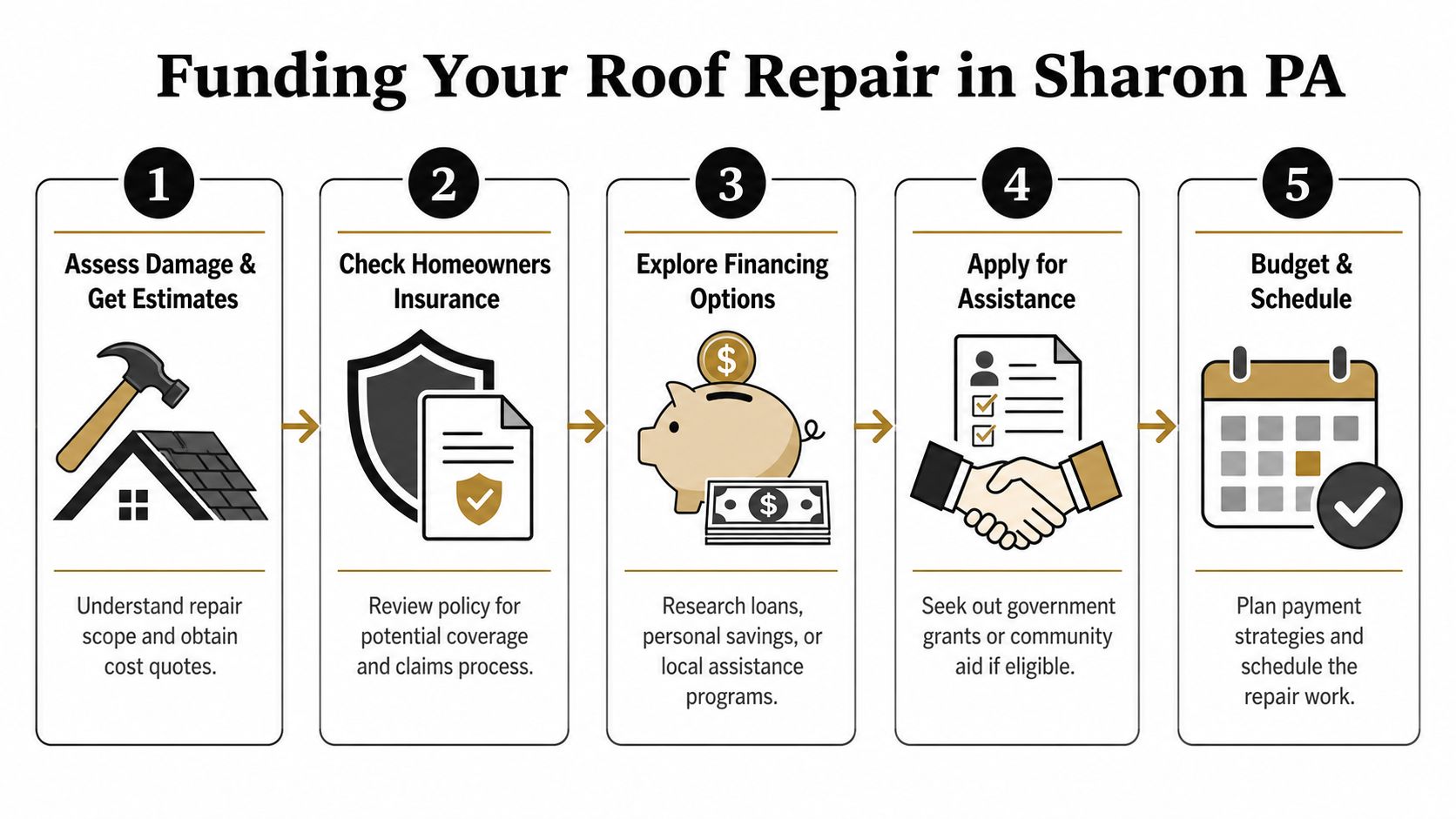
That's why funding needs its own plan. Start with insurance if storm damage may be involved. Then look at local assistance and financing paths if insurance doesn't cover the work or only covers part of it.
Insurance first, then city assistance if needed
If the roof damage followed wind, hail, or a specific storm event, document everything before cleanup changes the scene. Take photos from the ground, inside the attic if safe, and inside the living space where damage is visible. Write down the date you first noticed the issue and what weather event may have caused it.
When the adjuster visits, keep the discussion focused on observed damage, leak locations, and affected interior areas. Don't guess about causes you can't verify. Let the inspection determine that.
If insurance won't cover the work, or if the roof problem comes from aging rather than a single storm, other funding may matter more. Some homeowners also look at structured financing products when the project includes broader rehabilitation work. In those cases, reviewing New American Funding rehab loans can help you understand one financing route that goes beyond paying out of pocket all at once.
Homeowners who want to compare payment approaches with local roofing timelines can also review roof financing options for repair projects.
What Sharon homeowners need for the city program
This is the part many generic roof articles miss. The City of Sharon operates a Roof Repair Program for low-to-moderate-income homeowners that offers a low-interest loan of up to $5,000 for roof repairs, and any additional amount between $5,000 and $15,000 may be covered as a grant, as long as the property is owner-occupied and located within the City of Sharon, according to the City of Sharon Roof Repair Program application.pdf).
That same city application states that applicants must provide proof of income, paid property tax receipts, sewer and garbage bill receipts, a copy of the deed, a current homeowner's insurance policy, and the previous year's income tax return.
That's a meaningful local option, especially for homeowners dealing with active leaks on a tight budget. It also fills a real information gap. A lot of people in Sharon have heard about homeowner assistance in general terms but haven't seen the roof program requirements laid out clearly enough to know whether it's worth pursuing.
Here's the most practical way to approach it:
- Gather paperwork before calling around: Missing documents slow this process more than anything else.
- Confirm owner-occupancy first: If the property doesn't meet that requirement, you need a different funding path.
- Get a written roof scope: City programs and lenders both need clarity on what work is required.
- Don't wait for a minor leak to become interior damage: Funding takes time. Water doesn't.
The best funding plan is the one you can actually complete. That usually means matching the repair scope with the paperwork you're ready to provide.
How to Select a Trustworthy Sharon Roofing Contractor
You call for a leak over the back bedroom after a March thaw, and by afternoon two trucks are already in the driveway. One promises a fast patch for cash. The other says the whole roof needs replaced before the next rain. That is the point where Sharon homeowners get into trouble, not because the roof is impossible to fix, but because pressure starts before the facts are clear.
A trustworthy contractor slows the process down enough to inspect the roof correctly, explain what failed, and put the repair scope in writing. In Mercer County, that matters after wind events, freeze-thaw swings, and heavy snow loads, when rushed repairs often miss flashing damage, ice backup entry points, or ventilation problems that helped cause the leak.

What to verify before signing anything
Start with paperwork and scope, not personality.
Pennsylvania roofers serving Sharon should be properly registered for the work they perform and should carry current insurance. Ask to see documentation before you approve anything. If a contractor hesitates, asks you to trust a verbal answer, or says the office will send it after the deposit, keep looking.
Review these items closely:
- Business registration: Confirm the company is operating under the proper business name.
- Insurance certificates: Ask for current proof of liability coverage and, if applicable, worker coverage.
- Written repair scope: The estimate should state what gets removed, what gets replaced, and what gets reused.
- Material identification: Brand line, shingle type, underlayment, flashing metal, sealant type, and ventilation parts should be named clearly.
- Leak-area detail: Chimneys, wall step flashing, valleys, pipe boots, and skylights should not be lumped into vague language.
- Permit responsibility: In Sharon, permit questions should be answered before work starts, especially if repair scope expands into structural decking or larger exterior work.
Homeowners also benefit from understanding how contractors market themselves online. These transactional guides for roofers give useful context on how roofing companies compete for attention, which helps you separate a polished web presence from a solid repair process.
Questions that expose weak contractors fast
Ask direct questions and listen for direct answers.
What failed on this roof, and how did you confirm it?
A good roofer should point to the defect, not just the stain on the ceiling.What repair method are you proposing at the leak location?
“We'll seal it” is not enough. You want to hear whether they are replacing flashing, shingles, underlayment, pipe boots, or damaged decking.What hidden conditions could change the price?
Deck rot, wet insulation, and failed wall flashing are common examples. If they exist, the contractor should explain how they will be documented.Who handles permit questions and code compliance?
A contractor working regularly around Sharon should be comfortable answering that.What does this estimate exclude?
This catches low bids that leave out disposal, flashing, ventilation corrections, or interior protection.Is this a temporary repair or a permanent one?
There is nothing wrong with a temporary dry-in during bad weather, but it should be labeled as such.
The best answers are specific, calm, and easy to follow. Sales pressure usually sounds vague.
Local experience matters more than a polished pitch
Sharon roofs take a different beating than roofs in milder markets. Ice damming, wind-driven rain, older housing stock, and repeated freeze-thaw cycles all change how repairs should be done. A contractor with local job history is more likely to check attic airflow, flashing tie-ins at masonry, and the condition of older roof decking instead of treating every leak like a simple shingle swap.
That is also why references should be local when possible. Ask for recent repair work in Sharon, Hermitage, Farrell, or nearby Mercer County neighborhoods. Local crews know the housing mix, common roof lines, and the inspection issues that come up on older homes.
One factual option in the area is Penn Ohio Roofing & Siding Group, which offers roof repair services in Sharon and surrounding Mercer County areas. Whether you speak with them or another company, hold every bidder to the same standard.
Red flags worth taking seriously
Some warning signs show up again and again:
- Storm-chasing sales tactics: door knocking right after weather damage, paired with pressure to sign immediately
- Large upfront cash requests: especially before materials are delivered or the scope is documented
- A bid that is far below the others: often a sign that flashing work, disposal, or deck repairs were left out
- No inspection photos: if they cannot show what failed, they may not have found the true source
- Verbal promises without line items: disputes often begin
- Replacement recommendations without proof: sometimes replacement is justified, but the contractor should explain why repair will not hold
A trustworthy roofer does not avoid hard questions. They answer them, document the work, and leave you with a scope that makes sense for your roof, your budget, and Sharon's weather.
Protecting Your Investment After the Repair
A Sharon homeowner gets the leak fixed in March, then sees the same ceiling stain again by January. That usually happens because the repair solved the symptom but missed the details around drainage, flashing movement, or attic moisture. In Western PA, freeze-thaw cycles keep testing those same areas.
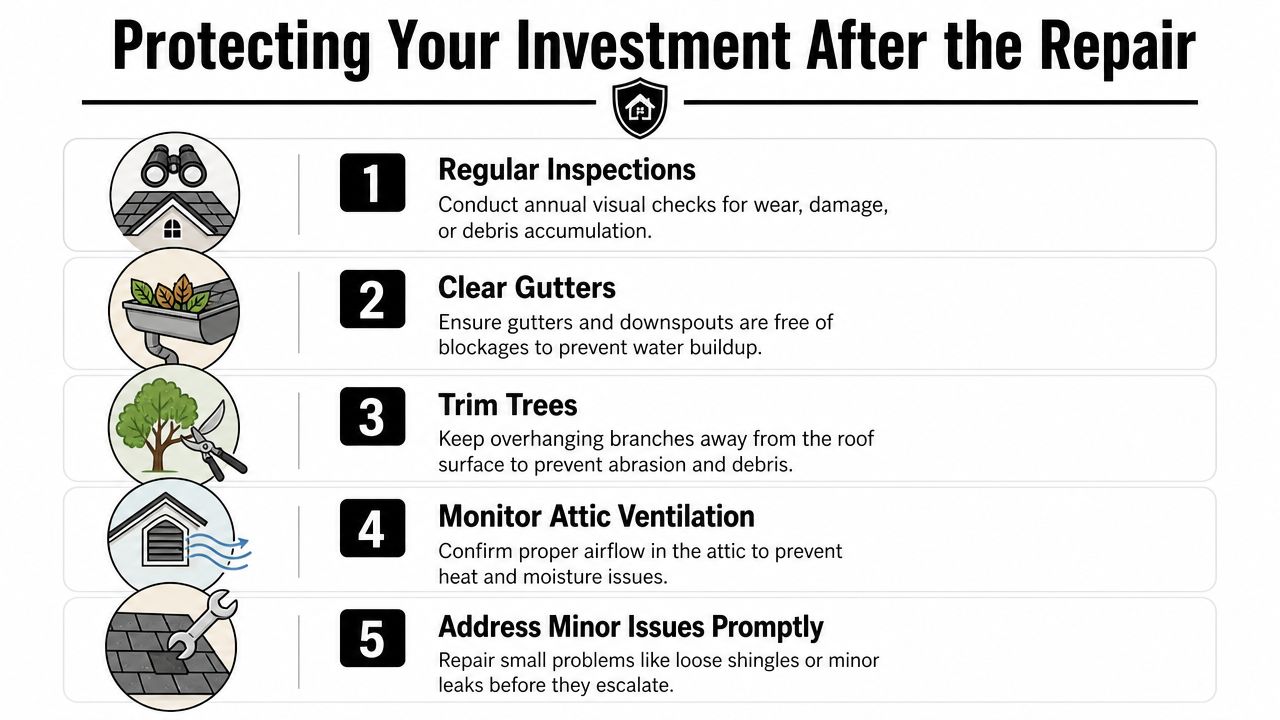
The roof needs a maintenance routine after the repair, not just a receipt and a warranty sheet.
The repair detail that prevents repeat leaks
Around Sharon, the repeat calls I see most often trace back to roof penetrations and transitions. Plumbing vents, chimneys, skylights, and wall flashing all move a little over time. The shingles around them age at a different rate than the metal and sealant. If that joint was patched quickly instead of rebuilt correctly, water usually finds it again.
The repair that lasts usually includes a few unglamorous steps:
- Removing failed sealant instead of coating over it
- Resetting or rebuilding the flashing sequence
- Using roofing sealant rated for outdoor temperature swings
- Checking fasteners, nearby shingles, and exposed nail heads in the same area
Shortcuts tend to fail for predictable reasons.
- New caulk over cracked material does not bond well for long
- Loose chimney or vent flashing keeps shifting with temperature changes
- Skylight edges treated like a simple bead-seal job often leak back at the corners
- Valley and sidewall details left untouched keep feeding water toward the original problem spot
That trade-off matters. A cheaper patch can stop active dripping today, but a more thorough flashing repair often saves money over the next two winters.
A practical seasonal roof care routine
You do not need to climb the roof every month. You do need a consistent check from the ground, in the attic, and at the gutters.
Spring
- Look for winter damage: lifted shingles, bent flashing, and dark overflow lines near gutters
- Check the attic on a dry afternoon: staining, damp insulation, or mildew smell usually shows up there first
Summer
- Cut back overhanging limbs: branches wear granules off shingles and drop debris into valleys
- Flush gutters and downspouts: standing water at the eaves shortens roof life
Fall
- Clear leaves from valleys and behind chimneys: wet debris holds moisture where water should move off quickly
- Book an inspection before hard freeze season: small defects are easier to fix before ice gets involved
Winter
- Watch ceilings and attic air: fresh stains, musty smell, or cold drafts near penetrations deserve a call
- Address minor leaks early: winter leaks often spread into insulation and decking before they show inside
In Sharon, snow load, wind-driven rain, and repeated freezing nights expose weak repairs fast. Older homes near the city core can have ventilation and decking issues that newer suburban homes do not. If your roof repair was tied to a larger housing issue, it also helps to keep records. Photos, invoices, and inspection notes can matter if you apply for local housing assistance or rehabilitation funding through city or county programs later.
If you want another set of eyes on the repair, Penn Ohio Roofing & Siding Group can inspect the area, explain whether the fix still looks sound, and put any remaining problem spots in writing. That is the kind of follow-up that helps a Sharon homeowner stay out of emergency mode the next time a lake-effect system or ice storm rolls through.