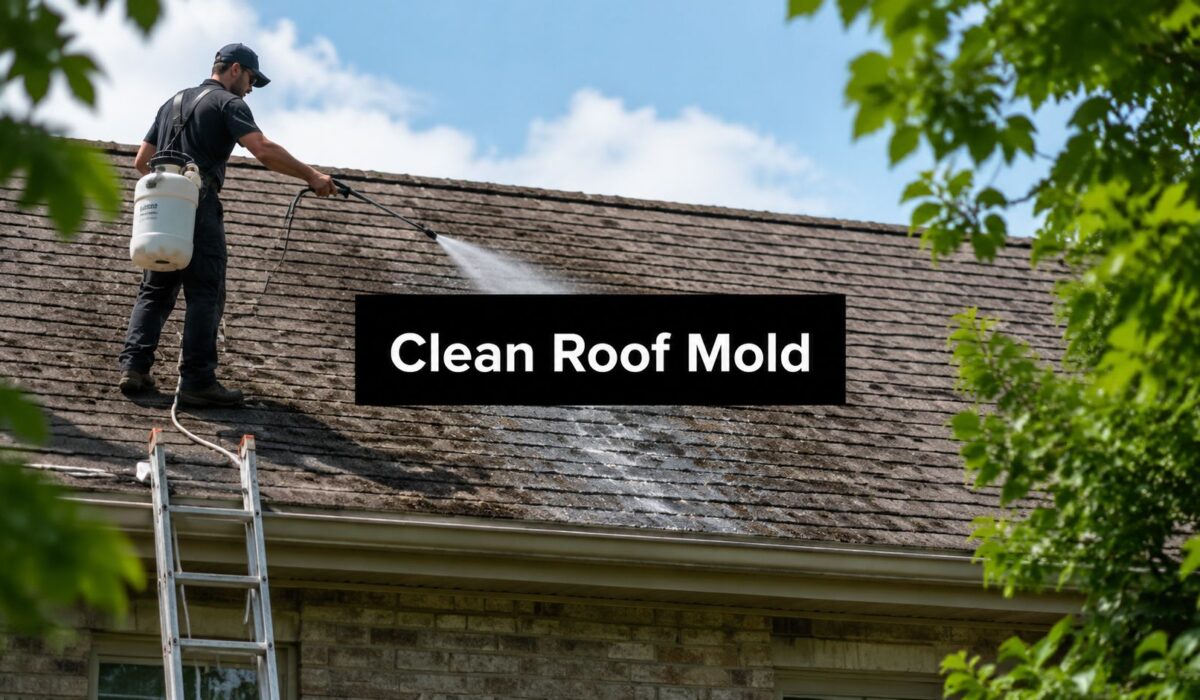
If you're looking up how to clean roof mold, there's a good chance you're staring at black streaks from the driveway, or you've seen green buildup on the shaded side of the house after another wet stretch in Western Pennsylvania. Around Sharon, Pittsburgh, and Erie, that kind of staining is common. Wet seasons, tree cover, clogged gutters, and long periods without full sun all work against a roof.
The good news is that a lot of roof staining can be handled safely if you know what you're dealing with and you respect the limits of a DIY job. The bad news is that plenty of homeowners ruin good shingles by scrubbing too hard, rinsing the wrong way, or dragging a pressure washer onto the roof. The method matters just as much as the cleaner.
Table of Contents
- Identifying the Grime on Your Roof
- Essential Safety Gear and Roof Preparation
- Choosing Your Cleaning Method and Solution
- The Step-by-Step Roof Cleaning Process
- Preventing Future Mold and Algae Growth
- DIY vs Calling a Professional in Penn Ohio
Identifying the Grime on Your Roof
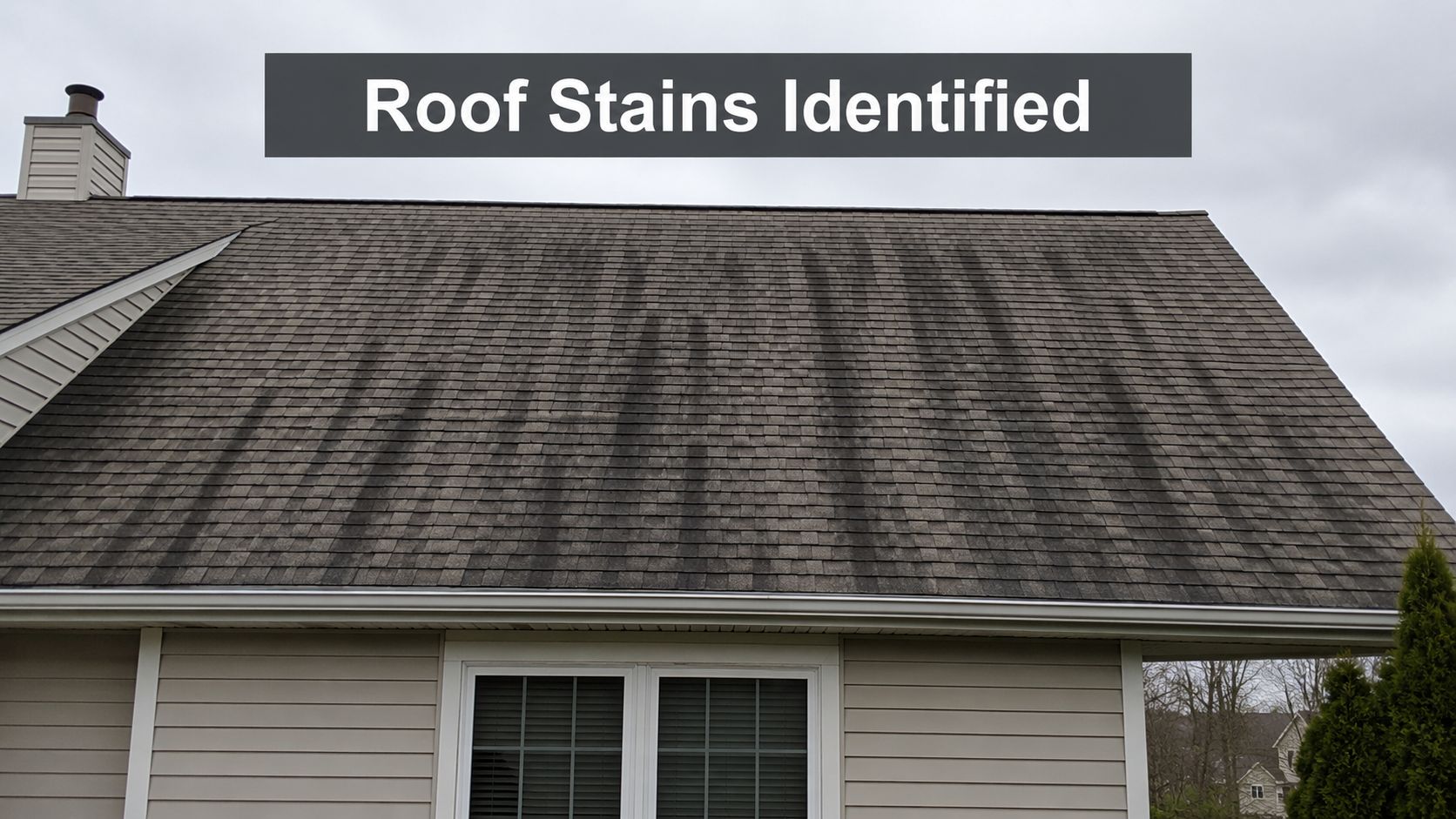
In a lot of neighborhoods, especially older shaded streets around Pittsburgh and Erie, the first thing homeowners notice is a set of dark streaks trailing down asphalt shingles. It's often referred to as roof mold. That's understandable, but it's often not the right diagnosis.
The black stains commonly mistaken for mold on roof shingles are an algae species called Gloeocapsa Magma, and it needs chemical treatment instead of mechanical scrubbing to remove it at the root, as noted in this roof cleaning explanation of Gloeocapsa Magma. That distinction matters because if you treat algae like dirt, you'll end up attacking the shingles instead of the growth.
What black streaks usually mean
A few common roof conditions get lumped together:
- Black streaks usually point to algae staining.
- Green, thicker patches are more often moss or a heavier organic buildup.
- Fuzzy or spotty growth near shaded damp areas may include mold or mildew.
On asphalt roofs, those categories overlap. From the ground, they can all look similar. That's one reason a close look matters before you mix anything or set a ladder.
Why the diagnosis changes the method
Algae and surface growth don't respond well to aggressive brushing. Scrubbing can loosen granules, scar the shingle face, and shorten the service life of the roof. A chemical wash is meant to kill the growth first, then let rinsing do the cleanup without grinding into the roofing surface.
Practical rule: If the staining looks embedded in the shingle instead of sitting on top like loose dirt, don't treat it like a deck or concrete patio.
A second issue is that a stained roof isn't always just a cleaning problem. Sometimes the staining shows up where runoff patterns, shade, or moisture retention are worst. If you're unsure whether you're looking at cosmetic algae, trapped moisture, or shingle wear, it's smart to start with a professional roof inspection before you decide on a DIY cleaning day.
For a capable homeowner, the first job isn't spraying. It's identifying what you're trying to remove.
Essential Safety Gear and Roof Preparation
A roof cleaning job goes wrong before the cleaner ever comes out. It goes wrong when someone works on a wet slope in worn sneakers, climbs with no harness, ignores runoff near flower beds, or decides a pressure washer will make the whole thing faster.
Gear that belongs on the job
If you're going to clean the roof yourself, have the basics ready first:
- Stable ladder: Set it on solid ground and tie it off if needed.
- Non-slip footwear: Roof traction matters more than speed.
- Gloves and safety goggles: Bleach-based cleaners can burn skin and eyes.
- A properly fitted harness: Especially if the pitch is steeper than you're comfortable with.
- Garden sprayer and hose: Those are the right tools for controlled application and rinsing.
If you haven't worked at height before, review basic simplify heights safety compliance guidance before you start. The roof doesn't care whether the task looks simple from the driveway.
Why pressure washing is the wrong tool
The accepted professional approach is soft washing, not blasting. One published guide describes soft washing as using a 50:50 sodium hypochlorite and water solution with surfactant, applied top-down, allowed to sit 5 to 10 minutes, then rinsed at low pressure, and it reports a 95% success rate while avoiding the 40% shingle damage rate associated with high-pressure methods in that same comparison of roof cleaning approaches in this soft washing roof mold guide.
That lines up with what roofers see in the field. Pressure washing strips granules, lifts shingle edges, and can force water where it doesn't belong.
Leave the pressure washer for concrete. On asphalt roofing, it's usually a damage tool, not a cleaning tool.
Protect the house before you protect the roof
The cleaning mix may solve one problem and create another if runoff isn't controlled. Before spraying anything overhead, prep the ground level.
Use a simple protection routine:
- Move what you can. Patio furniture, grills, and lightweight decor should be cleared away.
- Pre-soak plants and lawn areas. Wet soil and foliage first so they aren't dry and ready to absorb runoff.
- Cover sensitive landscaping carefully. Use breathable protection where practical, and don't leave plants smothered under plastic longer than needed.
- Control the downspouts. Watch where roof runoff exits so cleaner doesn't pool near shrubs or beds.
- Keep someone on the ground if possible. A second person can rinse plants, monitor runoff, and help with ladder safety.
Prep the roof surface
You don't need to overwork the roof before cleaning. Keep prep simple.
- Clear loose debris: Branches, leaves, and twigs can block the cleaner from reaching the shingle face.
- Check gutters: Backed-up gutters hold water where growth thrives.
- Choose your weather carefully: Skip windy, rainy, or blazing hot days.
- Plan your route: Never step all over the roof deciding where to go next.
A good roof maintenance checklist helps here because cleaning goes better when you already know where the soft spots, damaged flashing, and trouble areas are. Preparation isn't extra work. It's the part that keeps a cleaning job from turning into a repair job.
Choosing Your Cleaning Method and Solution
A lot of roof cleaning advice gets muddled because it mixes methods for siding, decks, concrete, and shingles as if they were all the same. They aren't. Asphalt roofing needs a cleaner that kills organic growth without asking you to scrub the life out of the shingle.
The industry standard for asphalt shingles
For asphalt roofing systems, the Asphalt Roofing Manufacturers Association recommends a 50:50 mix of laundry-strength liquid chlorine bleach and water as the "most effective method," with a 15 to 20 minute dwell time before rinsing, according to ARMA's guidance for algae and moss cleaning on asphalt roofing systems.
That specific mix gets repeated for a reason. It's strong enough to kill growth instead of just lightening the stain, and the dwell time gives the solution time to work before it dries off. If you rush the process, you often end up with a roof that looks better for a short time but still has growth hanging on.
What works, what doesn't
The simplest way to think about roof cleaning is this:
- Chemical kill first, gentle rinse second works on asphalt shingles.
- Mechanical scrubbing first tends to remove granules before it removes the cause.
- Weak mixes may lighten the surface but leave enough behind for fast return.
- Harsh application without material awareness can damage metal finishes, tile surfaces, or slate edges.
This is why homeowners get mixed results from store-bought products. Some are too mild for established growth. Others may be fine on one roof type and a bad idea on another.
If you're cleaning asphalt shingles, the chemistry matters more than elbow grease.
Roof Cleaning Solution Guide
| Solution | Best for Asphalt Shingles | Best for Metal Roofs | Best for Tile/Slate | Key Consideration |
|---|---|---|---|---|
| 50:50 laundry-strength liquid chlorine bleach and water | Yes. This is the main industry-standard option for asphalt shingles. | Sometimes. Test carefully and follow manufacturer guidance for coatings and finishes. | Use caution. Material and surrounding mortar details matter. | Best fit for organic growth on asphalt. Needs careful handling and plant protection. |
| Commercial roof wash | Sometimes. Useful if the label is shingle-safe. | Often a practical option if finish compatibility is confirmed. | Often preferred when you want a product designed for delicate surfaces. | Read the label closely. "Roof cleaner" is too broad to trust on name alone. |
| Oxygen-based cleaner | Sometimes, but it may be less effective on rooted organic staining. | Can be a gentler option depending on the roof finish. | Often considered where bleach sensitivity is a concern. | Gentler doesn't always mean better. On stubborn growth, it may not solve the whole problem. |
| Plain water and brushing | No. Poor choice for embedded algae and risky for granules. | Limited use for loose surface dirt only. | Limited use, depending on material condition. | Usually the wrong approach for roof mold or algae because it relies on abrasion. |
Match the method to the roof, not your preference
If you have a basic asphalt shingle roof, the standard bleach-and-water mix is the benchmark method. If your roof is metal, tile, slate, or a specialty product, you need to be more cautious. The wrong cleaner can stain finishes, affect coatings, or create runoff issues around trim and landscaping.
A capable homeowner should also think about comfort level. Some people are fine handling a garden sprayer and bleach mix. Others would rather avoid chemical handling overhead, especially around dormers, skylights, or landscaping. That's a fair reason to stop before the job starts.
The right answer isn't always the strongest product. It's the product and method your roof can tolerate safely.
The Step-by-Step Roof Cleaning Process
The best roof cleaning days are quiet, overcast, and boring. No gusty wind. No blazing afternoon sun. No rushing because a storm is due in an hour. If you're trying to learn how to clean roof mold without damaging the roof, the pace matters as much as the cleaner.
Start with the least dramatic setup possible
Set your ladder, lay out the hose so it won't snag, and fill the garden sprayer on the ground. Wear the gear you laid out earlier. If something feels sketchy before you start, it won't feel safer once you're carrying solution on a slope.
Then work in small sections. That's how pros keep the job controlled.
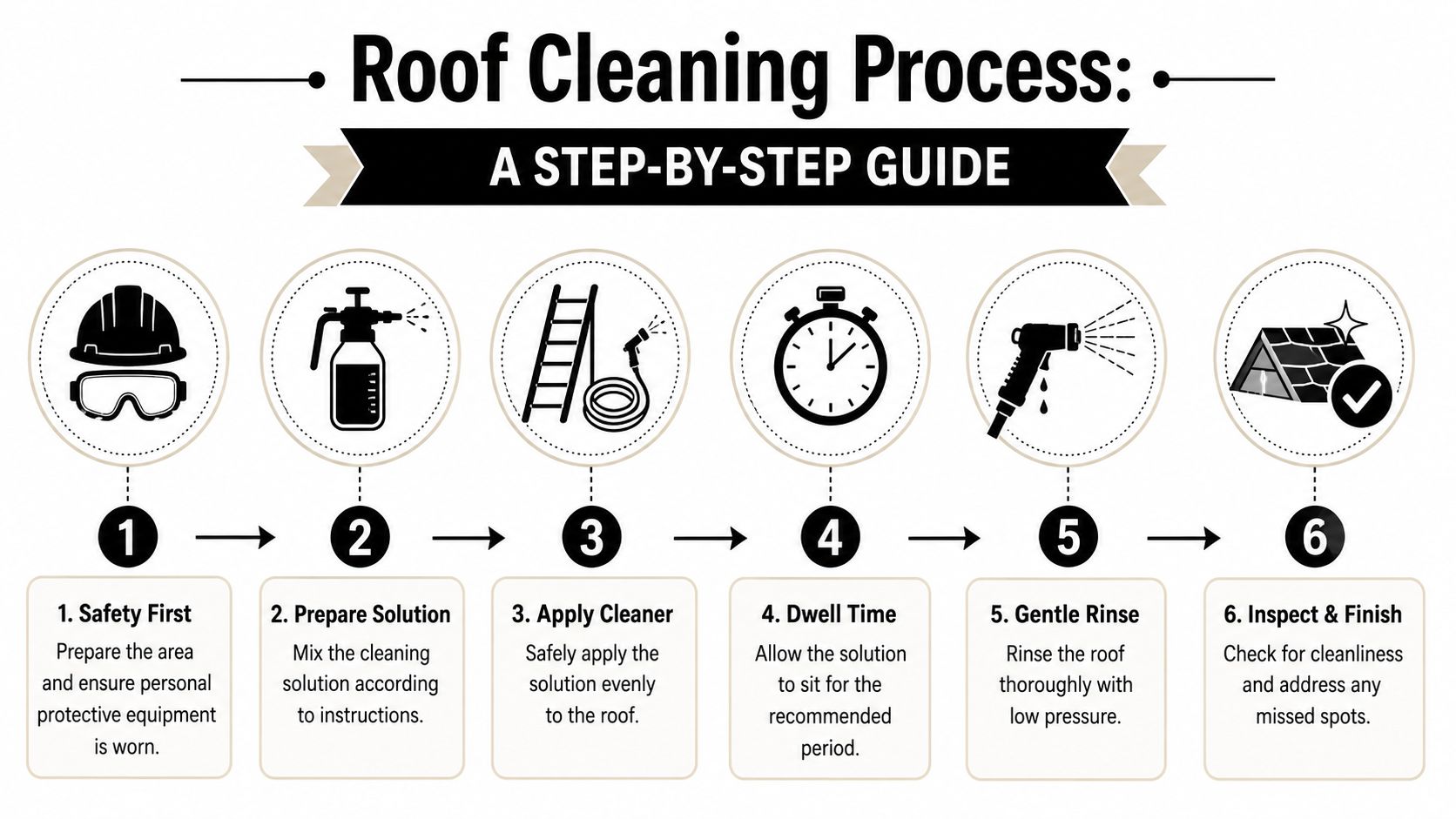
A clean sequence looks like this:
- Apply from the top down. Let gravity help you instead of fighting it.
- Spray evenly, not violently. You want coverage, not force.
- Follow the shingle grain. Keep liquid moving downward so you don't drive water under the tabs.
- Let the solution sit. Dwell time is part of the cleaning, not dead time.
- Rinse with low pressure. The rinse clears the dead growth without tearing up the roof.
Why application direction matters
One of the easiest mistakes is spraying up the roof slope or sideways under shingle edges. That can push water where it shouldn't go. Professional demonstrations of soft washing stress applying the solution with low pressure and spraying strictly downward along the shingle grain to avoid water intrusion, as shown in this roof soft wash demonstration.
That principle matters more than people think. A roof is designed to shed water downhill. Work with that design.
Don't chase stains uphill with a nozzle. Apply and rinse in the same direction rain is supposed to travel.
A practical rhythm for the job
If I were walking a homeowner through it in real time, I'd tell them to stop trying to clean the whole roof at once. Pick one manageable area. Spray it thoroughly. Watch for even wetting. Let the cleaner work. Then rinse gently and check the result before moving on.
A good rhythm is:
- Spray one section
- Wait the proper dwell time for your chosen solution
- Rinse gently
- Inspect from a stable position
- Repeat only where needed
That method does two useful things. It keeps your footing and hose management under control, and it prevents overapplication. A lot of DIY damage happens because people keep re-hitting the same area out of impatience.
Know when to stop mid-job
Stop immediately if you notice any of these:
- Granules collecting heavily in runoff
- Loose, cracked, or curling shingles
- Water going where it shouldn't
- A roof pitch that feels less stable than it looked from below
- Staining that isn't responding and may be something other than surface growth
A careful partial cleaning is better than a full bad cleaning. Roof work rewards restraint.
Preventing Future Mold and Algae Growth
A roof that gets cleaned once but keeps staying damp will grow the same problem again. That's why prevention matters more in places like Sharon, Pittsburgh, and Erie, where shade, tree cover, and wet weather stick around.
Dry the roof faster
Organic growth likes moisture, shade, and trapped debris. Change those conditions and the roof becomes less inviting.
Focus on the basics first:
- Trim overhanging branches: Shade is one of the biggest contributors to lingering dampness.
- Keep gutters clear: Debris traps moisture at the roof edge and along runoff paths.
- Address attic moisture: A damp attic can feed roof-related moisture issues from below.
- Watch trouble spots after rain: Valleys, chimney areas, and shaded slopes tell you where moisture hangs around longest.
For homeowners trying to think beyond the roof surface, this overview of mitigating mold risks is useful because it connects exterior moisture control with what happens inside the home too.
Use maintenance, not constant cleaning
One of the biggest mistakes I see is over-cleaning. A roof doesn't need to be attacked every time a faint streak shows up. But once organic growth is established, waiting too long lets the problem spread.
Published guidance on roof maintenance notes that applying a diluted bleach-and-water solution every six to eight months is the recommended preventive schedule for stopping mold, algae, and mildew from re-establishing, and it also notes that 99.9% pure zinc or copper strips installed near the roof peak release ions that create a persistent antimicrobial zone in this roof mold prevention and maintenance guide.
That gives you two levels of defense:
- Routine maintenance treatment for roofs that tend to regrow staining
- Metal strip installation for a longer-term preventive effect
Fix runoff before it feeds the problem
Sometimes the reason one roof section keeps turning ugly isn't the shingle. It's water management. Overflowing gutters, short downspouts, and poor drainage around the house keep the whole system wetter than it should be.
If runoff is dumping too close to the foundation or backing up at the edges, a downspout extension installation can be part of the solution. Roof cleanliness and water control are tied together more than most homeowners realize.
The roof that dries faster usually stays cleaner longer.
DIY vs Calling a Professional in Penn Ohio
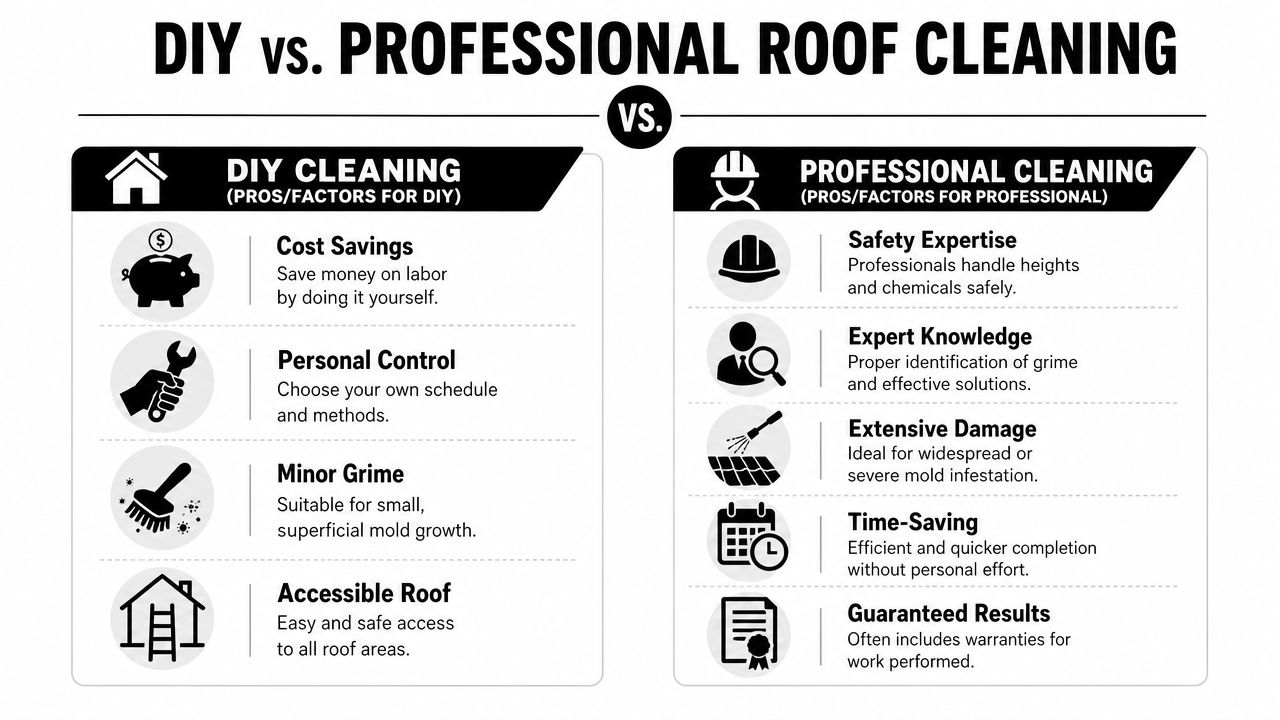
Some roof cleaning jobs are reasonable for a homeowner. Some are a bad bet from the start. The trick is being honest before you climb, not after you're halfway across a slope with a sprayer in your hand.
When DIY makes sense
DIY roof cleaning is usually more realistic when the conditions are simple:
- Single-story home
- Low-slope roof
- Minor staining or limited organic growth
- Clear, safe ladder access
- A homeowner who is comfortable with height and chemical handling
That's the kind of setup where patience and careful method can carry the day.
When it makes more sense to call a pro
Other situations push the job out of the DIY category fast:
- Steep pitches
- Two-story or taller homes
- Heavy coverage across large roof areas
- Fragile or specialty roofing materials
- Existing roof damage
- Landscaping or exterior features that make runoff control difficult
The issue isn't just cleaning skill. It's roof access, fall risk, chemical control, and recognizing when the staining is hiding a broader roofing problem.
The decision I give homeowners
If the roof is easy to access, the staining is light, and you can follow a soft-wash process without improvising, DIY can be a sensible weekend project. If you're already negotiating steep sections, second-story edges, delicate materials, or uncertain roof condition, the smartest move is to stay off it.
A lot of homes across Penn Ohio have exactly the kind of mixed conditions that make this a judgment call. A shaded rear slope in Sharon, a taller older home near Pittsburgh, or a lake-effect-beaten roof around Erie can all turn a "simple cleaning" into something less simple once you're up there.
If you'd rather get an expert set of eyes on the roof before you risk damage or a fall, Penn Ohio Roofing & Siding Group is a solid local option for homeowners across the region. With more than 25 years of experience serving communities from Sharon to the broader Penn Ohio area, they can inspect the roof, tell you whether the staining is cosmetic or a sign of a bigger issue, and help you decide whether cleaning, repair, or replacement makes the most sense.