Your Guide to Penn Ohio's Exterior Solutions. Whether you're a homeowner in Sharon noticing a few missing shingles after a storm, or a business owner in Pittsburgh planning a major facility upgrade, your property's roof and siding are its first line of defense. Protecting that investment takes good materials, correct installation, and a contractor who can explain what needs attention now versus what can wait.
At Penn Ohio Roofing & Siding Group, the services we offer are built around the specific problems property owners deal with in western Pennsylvania. That means emergency leak response after a hard wind event, full replacements when an older system has reached the end of its useful life, and exterior upgrades that improve both protection and curb appeal. It also means practical guidance after the estimate, because many owners still need help deciding whether repair makes sense, how to document storm damage, and when replacement is the better long-term move. That gap is especially relevant in weather-driven roofing decisions, as discussed in this public research on storm-related housing impacts and claims pressure.
If you're in Erie, Pittsburgh, Sharon, or the surrounding Mercer, Beaver, and Lawrence County areas, the goal is the same. You want clear answers, sound workmanship, and a scope of work that matches the building in front of you. The guide below gets straight to that.
Table of Contents
- 1. New Roof Installation
- 2. Roof Repairs and Maintenance
- 3. Metal Roofing Solutions
- 4. Tile Roofing Installation and Repair
- 5. Flat Roof Systems
- 6. Storm Damage Assessment and Restoration
- 7. Siding Installation and Repair
- 8. Free Roof Inspections and Estimates
- 8-Point Comparison: Roofing & Exterior Services
- Partner with Penn Ohio for Your Next Project
1. New Roof Installation
A homeowner in Pittsburgh notices the same ceiling stain coming back every winter. A business owner in Sharon is tired of budgeting for one repair after another. At that point, a new roof installation usually makes more sense than another patch.
We install new roofing systems on homes, commercial buildings, and new construction projects across Sharon, Pittsburgh, Erie, and the surrounding region. The job is bigger than putting on new shingles or panels. The condition of the decking, underlayment, ventilation, flashing, and drainage details determines how the next roof will perform.
When a New Roof Makes Sense
Replacement is often the better call when leaks keep returning, shingles are failing across large areas, or the roof system has reached the point where repairs no longer buy much time. We also recommend a closer look when attic moisture keeps showing up, flashing has failed in several places, or wind damage has affected more than a few isolated sections. Property owners who are unsure what those warning signs look like can review these common signs of roof damage before deciding between repair and replacement.
A new roof also makes sense during major exterior renovations or when changing materials. Some Sharon homeowners move from standard asphalt shingles to metal for longer service life. Some older buildings in Pittsburgh need a full replacement before interior leaks start affecting operations, insulation, or finished spaces.
What the Installation Process Includes
The process starts with an inspection of the existing roof system and the structure beneath it. If a tear-off is needed, we remove the old roofing, inspect the deck, replace any damaged sections, install underlayment, and build out the flashing details at valleys, walls, chimneys, and penetrations. We also check ventilation, because a good-looking roof can still fail early if heat and moisture are trapped in the attic.
That hidden work matters.
A roof installation should also account for water control beyond the field of the roof. Gutters and drainage affect how water leaves the system, especially during heavy seasonal rain, and homeowners who want to understand that part better can review these monsoon season gutter cleaning tips.
What Affects Cost
Price usually comes down to a handful of practical factors: roof size, pitch, tear-off difficulty, material choice, decking repairs, flashing complexity, and ventilation upgrades. Access can change the labor side too. A simple ranch in Erie is a different project from a steep multi-plane roof in Pittsburgh with chimneys, dormers, and tight site access.
For homeowners planning the budget, Penn Ohio's guide to roof replacement cost factors gives a useful breakdown of what shapes the final proposal.
A few common situations where this service fits:
- New construction homes: Builders in Mercer County need a weather-tight roof installed on schedule and tied in correctly with the rest of the exterior.
- Older commercial properties: Facilities in Pittsburgh often replace aging roof systems before repeated leaks interrupt business.
- Material upgrades: Homeowners in Sharon and Erie sometimes replace worn shingles with metal to improve durability and reduce future maintenance.
A good installation solves the current problem and prevents the next one. That is the standard Penn Ohio follows on every full roof replacement.
2. Roof Repairs and Maintenance
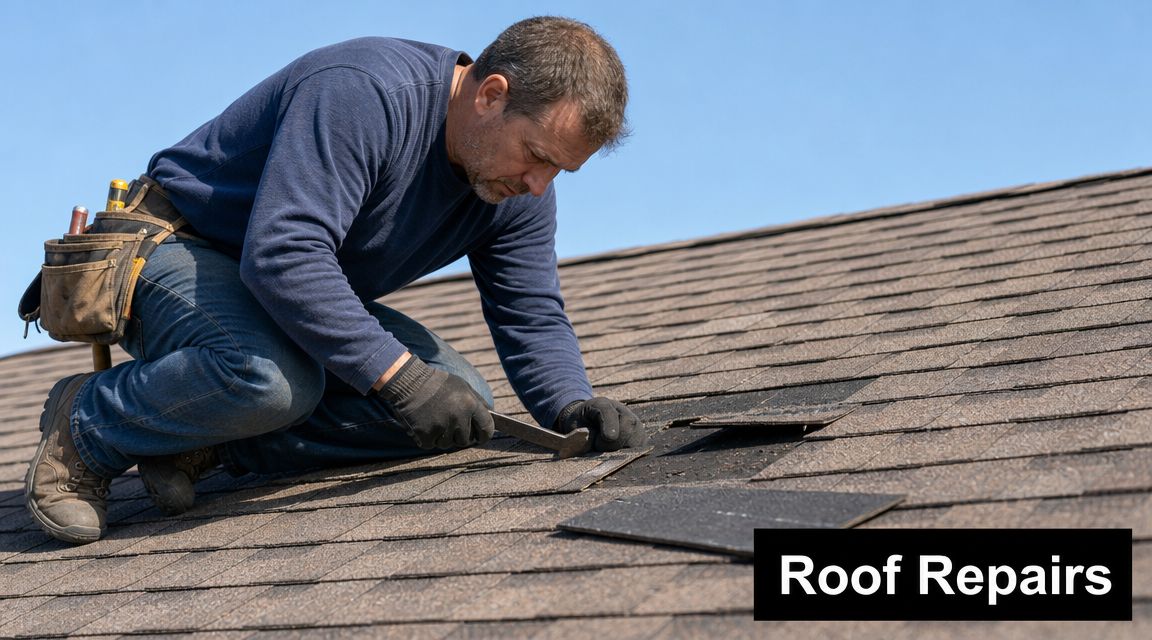
A typical repair call starts with a ceiling stain in Sharon, a loose shingle line after wind in Erie, or water showing up around a rooftop unit on a commercial building in Pittsburgh. The visible damage is rarely the full story. Water often travels before it shows itself, which is why repair work depends on diagnosis first and materials second.
We handle active leaks, storm-related punctures, flashing failures, pipe boot problems, missing shingles, and trouble spots around chimneys, skylights, and wall intersections. On older roofs, the question is not just what failed. It is whether the failure is isolated or part of a larger wear pattern that makes repair a short-term fix.
What We Fix Most Often
Some issues are direct and economical to address. A torn shingle tab, cracked vent boot, or a small section of lifted flashing can often be repaired without disturbing large areas of the roof. Other leaks take a closer inspection because the entry point is hidden by underlayment laps, siding transitions, or aging sealant.
That is especially true on roofs with multiple penetrations or additions tied into the original structure. Sidewalls, chimneys, skylight curbs, and low-slope transitions are common places for recurring leaks if the original detailing was rushed.
If you are trying to decide whether the problem looks minor or points to a larger repair, Penn Ohio's guide to signs of roof damage helps homeowners identify warning signs early.
How the Repair Process Works
We start by locating the source, not just the symptom. That can include checking shingles and exposed fasteners, testing suspect flashing areas, inspecting penetrations, and looking in the attic or roof deck area for moisture paths. On commercial roofs, we also check seams, drains, curb details, and any equipment mounts that may be letting in water.
Once the source is confirmed, the repair plan depends on condition, age, and access. In some cases, a targeted repair is the right move and buys years of service. In others, the surrounding materials are brittle or too worn to hold a reliable fix, and we will say so plainly. That trade-off matters. A cheaper patch can become more expensive if it has to be reopened after the next freeze-thaw cycle.
What Good Maintenance Looks Like
Maintenance keeps small defects from turning into interior damage, rotten decking, or soaked insulation. For most properties in western Pennsylvania, that means checking the roof after winter, after major storms, and any time debris has built up around valleys, gutters, or drains.
A practical maintenance routine usually includes:
- Seasonal inspections: Check for lifted shingles, cracked sealant, exposed fasteners, and flashing movement.
- Drainage cleanup: Keep gutters, downspouts, and roof drains clear so water leaves the system properly. Overflow near the eaves can damage fascia, siding, and soffits. This guide on monsoon season gutter cleaning tips is a useful reminder.
- Repair records: Save photos and notes from each visit so future diagnosis is faster and insurance documentation is easier.
- Follow-up on known weak spots: Areas repaired before, especially around penetrations and transitions, deserve another look during the next service visit.
Fast response helps. Accurate diagnosis prevents repeat leaks.
For homeowners and property managers, the value of repair work is simple. Stop the leak, protect the structure, and avoid replacing more roof than the building needs. That is the standard Penn Ohio uses on repair and maintenance calls.
3. Metal Roofing Solutions
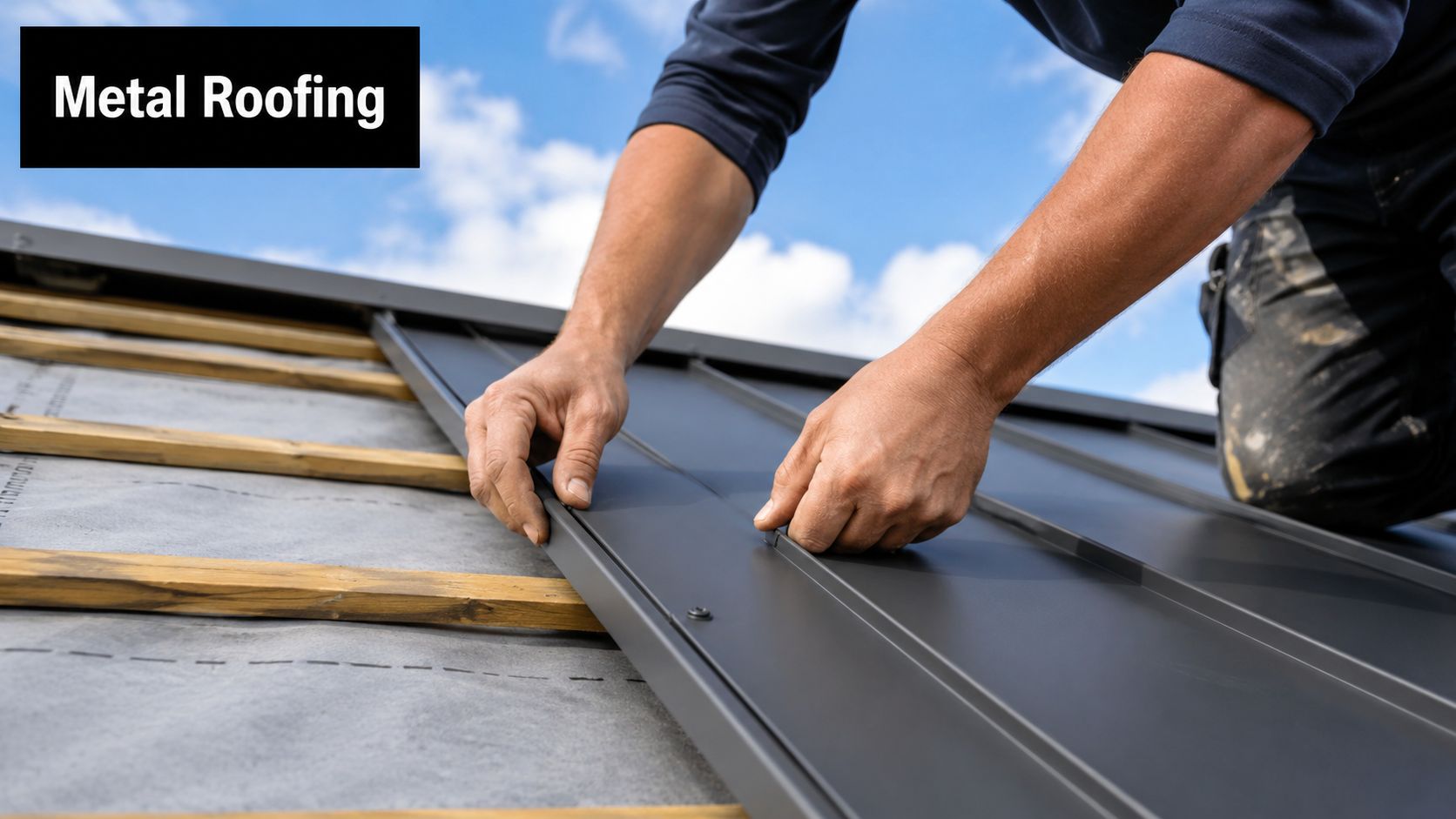
Metal roofing works well for owners who want durability, a clean profile, and lower maintenance demands than many traditional systems. We install and service standing seam, corrugated panels, and metal shingles on residential, agricultural, and commercial properties.
This isn't one product category with one installation method. A standing seam roof on a newer home in Beaver County requires different detailing than corrugated metal on a barn or a commercial structure. Fastener placement, trim transitions, thermal movement, and substrate preparation all have to match the panel system you're using.
Where Metal Roofing Works Best
Metal is a strong fit for homeowners replacing older shingle roofs, for warehouses that need a hard-wearing exterior, and for some historic renovations where profile and finish need careful selection. It's also a smart option when a property owner wants a more modern look without moving to a flat or low-slope membrane design.
We also see interest from buyers who want a system that handles Pennsylvania weather swings without the layered look of architectural shingles. That said, metal isn't automatically the best choice for every house. On a complex roof with many cuts and penetrations, trim and labor details can become a major part of the project.
What Separates a Good Metal Install from a Bad One
The details make the roof. Good metal installation includes underlayment matched to the assembly, correct clips or fasteners, well-built ridge and eave details, and room for expansion and contraction. Poor installations usually fail at trims, penetrations, or panel alignment long before the field panels become the issue.
One industry summary reports up to 60% adoption of big data analytics in large organizations, with financial services at 91% adoption. For contractors, the takeaway isn't about copying another industry. It's that buyers increasingly expect structured estimates, documented inspections, and process visibility rather than vague verbal promises.
Metal roof projects usually go smoother when owners:
- Match panel type to the building: Standing seam suits many homes and commercial properties. Corrugated often fits utility structures.
- Plan insulation and ventilation together: Noise complaints often trace back to assembly design, not the metal itself.
- Choose an experienced installer: Metal punishes shortcuts faster than many other roofing materials.
4. Tile Roofing Installation and Repair
Tile roofing isn't common on every Pennsylvania street, but for the right home it delivers a distinct look and a long-lasting exterior finish. We work with clay and concrete tile systems, handling both new installations and targeted repairs where breakage or underlayment issues need attention.
This service is usually for higher-end residential properties, custom homes, and restorations where appearance matters as much as protection. In some Mercer County neighborhoods, tile suits Mediterranean-style architecture or homes with a more formal design language. It can also be the right answer when a property owner wants something less ordinary than asphalt or standard metal.
Who Should Consider Tile
Tile is best for owners who want strong visual character and are willing to invest in a roofing assembly that requires careful structural review. The roof framing has to be able to support the load, and the installer has to know how to walk, stage, and repair the roof without creating more breakage.
A tile roof also rewards planning. Matching profiles and colors later can be difficult if the original product changes or is discontinued. We encourage owners to keep records on the tile type, accessory pieces, and underlayment used so future repairs don't become guesswork.
Tile lasts best when the support system is treated as part of the roof. Broken pieces are visible. Failed underlayment is what turns a cosmetic issue into a leak.
Repair Versus Replacement on Tile Roofs
Not every damaged tile roof needs replacement. If the field tile is largely sound and the issue is limited to a section disturbed by weather or foot traffic, a focused repair can make sense. We replace cracked tiles, inspect valleys and flashings, and check whether the water barrier beneath the tile is still doing its job.
Replacement becomes the better route when the underlayment has broadly failed, when widespread breakage exists, or when earlier repairs used mismatched pieces and poor fastening methods. On these roofs, craftsmanship matters at every step. A rushed crew can do visible damage before the day is over.
Typical tile service scenarios include:
- Custom homes: Owners who want a distinctive look with premium curb appeal.
- Architectural restorations: Properties that need roofing materials aligned with the home's original style.
- Selective repairs: Roofs with isolated tile damage but an otherwise serviceable assembly.
5. Flat Roof Systems
Flat roof work is a different discipline from steep-slope roofing. We install and maintain TPO, EPDM, and built-up roof systems for commercial buildings, multifamily properties, and modern residential designs. These roofs need correct drainage, membrane detailing, and regular inspection because small failures can travel far before they show up indoors.
In places like Pittsburgh and Erie, flat roofs also have to accommodate equipment, foot traffic, and service access. That means the membrane isn't the only concern. Curbs, penetrations, drains, edge metal, and walkway protection all affect how the roof performs.
Best Uses for Flat Roofing
Commercial offices, warehouses, retail buildings, and contemporary homes often benefit from a flat or low-slope system. These roofs create usable access for HVAC and other mechanical equipment, and they can simplify the lines of a building where a pitched roof would look out of place.
The trade-off is maintenance discipline. Leaves, branches, and rooftop debris don't always clear the way they do on a steeper roof. If drains clog or water sits too long, seams and flashings take more stress.
The Main Failure Points We Watch
Most flat roof problems show up around transitions rather than across the open field. We pay close attention to drain bowls, wall flashings, pitch pockets, equipment curbs, coping edges, and any point where multiple materials meet.
For owners trying to understand budgeting from the repair side, this article on average flat roof repair expenses gives general context. On the work itself, we focus less on broad averages and more on membrane type, access, saturation under the surface, and whether the issue is isolated or system-wide.
A few operating habits help flat roofs last:
- Keep drainage paths clear: Debris buildup is a common cause of ponding.
- Protect service routes: Walkway pads help where technicians regularly cross the membrane.
- Document roof activity: Every HVAC visit or equipment upgrade can affect the roof if penetrations aren't handled correctly.
Global investment in data tools continues to expand, with one market analysis projecting the big data analytics market will grow from $447.68 billion in 2026 to $1,176.57 billion by 2034. For building owners, the practical effect is simple. Expectations around documentation, service tracking, and operational visibility are rising across industries, and roofing is part of that shift.
6. Storm Damage Assessment and Restoration
Storm damage work starts before permanent repairs begin. When wind, hail, or driving rain hits a property in Sharon, Erie, or Pittsburgh, the first job is to stabilize the building and document what happened clearly enough that everyone involved can make decisions from the same facts.
We provide emergency response, temporary protective measures, damage assessment, and restoration planning. That can include tarping an exposed area, identifying whether water entered through shingles, flashing, siding, or trim, and mapping which parts of the roof system need repair versus replacement.
What to Do Right After a Storm
Take photos if it's safe, but don't climb onto the roof yourself. Interior stains, wet insulation, lifted shingles at the ground line, dented metal accessories, and displaced siding all help tell the story. Property managers should also save notes on timing and visible changes from before and after the event.
The most common mistake after a storm is assuming that if the leak stops, the problem is over. Water often travels. A stain in one room may trace back to a valley, vent, or wall connection several feet away.
Field advice: Temporary protection buys you time. It doesn't settle whether the assembly underneath stayed intact.
How Restoration Usually Moves Forward
Restoration works best in a clear sequence. First, protect the property from more water entry. Second, inspect and document. Third, compare repair scope to full replacement only after the damage pattern is understood.
This is also where homeowners often need more than a price. They want plain-language guidance on whether a repair is enough, how to document the condition for insurance, and whether timing or material matching changes the decision. That's especially true after hail and wind events, when visible damage and functional damage aren't always the same thing.
Common storm restoration situations include:
- Hail-hit neighborhoods: Multiple homes on one street may need inspection after the same event.
- Commercial leaks: A warehouse can require immediate interior protection before roof repairs are finalized.
- Insurance-related decisions: Owners often need written documentation that distinguishes emergency work from permanent restoration.
7. Siding Installation and Repair
Roofing gets the most attention after bad weather, but siding often takes the hit that owners notice second. We install and repair vinyl, fiber cement, wood, and metal siding for homes and light commercial properties. This work matters because siding doesn't just change appearance. It manages water, helps the wall system dry properly, and protects vulnerable trim and sheathing.
In Beaver County, Sharon, and nearby communities, siding projects often come up in two situations. One is obvious storm damage. The other is a broader exterior update where the roof, fascia, soffit, gutters, and siding all need to work together instead of being patched one piece at a time.
Signs Your Siding Needs Attention
Cracks, loose panels, fading with brittleness, moisture intrusion around windows, and repeated repainting on older wood siding are common signs it's time for repair or replacement. We also inspect for subtle issues such as failed house-wrap integration, poorly flashed openings, and trim details that direct water behind the siding.
For budget planning, Penn Ohio's guide to the average cost of new siding helps explain the main pricing variables. Material selection, wall height, trim complexity, sheathing repairs, and the number of openings all shape the scope.
Choosing the Right Siding Material
Vinyl is popular for straightforward upgrades and lower-maintenance ownership. Fiber cement is often chosen when owners want a more substantial look and a product that pairs well with many architectural styles. Wood can be the right fit on older homes where preserving character matters. Metal siding suits some modern or utility-focused buildings.
If storm damage is part of the decision, broader insurance context can help owners ask better questions. This review of hail damage payout analysis offers general perspective, though the actual scope always depends on the property, policy, and documented condition.
A coordinated exterior project usually works best when owners:
- Match systems together: Roofing, flashing, gutters, and siding should be planned as one water-management envelope.
- Respect the home's style: Historic homes in Erie or Pittsburgh often need material choices that don't fight the architecture.
- Prioritize details over brochure claims: The install quality around windows, corners, and transitions matters more than the sales sheet.
8. Free Roof Inspections and Estimates
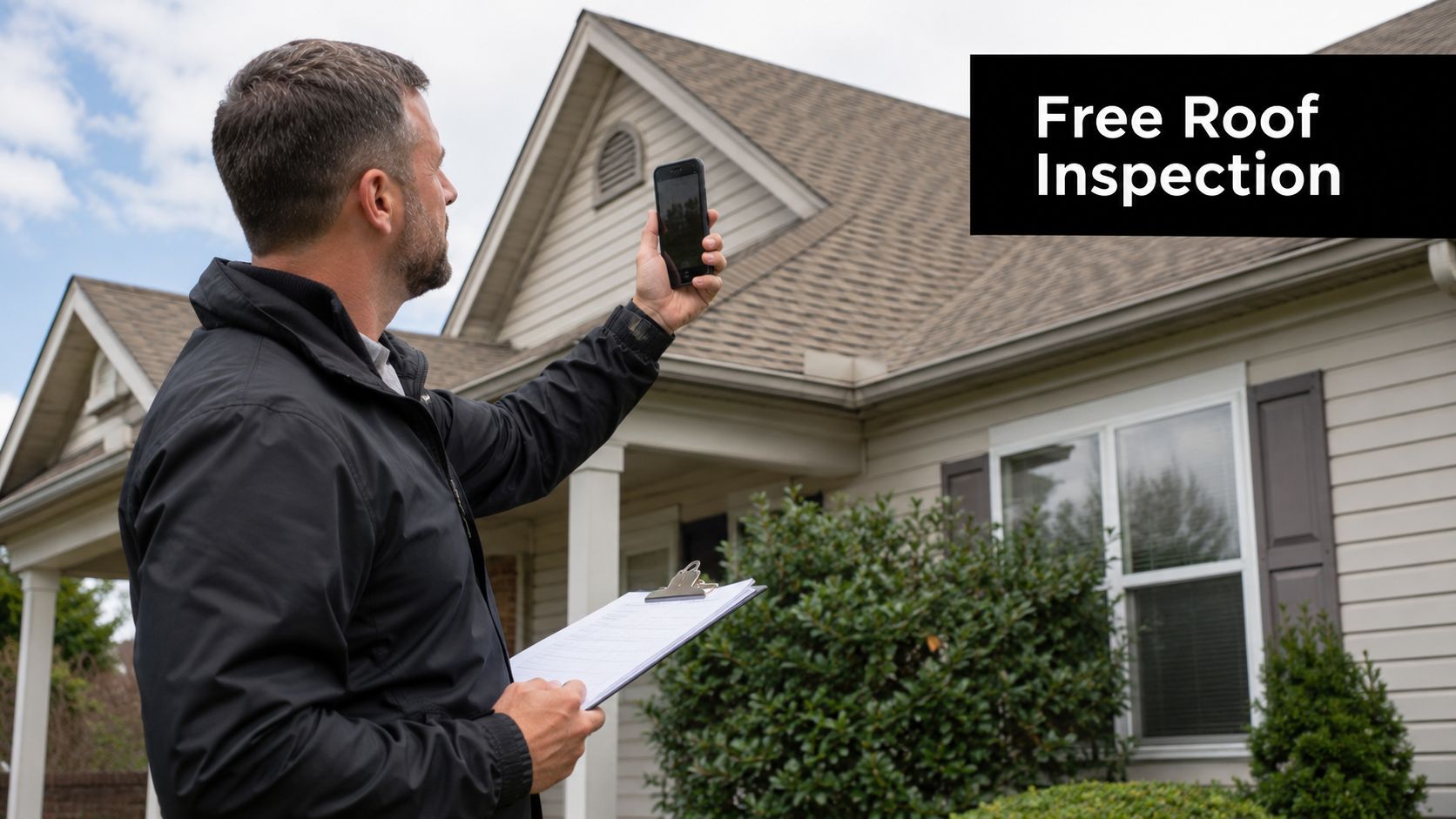
A free inspection is often the point where a vague concern turns into a clear plan. A homeowner in Erie may notice a ceiling stain after heavy rain. A landlord in Sharon may see shingles on the ground after wind. A buyer in Pittsburgh may need to know whether a roof has a few repair items or a replacement coming soon. In each case, the goal is the same: identify the condition, explain the risk, and price the work in a way that makes sense.
We provide no-obligation inspections for homeowners, property managers, real estate professionals, and commercial owners. The value is not just the estimate. The value is knowing what problem exists, how urgent it is, and what scope fits the condition of the roof.
What You Get From an Inspection
We check the roof surface, flashing, penetrations, drainage, and visible signs of structural movement or moisture entry. We also look at related exterior details when they affect the roof's performance, including trim, gutter flow, and wall transitions. If you have indoor symptoms such as staining, drafts, or musty odors, we compare those reports against what the exterior conditions suggest.
That matters because different problems call for different solutions.
A sound roof with a small flashing failure should not be priced like a full replacement. On the other hand, a roof with widespread shingle loss, soft decking, failed valleys, or repeated leak history usually costs less in the long run to replace than to patch over and over. A good inspection draws that line clearly and shows the reason with notes and photos.
How to Use an Estimate the Right Way
Estimate comparisons should focus on scope first, price second. Two proposals can look close on paper while covering very different work. One may include tear-off, disposal, flashing replacement, ventilation corrections, and deck repair. Another may cover only the exposed roofing material. Those are not equal bids, and they should not be judged as if they are.
Penn Ohio explains that difference directly because owners need usable information, not guesswork. If a repair is enough, we say so. If replacement is the better choice, we explain what is driving that recommendation and which cost factors are pushing the number up or down.
Before signing a contract, ask for:
- Written scope details: Materials, flashing, ventilation, cleanup, and disposal should be listed clearly.
- Photo documentation: Photos help confirm why a repair or replacement was recommended.
- Cost drivers: Steep pitch, multiple layers, decking damage, and specialty materials should be identified so the estimate is easier to evaluate.
- Warranty terms: Manufacturer coverage and contractor workmanship coverage should be explained separately.
That level of detail helps with insurance discussions, maintenance planning, and real estate decisions. It also reduces the chance of surprise change orders once the crew starts work.
8-Point Comparison: Roofing & Exterior Services
| Service | 🔄 Implementation Complexity | ⚡ Resource Requirements | ⭐ Expected Outcome | 📊 Ideal Use Cases | 💡 Key Advantages / Tips |
|---|---|---|---|---|---|
| New Roof Installation | High, full tear-off, structural work, multi‑trade coordination | High, major materials, crew, equipment, disposal | Long-term protection, improved efficiency & value (⭐⭐⭐⭐⭐) | Severely damaged roofs, full upgrades, new construction | Complete replacement opportunity; schedule in dry season; verify warranties |
| Roof Repairs and Maintenance | Low–Medium, targeted fixes and inspections | Low–Medium, parts, skilled crew, 24/7 availability for emergencies | Extends life; cost‑effective vs replacement (⭐⭐⭐⭐) | Leaks, storm damage, routine upkeep | Bi‑annual inspections; document repairs for insurance; consider maintenance plans |
| Metal Roofing Solutions | Medium–High, specialized fastening, expansion management | High, premium metals, experienced installers, coatings | Exceptional longevity and energy savings (⭐⭐⭐⭐⭐) | Modern residences, warehouses, long‑life installations | Ensure insulation for noise; hire experienced crews; use reflective coatings |
| Tile Roofing Installation and Repair | High, heavy materials, specialized handling & structural considerations | Very High, reinforced structure, skilled artisans, premium tiles | Very long lifespan and premium curb appeal (⭐⭐⭐⭐⭐) | Mediterranean/Spanish styles, high‑end or historic homes | Verify load capacity; use expert tile specialists; plan maintenance/records |
| Flat Roof Systems | Medium, membrane installation, drainage and slope optimization | Moderate, membrane materials (TPO/EPDM/BUR), equipment, insulation | Cost‑effective for large areas; good rooftop access (⭐⭐⭐⭐) | Commercial roofs, rooftops with equipment, modern flat residences | Ensure proper slope/drainage; schedule regular inspections; install walkway pads |
| Storm Damage Assessment and Restoration | Medium, rapid assessment, temporary protection, insurance coordination | Moderate, rapid‑response teams, tarping, documentation tools | Mitigates secondary damage; supports insurance claims (⭐⭐⭐⭐) | Post-hail/wind/rain events; insurance-driven restorations | Photograph immediately; notify insurer first; obtain multiple estimates |
| Siding Installation and Repair | Medium, coordination with roofing, precise flashing/drainage | Moderate–High, material dependent (vinyl, fiber cement, wood, metal) | Improved weather protection and curb appeal (⭐⭐⭐⭐) | Full exterior renovations, storm repairs, historic restorations | Coordinate timing with roofing; choose climate‑appropriate materials; check warranties |
| Free Roof Inspections and Estimates | Low, visual inspection and written reporting | Low, inspector time, photos, estimate preparation | Clear condition baseline and transparent options (⭐⭐⭐⭐) | Pre‑purchase checks, budgeting, insurance claims, maintenance planning | Request itemized written estimates; compare multiple contractors; document concerns |
Partner with Penn Ohio for Your Next Project
A call usually comes after water shows up where it should not. A Sharon homeowner notices a ceiling stain after a hard rain. A Pittsburgh property manager sees ponding on a flat roof near rooftop equipment. An Erie homeowner starts with a few loose siding panels and then finds rot around a window. In each case, the first useful step is the same. Get the building inspected, define the actual scope, and decide whether repair or replacement makes better financial sense.
That is the value of treating this page as more than a service list. The right contractor should be able to explain what problem each service solves, what signs point to that service, what the work involves, and what usually changes the price. Pennsylvania properties do not all fail in the same way, and they should not all get the same recommendation.
Penn Ohio Roofing & Siding Group handles new roof installation, roof repairs, metal roofing, tile roofing, flat roof systems, storm damage restoration, siding installation and repair, and free inspections. The company is family-owned and operated, licensed, bonded, and insured, with more than 25 years of experience serving residential and commercial properties across Hermitage and the surrounding Mercer, Beaver, and Lawrence County areas. It is also a GAF Triple Excellence Award winner.
Credentials matter. Clear judgment matters more.
Property owners usually want straight answers to practical questions. Does the leak come from failed flashing, damaged shingles, or a ventilation issue that keeps creating condensation? Is the siding problem cosmetic, or has water already reached the sheathing? On a flat roof, does a localized patch solve the issue, or has the membrane aged enough that section replacement or a full reroof is the smarter choice? Good exterior work starts with those distinctions because they affect cost, timing, and how long the fix is likely to hold.
That trade-off is where experienced inspection work pays for itself. A smaller repair often makes sense when the surrounding system is still sound. A full replacement is usually the better investment when repeated repairs are stacking up, storm damage is widespread, or the roof and exterior details were installed incorrectly in the first place. Coordinating roofing, siding, drainage, and trim can also prevent the common problem of fixing one surface while water keeps entering at the transitions.
If you need roofing or siding help in Sharon, Pittsburgh, Erie, or the surrounding region, contact Penn Ohio Roofing & Siding Group to schedule a free, no-obligation inspection and estimate.