
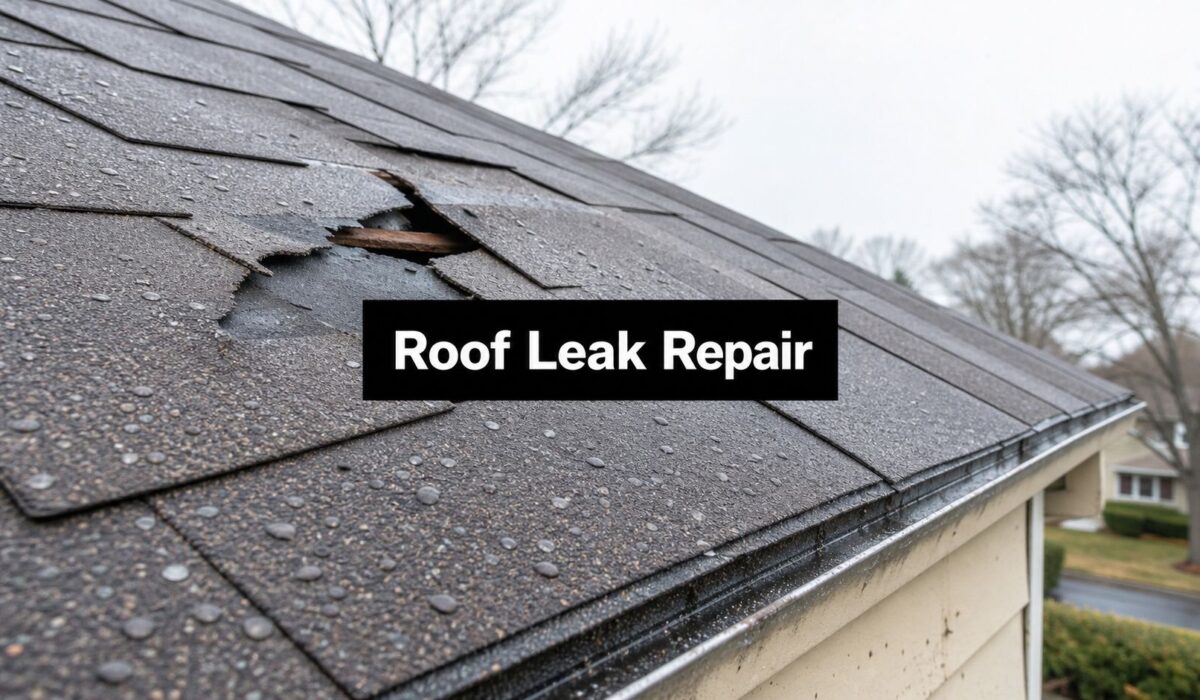
You hear dripping, see a ceiling stain spreading, and your first thought is usually the same. How bad is this, and what do I do right now?
That reaction is normal. In Hermitage, Sharon, Pittsburgh, Erie, and the rest of Western Pennsylvania, roof leaks often show up after a hard storm, a stretch of wet weather, or a temperature swing that exposes an older weak spot. The mistake I see most often isn't panic itself. It's waiting too long, filing an insurance claim without enough documentation, or approving a quick patch before anyone has checked for hidden deck damage underneath.
A smart response starts inside the house, then moves to safe diagnosis, then to repair decisions. If you're dealing with roof leak repair in Hermitage PA, that order matters.
Table of Contents
- Your First Response to a Roof Leak
- How to Find the Source of the Leak
- Common Causes for Leaks in Western Pennsylvania
- Navigating Repair Costs and Insurance in Hermitage
- Why and When to Call a Roofing Professional
- Hermitage Roof Repair FAQs
- Do I need a permit for a small roof repair in Hermitage
- Does damage to 25 percent of the roof mean I have to replace all of it
- What's the difference between a patch and a permanent repair
- How long should a professional roof repair last
- When should I stop repairing and start thinking about replacement
Your First Response to a Roof Leak
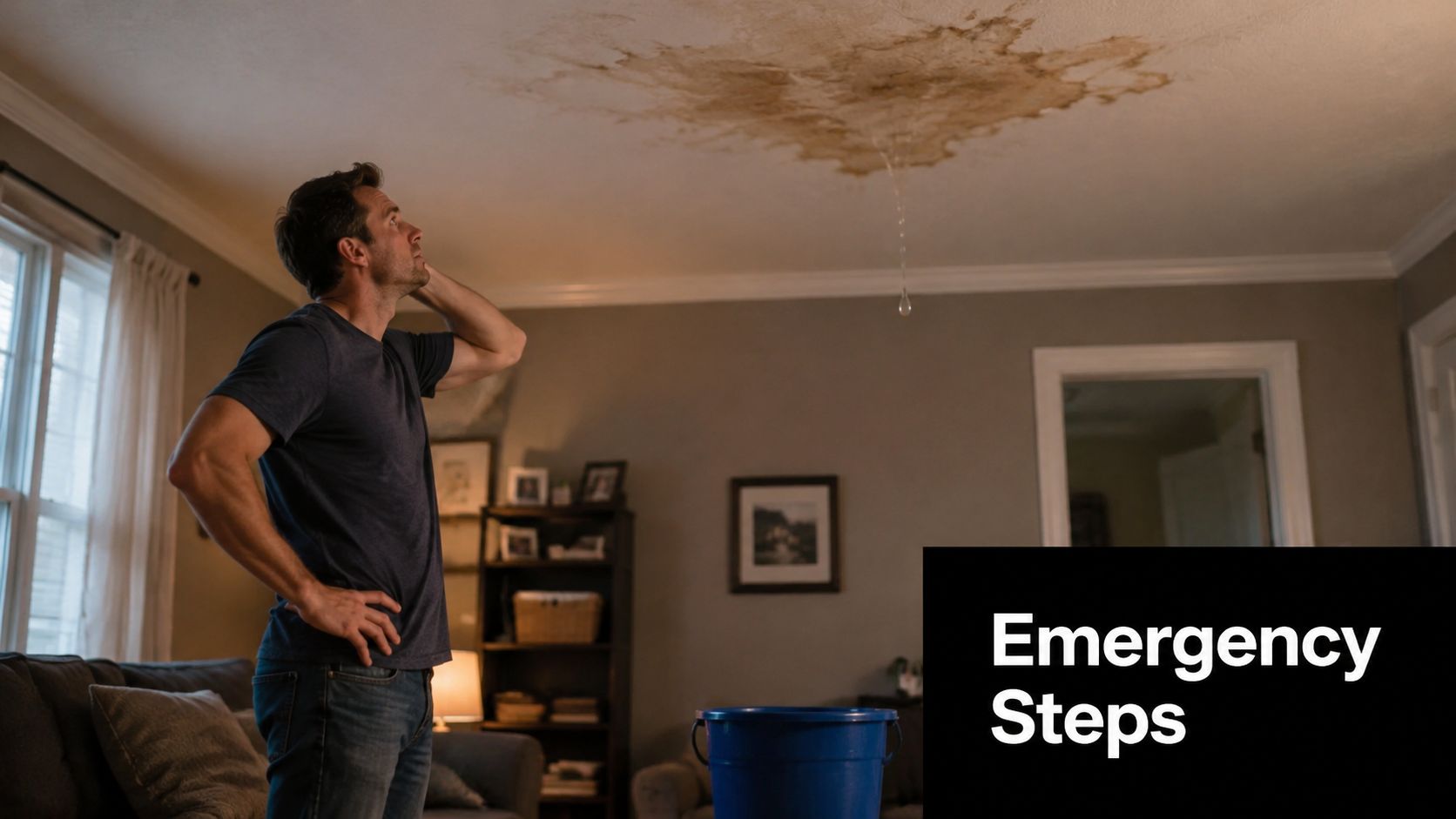
The first half hour matters most. Don't start by climbing on the roof. Start by controlling interior damage.
Stop the water from spreading
Put a bucket, deep pan, or plastic tote under the drip. If water is splashing, lay an old towel in the bottom to reduce bounce and keep it from soaking more flooring.
Move furniture, electronics, rugs, and anything paper-based out of the wet zone. If you can't move something heavy, slide plastic sheeting or trash bags over it and raise the item off the floor if possible.
If the ceiling has formed a bulge, that's trapped water. In many cases, it's safer to relieve that pressure in a controlled way than to let the drywall collapse on its own.
- Use a screwdriver or small nail carefully: Puncture the lowest point of the sagging bubble so water drains into the bucket instead of tearing a larger section of ceiling.
- Protect the floor first: Put down towels, a drop cloth, or plastic before you puncture the bubble.
- Keep people clear: Wet drywall can give way without warning.
Practical rule: If water is entering near light fixtures, switches, or ceiling fans, turn off power to that area before you touch anything.
Lower the risk inside the house
If water is running down walls or near outlets, don't guess whether it's safe. Shut off the affected circuit if you can do it safely. If you can't, stay clear and call for help.
Open the attic access only if it's safe and the area isn't actively energized. Wet insulation holds water for a long time, and a small ceiling stain can hide a larger wet area above it.
This is also the point where documentation starts. Take photos of the stain, the drip location, damaged belongings, and any visible exterior condition from the ground. If the leak later becomes an insurance issue, timing and cause matter. If you also have interior staining, warped drywall, or soaked insulation, this guide to water damage from a roof leak helps you understand what else may need attention beyond the roofing surface.
What not to do
A rushed response causes a lot of repeat damage. Avoid these common mistakes:
| What people do | Why it backfires |
|---|---|
| Climb onto a wet roof | Slippery surfaces and hidden soft spots make falls much more likely |
| Smear roof cement from the first visible spot | Water often enters higher up than the stain suggests |
| Ignore attic moisture | Insulation, decking, and framing can stay wet after the room below looks dry |
| Delay cleanup for a day or two | Interior materials can deteriorate fast once water keeps moving |
If the leak is active, your job is containment. The actual fix comes after the source is confirmed.
How to Find the Source of the Leak
Most homeowners look at the ceiling stain and assume that's where the roof failed. Usually, it isn't.
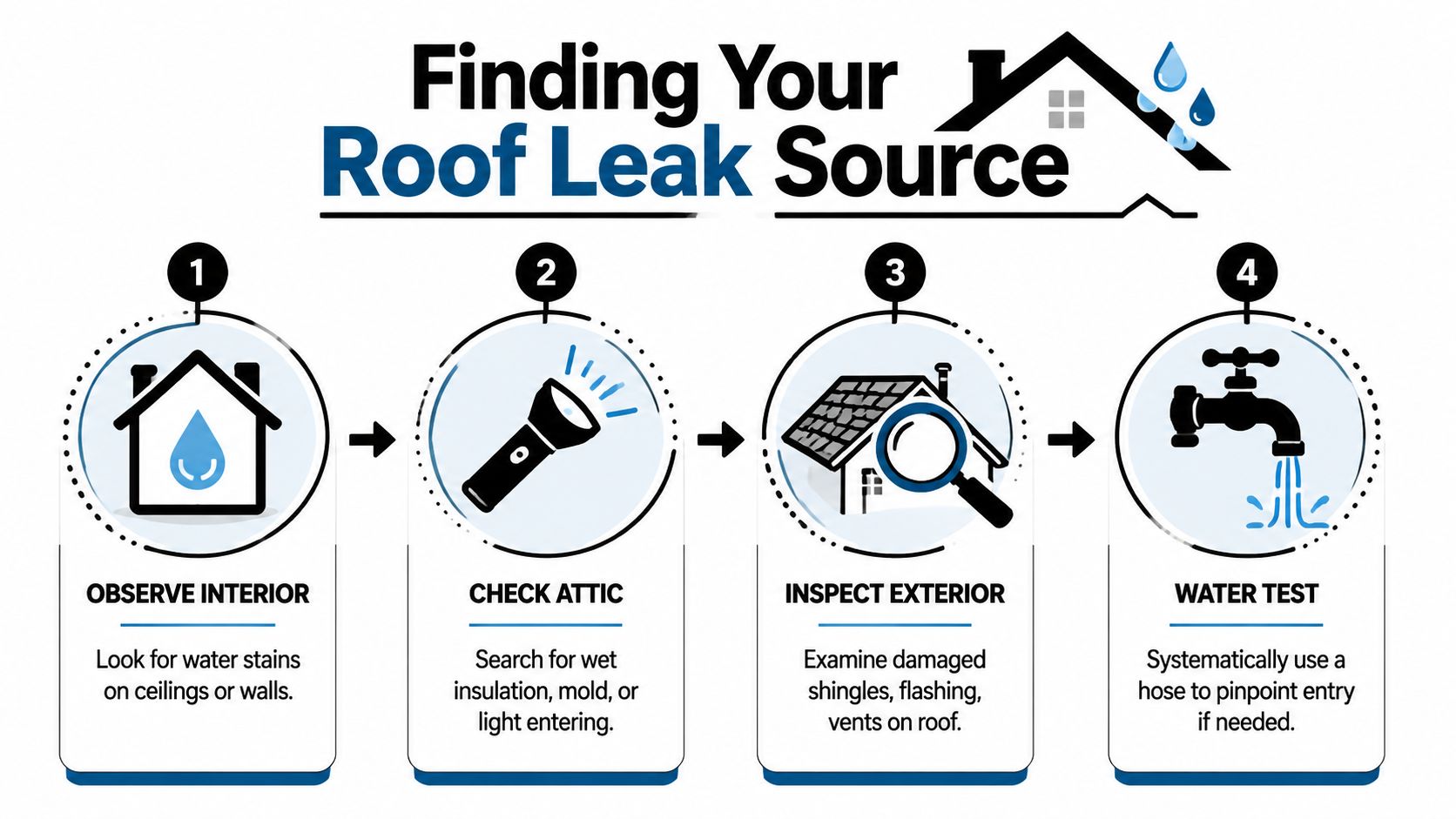
Professional leak diagnosis follows a seven-step sequence that starts inside the house and moves to the attic before anyone confirms the exterior source. The key idea is simple. The ceiling stain is often the end of the trail, not the true entry point, because water can travel along decking or rafters before it drops into a room, as explained in this guide on roof leak repair diagnosis.
Start in the attic, not on the shingles
If you can access the attic safely, bring a flashlight. Go during daylight if possible. You're looking for the highest point where moisture appears, not just the most obvious wet spot.
Check for these signs:
- Darkened decking: Look for water marks on the underside of roof sheathing.
- Wet insulation: Compressed or matted insulation often shows where water has been sitting.
- Rafter trails: Water may run along framing members before dropping off farther down.
- Daylight penetration: Small openings around vents or flashing sometimes show light where they shouldn't.
A lot of Hermitage roof leak calls come from leaks that appear around a chimney, bathroom vent, plumbing stack, or valley, but the interior stain shows up several feet away. That's why driveway guesses miss the problem so often.
Use a simple homeowner version of the process
A safe homeowner check should stay limited and methodical. Don't tear roofing apart, and don't walk a steep or wet roof.
Try this order:
- Mark the ceiling stain location from inside the room.
- Inspect directly above in the attic and trace any staining upward.
- Look upslope from the moisture trail because the opening is often higher than the drip point.
- Check penetrations and flashing first since those joints fail before large field areas in many leak situations.
- Use controlled water testing only if conditions are safe and only with two people, one outside with a hose and one inside watching carefully.
Water that shows up in a hallway ceiling may have entered near a vent boot, flashing edge, or roof transition well above it.
If your roof is difficult to view from the ground, a documented exterior look can help before repair decisions get made. Some homeowners use drone roof inspection services to get a closer look at vents, ridge lines, valleys, and missing or displaced shingles without climbing up themselves.
What usually causes repeat leaks
The biggest diagnosis mistake is patching the symptom. If someone seals one visible crack but doesn't lift surrounding materials and tie the repair back into sound roofing and flashing, the leak often returns.
That's why a leak can seem "fixed" after one rain, then show up again in the next storm from the same general area. The entry point was never fully addressed.
Common Causes for Leaks in Western Pennsylvania
Hermitage roofs don't fail in a vacuum. The same weather pattern that affects homes in Sharon can show up across the corridor from Erie down toward Pittsburgh. The materials change from house to house, but the stress points are familiar.
Weather stress that shows up on local roofs
Hail damage is a frequent cause of roof leaks in Pennsylvania, and localized hail repairs typically run $500 to $1,500 according to Pennsylvania roof repair cost guidance. Hail doesn't always leave obvious holes. On asphalt shingles, it can bruise the surface and shorten the roof's ability to shed water cleanly.
Temperature swings also matter more than many homeowners realize. On low-slope and flat sections, materials like EPDM and TPO can crack or split without proper annual inspections in this region, according to that same Pennsylvania guide. That's a common issue on additions, porches, garages, and commercial buildings around Hermitage.
Material type changes the leak pattern
Different roofing systems fail in different ways.
| Roof type | Leak pattern homeowners often see |
|---|---|
| Asphalt shingles | Missing tabs, lifted shingles, nail-area failures, flashing breakdown |
| Metal roofing | Fastener issues, seam separation, penetration leaks |
| Slate | Broken tiles, failed flashing, aging underlayment beneath otherwise durable surfaces |
| Flat and low-slope systems | Ponding areas, punctures, seam failures, drainage-related splits |
Architectural shingles generally handle Western Pennsylvania conditions better than bargain materials, but installation quality still decides a lot. Poor ventilation, weak flashing work, and shortcuts at valleys or roof penetrations usually show up before the field shingles become the issue.
Maintenance matters more in four-season climates
Homes in this part of Pennsylvania deal with moisture, storms, debris, and freeze-thaw movement. That combination punishes roof edges, gutter lines, and transitions around skylights or chimneys.
A simple seasonal inspection routine helps catch small failures before they become interior damage. Homeowners who like using checklists for broader home upkeep may find this guide to seasonal property care in Flagstaff useful as a framework for thinking through recurring exterior maintenance tasks, even though the climate is different.
Local roofs usually leak first at joints, edges, penetrations, and drainage trouble spots. The middle of the roof field gets blamed more often than it deserves.
If your home has an older roof, mixed rooflines, or a flat section over part of the structure, leak patterns get even less predictable. That's where careful diagnosis matters more than assumptions.
Navigating Repair Costs and Insurance in Hermitage
The two questions every homeowner asks are straightforward. How much will this cost, and will insurance help?
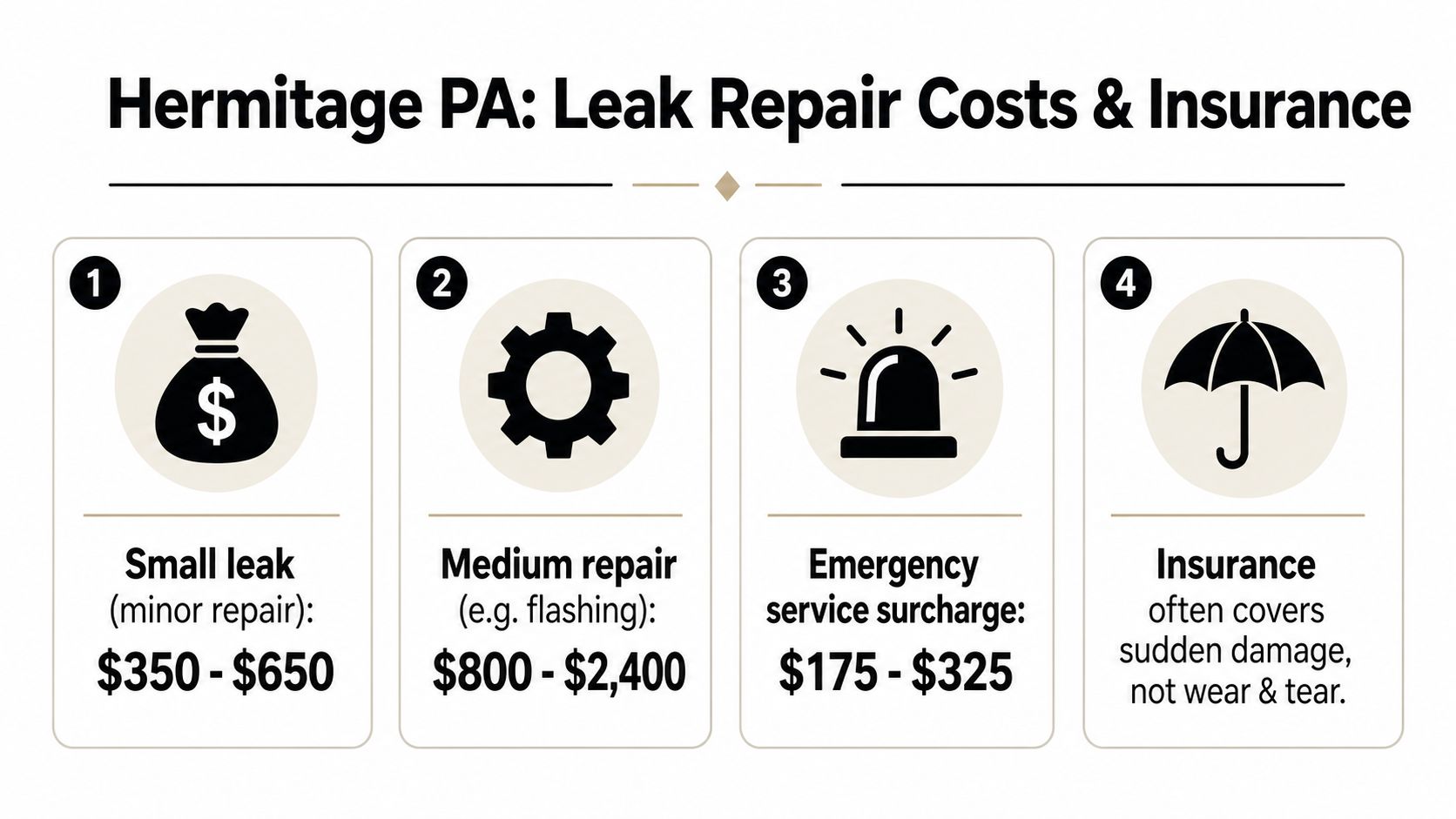
In Hermitage, the typical cost for common roof leak repairs ranges from $1,089 to $2,429, with many standard repairs landing around $1,100, depending on roof type, access, and storm severity, according to Hermitage roof cost data. Minor leaks with no interior water damage can come in lower, while moderate and major leaks rise sharply once water has affected drywall, insulation, framing, or decking.
What drives the final repair bill
Labor is a major part of roof leak work. In the Hermitage market, labor often makes up 60% or more of the total repair cost, and roofers commonly charge $40 to $100 per hour depending on complexity and experience, based on the same local cost source linked above.
The reason is simple. Leak repair isn't just swapping a shingle. Crews often need to locate the breach, remove surrounding materials carefully, inspect flashing, check the deck, rebuild the area correctly, and make sure the patch ties into sound roofing on all sides.
A few examples from the Hermitage and Pennsylvania cost ranges help set expectations:
- Minor leak repair: often falls between $150 and $1,000 when there's no interior water damage, based on Hermitage repair pricing.
- Moderate leak repair: often falls between $1,000 and $3,000 when some water damage is already present, from that same Hermitage source.
- Major leak repair: can run $3,000 to over $6,000 when structural damage or heavy interior intrusion is involved, also from the Hermitage pricing guide.
The insurance detail many homeowners miss
Insurance usually looks for sudden and accidental damage. Long-term deterioration is a different category.
A Pennsylvania roofing source focused on emergency roof leaks reports that over 60% of roof leak claims in Pennsylvania are denied because of maintenance-related or gradual deterioration clauses, which is why homeowners need to document when the leak started and what likely caused it with photos and notes from the beginning of the event. I'm not linking that source again elsewhere because this point belongs here.
That means storm-created openings may qualify where a long-ignored flashing issue may not. If you wait months while a small stain grows, the claim gets harder to defend.
If you think weather caused the leak, document the date, the storm conditions, interior damage, and any exterior changes before temporary repairs hide the evidence.
Hidden deck rot is where budgets change fast
This is the part generic articles skip. Visible shingle damage isn't always the full scope. In Pennsylvania, 30% to 45% of roof leak repairs uncover rotted decking, and decking labor can add $1,500 to $3,000 to the repair bill according to Hermitage roof repair guidance.
If mold remediation is needed because the leak sat too long, that can add $1,000 to $5,000+, and interior restoration may run $1,000 to $15,000 depending on how long the leak persisted and how many areas were affected, based on repair versus replacement guidance for Pennsylvania roofs.
When decking is soft or rotten, delaying replacement isn't a harmless shortcut. New materials need a sound substrate underneath.
Why and When to Call a Roofing Professional
Some leaks are small. Very few are simple.
If water is actively entering, if the roof is steep, if the leak is near flashing or a penetration, or if the roof has a history of prior repairs, a professional inspection usually saves money compared with trial-and-error patching. That's even more true on older systems. Repairs on roofs exceeding 15–20 years often have lower long-term success rates compared to replacement, because the economics change once a leak becomes part of a pattern rather than an isolated failure, according to Pennsylvania roof replacement versus repair guidance.

Jobs that usually shouldn't be DIY
Homeowners can often handle containment and basic observation. The repair itself is different.
Call a roofer when you see any of these conditions:
- Flashing failure: Chimneys, vent boots, skylights, and wall intersections need proper integration, not surface caulk alone.
- Steep or high roofs: Fall risk changes the equation immediately.
- Repeat leaks in the same area: That usually means the earlier repair didn't address the full assembly.
- Suspected deck damage: Soft sheathing, sagging, or long-term staining calls for materials to be opened up and evaluated.
- Storm damage across more than one slope: Insurance documentation and scope control matter more here.
A contractor also needs to know local permit rules when the work gets larger than a basic repair. If replacement of sheathing or structural components enters the picture, paperwork and inspection requirements can come into play quickly.
What professional repair does better
A proper roof repair doesn't just cover the opening. It identifies the water path, checks whether the surrounding roofing is still sound, and rebuilds the failed area in a way that doesn't create the next leak six inches away.
That includes matching materials correctly, integrating flashing with manufacturer requirements, and deciding when repair is no longer the economical move. For homeowners comparing service options, emergency storm damage repair is one example of the kind of response process worth looking for after a sudden leak event.
Penn Ohio Roofing & Siding Group is one local option for roof leak repair in Hermitage PA, including emergency response and repair work tied to storm-related damage. That's the kind of contractor role that matters when a leak needs documentation, temporary protection, and a permanent fix in the right order.
Fast response isn't just about trucks and ladders
Roofing companies that handle emergency calls well also need solid intake and communication systems. If you work in the trades or just want to see how contractors tighten that side of the business, this overview of solutions for boosting your contracting business is a useful look at the operational side of after-hours response.
A patch is cheap only when it works. If it fails and water gets into the deck, insulation, and drywall, it wasn't cheap at all.
Hermitage Roof Repair FAQs
Do I need a permit for a small roof repair in Hermitage
Usually, small repair work doesn't trigger the same requirements as tear-off or larger reroofing. In Hermitage and Mercer County, a permit is explicitly required for tear-off work and larger reroofing projects, especially when the work includes replacing structural sheathing or trusses, and contractors must provide their PA HIC registration number to the municipality, according to Hermitage roof permit guidance.
For bigger projects in Pennsylvania municipalities, permit fees generally fall between $50 and $150 for single-family homes, plus a $4.50 state fee, based on Pennsylvania roof permit requirements.
Does damage to 25 percent of the roof mean I have to replace all of it
Not automatically. Pennsylvania does not have a statewide law that forces full replacement once damage reaches 25% of the roof area. That threshold is often tied to local permit rules, not an automatic full replacement mandate, as discussed in this Pennsylvania roofing code explanation.
What's the difference between a patch and a permanent repair
A patch usually stops visible water for the moment. A permanent repair removes failed materials as needed, checks the surrounding roof system, replaces damaged flashing or underlayment when required, and ties the repaired area back into sound roofing correctly.
If someone only seals the symptom, the leak often returns. That's especially common around penetrations and transitions.
How long should a professional roof repair last
That depends on roof age, how isolated the damage is, and whether the surrounding materials are still in good shape. On a relatively healthy roof with one defined problem, a proper repair can be a sensible long-term solution. On a roof with recurring leaks or broad wear, repair may only buy time.
When should I stop repairing and start thinking about replacement
If the roof is older, the leak history keeps growing, or the current repair opens up hidden deck deterioration, replacement becomes a more practical conversation. The key question isn't whether a repair can be done. It's whether that repair makes financial sense on the roof you have.
If you're dealing with an active leak or trying to figure out whether the problem is isolated or part of a larger roof failure, Penn Ohio Roofing & Siding Group can inspect the roof, document the visible damage, and help you sort out the next step before a manageable repair turns into a bigger structural and interior problem.