Penn Ohio Roofing
Commercial Roofing in Sharon, PA & Eastern Ohio
Commercial roofing decisions should account for drainage, building use, roof condition and disruption to the business.
What should be clear before work begins?
Before work starts, compare the written scope with the conditions discussed during the inspection. Confirm access, property protection, the selected products, disposal arrangements and the treatment of hidden damage. Ask how changes will be documented and authorized if the crew discovers work outside the original scope. Keep the estimate and the product information together so that the proposed work can be checked against the completed project rather than relying on a verbal description.
Discuss any required permits for the property and the responsibilities assigned in the agreement. Requirements differ by jurisdiction and by the work proposed; structural changes may involve a different process from like-for-like replacement. Make sure any required permits are in place before work starts. Confirm the work schedule, weather protection and the point of contact for questions. Retain completion records and written warranty terms so future maintenance or a warranty enquiry can refer to the actual project.
How is a commercial roof assessed?
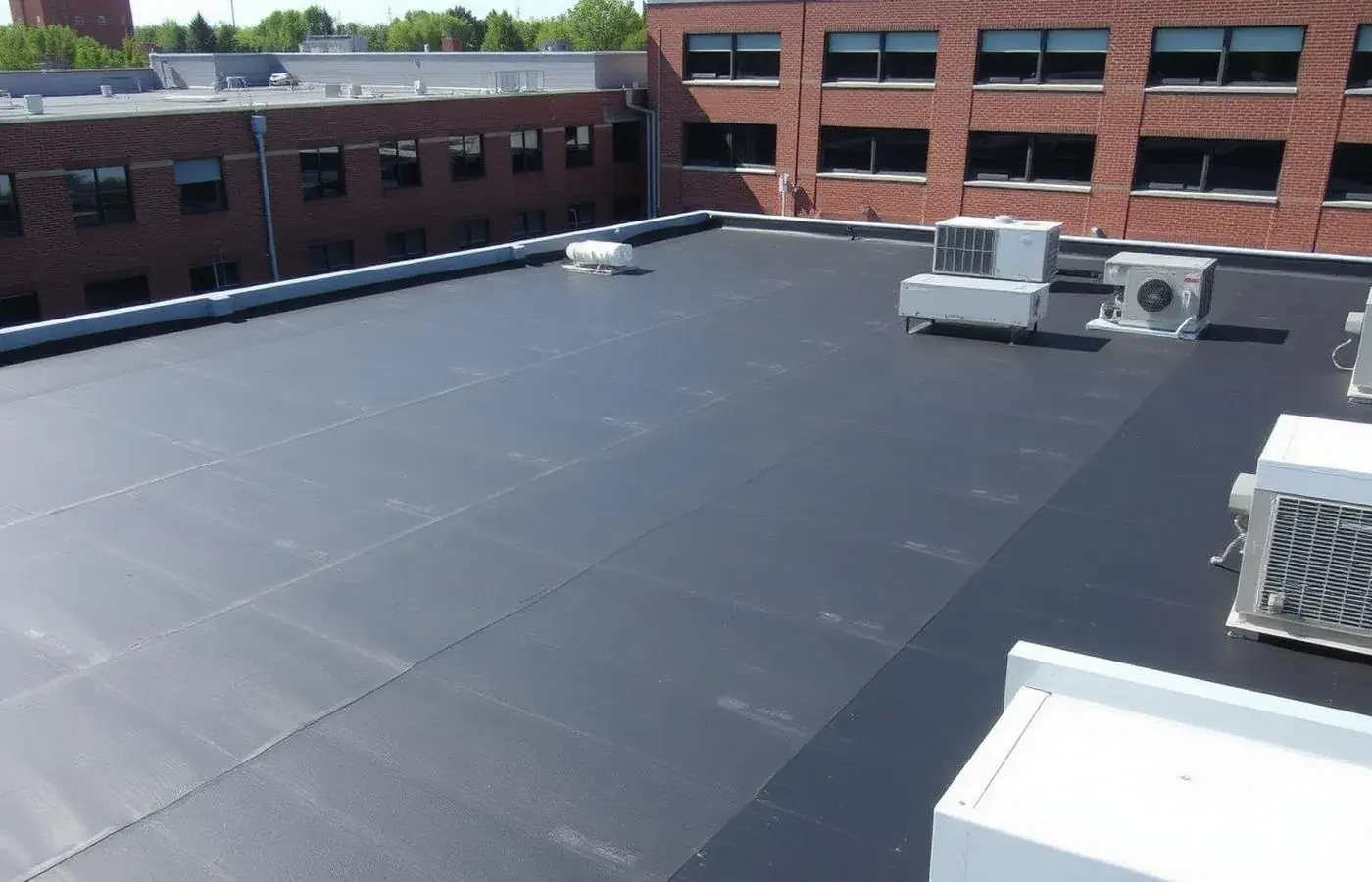
A roof inspection should identify the covering, visible seams and flashings, penetrations, perimeter details, drains and ponding patterns. Where access is safe, the roof surface is compared with interior leak locations and the building’s operating needs. A ceiling leak may originate at a curb, drain, parapet or mechanical penetration rather than the field membrane. The assessment should state the limits of the inspection and whether additional moisture investigation or specialist structural review is recommended.
Discuss prior repairs, warranty documents, maintenance records and any changes to rooftop equipment. Repeated patches can conceal the original assembly and make compatibility important. The proposal should distinguish maintenance, localized repair, restoration if appropriate and replacement. A roof should not be replaced solely because one drain is blocked, nor should a failing assembly be repeatedly patched without explaining the longer-term implications. Owners need a scope that addresses the actual condition and the costs of ongoing disruption.
Which systems may suit a low-slope building?
EPDM, TPO, PVC and modified bitumen have different attachment methods, seam details, chemical compatibility and maintenance requirements. Metal may suit some commercial roof configurations. Material selection depends on slope, deck, insulation, drainage, rooftop activity and the selected manufacturer’s requirements. A reflective surface can be one factor in the choice, but it does not solve poor drainage or replace an assessment of the building assembly. The estimate should name the proposed product rather than call every membrane rubber roofing.
Ask about membrane thickness, attachment, insulation, cover board, perimeter details and the treatment of curbs and penetrations. Rooftop grease, chemical exposure, frequent foot traffic and heavy equipment can affect compatibility and protection needs. Manufacturer warranty terms vary by product and system; a stated term must match the actual written proposal. We do not claim certification tiers or blanket warranty eligibility. Compare the system components and limitations before choosing between bids with different materials or attachment approaches.
How is commercial installation organized?
Work planning covers access, deliveries, occupant protection, hours, temporary weather protection and coordination around rooftop equipment. Tear-off or preparation follows the agreed scope, with the substrate and any wet or deteriorated components examined before the new system is installed. Drainage details need attention at the start, not just after a new covering is complete. Changes to equipment or structural loads may require separate professionals and approvals; those responsibilities should be written into the project plan.
The crew installs the specified insulation and roof assembly, including seams, terminations, flashings and perimeter details according to the chosen system. Quality checks should address the particular seam method and the continuity of water-shedding details around penetrations. Protecting walkways and arranging access for future maintenance can reduce damage after completion. Cleanup, completion records and warranty documents form part of the handover. Confirm who handles equipment reconnection and any inspection requirements rather than assuming all associated trades are part of the roofing contract.
How do cost, maintenance and claims fit together?
Roof area, access, tear-off, insulation, substrate condition, drainage corrections and the number of penetrations affect pricing. Business interruption and phased work can also influence the plan. An itemized estimate helps distinguish the roof work from mechanical, structural or interior repairs. Do not compare commercial projects with the residential asphalt planning range. A warehouse and an occupied office with the same roof area may need substantially different access, protection and coordination, even when the chosen membrane is similar.
Keep drains clear, document roof visits and arrange inspection after severe weather or changes to rooftop equipment. For observed storm damage, we can provide photographs and meet the adjuster, but the insurer makes the coverage decision. Financing options are subject to approval. Our fifteen-year workmanship warranty is separate from manufacturer material and system coverage; ask for the written terms that apply to the proposed commercial project. A documented maintenance and access plan supports the roof’s performance without making an unsupported promise about its life.
What do homeowners ask?
Is every flat roof an EPDM roof?
No. EPDM, TPO, PVC and modified bitumen are different systems. Identification of the existing covering and the proposed compatible assembly is part of the inspection and estimate.
Can work be planned around building use?
We discuss operating hours, deliveries, access, temporary protection and equipment coordination before work. The project plan must reflect the actual building and scope.
Can insurance or financing help with this work?
We can document observed storm damage and meet your adjuster on site. The insurer decides coverage. Financing options are available subject to approval; ask for the actual terms before committing.
Is the estimate free?
Yes. We provide a free inspection and an itemized written estimate. The scope identifies selected products and the proposed work; conditions requiring additional investigation are discussed rather than assumed.
What workmanship warranty do you provide?
We provide a 15-year workmanship warranty with written terms for the project. Manufacturer material, finish and product warranties are separate; ask to review the documents for the selected system.
Which related services may help?
Areas We Serve
- Sharon, PA roofing and service areaCommercial Roofing in Sharon, PA
- Hermitage, PA roofing and service areaCommercial Roofing in Hermitage, PA
- Youngstown, OH roofing and service areaCommercial Roofing in Youngstown, OH
- Boardman, OH roofing and service areaCommercial Roofing in Boardman, OH
- Warren, OH roofing and service areaCommercial Roofing in Warren, OH
- New Castle, PA roofing and service areaCommercial Roofing in New Castle, PA
- Butler, PA roofing and service areaCommercial Roofing in Butler, PA
- Mentor, OH roofing and service areaCommercial Roofing in Mentor, OH