Penn Ohio Roofing
Metal Roofing in Sharon, PA & Eastern Ohio
Standing seam and metal shingle systems need a roof-specific design for movement, fastening, drainage and transitions.
What should be clear before work begins?
Before work starts, compare the written scope with the conditions discussed during the inspection. Confirm access, property protection, the selected products, disposal arrangements and the treatment of hidden damage. Ask how changes will be documented and authorized if the crew discovers work outside the original scope. Keep the estimate and the product information together so that the proposed work can be checked against the completed project rather than relying on a verbal description.
Discuss any required permits for the property and the responsibilities assigned in the agreement. Requirements differ by jurisdiction and by the work proposed; structural changes may involve a different process from like-for-like replacement. Make sure any required permits are in place before work starts. Confirm the work schedule, weather protection and the point of contact for questions. Retain completion records and written warranty terms so future maintenance or a warranty enquiry can refer to the actual project.
How do standing seam and metal shingles differ?
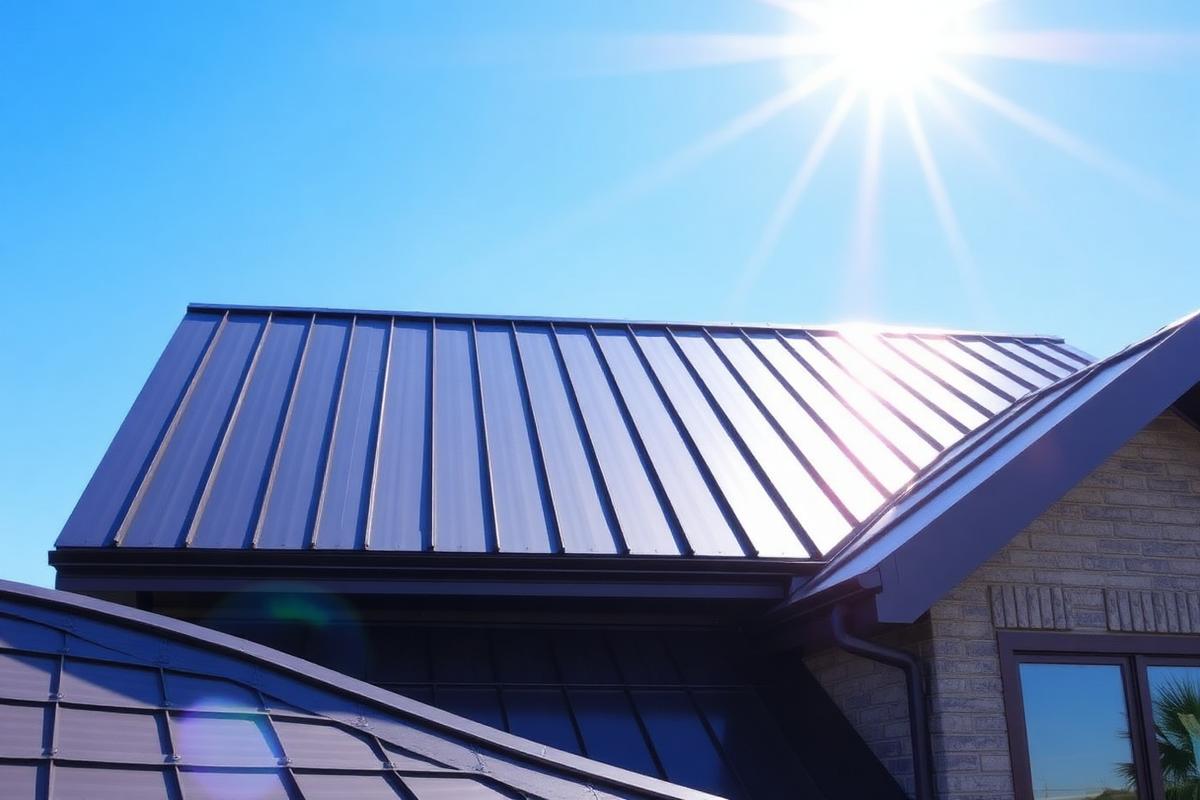
Standing seam uses long panels joined at raised seams, creating a continuous vertical pattern. Concealed fastening systems allow the panel assembly to respond to temperature changes without leaving the primary fasteners exposed to weather. Metal shingles use smaller interlocking units and can create a more traditional roof profile. The choice is not just appearance: roof slope, panel layout, wall transitions, penetrations and the product’s minimum-slope requirements affect which system is appropriate.
The estimate should name the proposed system, base metal, coating, panel or shingle profile and fastening method. Ask how valleys, ridges, eaves and sidewalls will be detailed. A porch roof or complex addition may need a different layout from the main house. Metal should not be chosen on a promise that it automatically solves leaks or lasts forever; the substrate, detailing and maintenance still matter. Product selection follows inspection and measurement of the actual roof.
Which gauges and finishes should be compared?
Gauge describes steel thickness, with a lower gauge number generally indicating thicker steel. Common residential products may use 24- or 26-gauge steel, while some lighter exposed-fastener products use 29-gauge. These are product examples, not a promise that every system is offered in every thickness. Aluminum is commonly specified by decimal thickness instead of steel gauge. The written proposal should identify the actual material and thickness rather than use the vague phrase heavy-duty metal.
Finish selection also matters. Ask for the coating type, color, written finish warranty and exclusions for fading, chalking or corrosion. Differences between a paint warranty and a roof-system weather-tightness warranty should be explained. Coastal exposure, dissimilar metals, cut edges and contact with treated lumber can affect compatibility. The goal is a specification that is suitable for the property, not simply the thickest panel or the longest number printed on a brochure.
How is the roof prepared and installed?
The crew establishes safe access and property protection, removes the covering as specified and checks the deck before installation. Underlayment, eave protection and flashing need to be compatible with the selected metal system. Panel layout is planned so seams, penetrations and transitions can be detailed correctly. Clips or fasteners follow the product requirements for spacing, attachment and thermal movement. Field modifications should not compromise the coating or lock the assembly in a way that prevents movement.
Valleys and roof-to-wall details need clear drainage paths, while pipe penetrations require compatible boots and sealants. Snow-retention devices may be appropriate above entrances, walkways or lower roofs, but their placement and attachment require a system-specific design. Ventilation should be considered with the attic and roof assembly rather than added as an afterthought. At completion, the work is reviewed for flashing, fastening, finish damage and cleanup, with warranty and maintenance information retained by the owner.
How should you compare metal cost and warranties?
Metal pricing requires an individual quote. Do not apply the $8,000–$18,000 asphalt planning range to metal or infer a metal price from house floor area. Material, panel length, complexity, substrate work, access and custom flashing affect the total. A quote should identify tear-off, deck repairs, underlayment, ventilation, snow retention and any applicable permit work. Compare standing seam and metal shingles on equivalent scopes instead of treating all metal products as interchangeable.
Our ten-year workmanship warranty is separate from manufacturer material and finish coverage. Ask for the written warranty of the exact product proposed, including exclusions and maintenance obligations. Financing may be available subject to approval. For storm-related damage, we document conditions and can meet the adjuster; the carrier decides coverage. A metal roof may be a sound option for the property, but no warranty, insurance settlement or lifetime performance claim should substitute for a careful estimate.
What do homeowners ask?
Do you install standing seam and metal shingles?
Yes. We discuss standing seam and metal shingle options after reviewing slope, deck and roof complexity. The written proposal names the selected material, profile, thickness and warranty terms.
Does a thicker gauge guarantee a better roof?
No. Gauge is one specification. Attachment, coating, drainage, thermal movement and product compatibility matter as well; compare the exact system rather than gauge alone.
Can insurance or financing help with this work?
We can document observed storm damage and meet your adjuster on site. The insurer decides coverage. Financing options are available subject to approval; ask for the actual terms before committing.
Is the estimate free?
Yes. We provide a free inspection and an itemized written estimate. The scope identifies selected products and the proposed work; conditions requiring additional investigation are discussed rather than assumed.
What workmanship warranty do you provide?
We provide a 10-year workmanship warranty with written terms for the project. Manufacturer material, finish and product warranties are separate; ask to review the documents for the selected system.
Which related services may help?
Areas We Serve
- Sharon, PA roofing and service areaMetal Roofing in Sharon, PA
- Hermitage, PA roofing and service areaMetal Roofing in Hermitage, PA
- Youngstown, OH roofing and service areaMetal Roofing in Youngstown, OH
- Boardman, OH roofing and service areaMetal Roofing in Boardman, OH
- Warren, OH roofing and service areaMetal Roofing in Warren, OH
- New Castle, PA roofing and service areaMetal Roofing in New Castle, PA
- Butler, PA roofing and service areaMetal Roofing in Butler, PA
- Mentor, OH roofing and service areaMetal Roofing in Mentor, OH